
UTv Videos
Advertisement

“Patients are interested in exercise, they're really keen, they want to know what they can do to help themselves,” says Kerry S. Courneya, PhD.
Advertisement

“We found in this study that the exercise group had lower prostate cancer-specific anxiety compared to the group that didn't exercise,” says Kerry Courneya, PhD.
“IsoPSA is a way of measuring all the different PSA-related proteins in the blood,” says Eric A. Klein, MD.

“The prevalence of incontinence is high and increasing. We recommend routine screening for all women for this condition as a part of preventive health care,” says Ushma J. Patel, MD.

“Women often are afraid to ask for what they want because they don't want to be perceived as too aggressive or too bossy,” says Kate H. Kraft, MD.
Advertisement

“IsoPSA is intended to be used in men over 50 who are being screened for prostate cancer as a way of helping to decide whether or not a biopsy should be done,” says Eric A. Klein, MD.

In this video, Ryan J. Nelson, DO, and Steven Ogilvy, PA-C, demonstrate the retroperitoneal single-port robotic surgical technique for a kidney tumor.

“There's no question that many patients [undergoing transurethral BPH surgery] can be done as a same-day ambulatory procedure. But you need to look at the criteria as to who you're going to keep and who you're not going to keep,” says Michael A. Palese, MD.

“I think research is a very important tool,” says Padraic O’Malley, MD, MSc, FRCSC.
Advertisement
“I think it's important for urologists and physicians to have an open mind in regard to complementary approaches to the treatment of BPH-related LUTS in men,” says J. Curtis Nickel, MD, FRCSC.

“We definitely don't have a clear standard,” says Shawn Dason, MD, FRCSC.
“These findings are an internal validation that the disparities we're seeing are real,” says Padraic O’Malley, MD, MSc, FRCSC.

“Goal setting for the patient is important,” says Omar El Shahawy, MD, MPH, PhD.
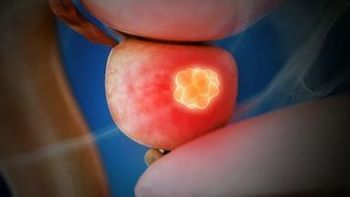
“We call this a ‘disruptive innovation,’” says Leonard S. Marks, MD.

“The most notable finding is that more than half of all adult US women experience urinary incontinence,” says Heidi Wendell Brown, MD, MAS, FACOG.
“There are a few different approaches in perioperative medical chemotherapy or immunotherapy treatment, and it's unclear as to how we should consider all these different approaches,” says Shawn Dason, MD, FRCSC.

“What really needs to be done to show that this works is to look prospectively,” says Amar U. Kishan, MD.

To investigate the severity and prevalence of dermatologic adverse events associated with apalutamide, Mario E. Lacouture, MD, and investigators conducted a study that will help to manage and counsel patients with prostate cancer in the future, especially with the expanded approval of apalutamide in this space.

“If you're looking at our results, in terms of the percent of authors who are female, the percent of first authors are female, or last authors who are female, we've seen growth in all 3 categories over the last 18 years,” said Megan Prunty, MD.

“I think that the most important thing to take home is that we all have implicit biases towards people who are underrepresented, whether it's women or minorities,” says Rena D. Malik, MD.

“The more you smoke, then the more prone you are to experience erectile dysfunction,” says Omar El Shahawy, MD, PhD.
“What we found was a signature that you can apply to patients to find out whether they're at high risk of these moderate or greater urinary side effects in the long term, and it did appear to depend on the type of radiation they were receiving,” says Amar U. Kishan, MD.

“I think there's a disconnect between the patients saying they're interested in these therapies, and the patients that actually go on to [receive] them,” says Jason Kim, MD.

In a recent interview, Hossein Jadvar, MD, PhD, discussed what the appropriate use criteria consist of for prostate-specific membrane antigen (PSMA)-PET imaging, and why these criteria are vital in ensuring the individualized care of patients.

“What's interesting in Dr Strum's analysis of these trials is that he not only looked at the English literature, which many of us are familiar with, but he looked at the many studies done in countries that were published in the non-English literature and never found [their] way into any of our analyses,” says J. Curtis Nickel, MD, FRCSC.
“We wanted to see whether certain variations and these micro-RNA binding sites could be associated with the risk of developing side effects,” says Amar U. Kishan, MD.

“Our goal was to educate these patients thoroughly on the risks and benefits of each of these therapies, and try to understand what guides their choice of third line therapy based on their lifestyle and what suits them,” says Anjali Kapur, MD.

“I think now the government has realized…the work that’s involved in this procedure…[and] we’re now being reimbursed at an appropriate level,” says David M. Albala, MD.

“I think there is an urgency for us as urologists who are seeing many of these patients with kidney stones to be advocates, not just for the patients whom we're treating today, but for the populations in the future,” says Gregory Tasian, MD, MSc, MSCE.
Advertisement
Advertisement
Trending on Urology Times
1
FAQs: The 2026 AUA Guideline on Medical Management of Kidney Stones
2
The UroOnc Minute: Neoadjuvant Therapy Before Radical Prostatectomy, With Isaac Y. Kim, MD, PhD, MBA
3
Jonathan Harper, MD, on the importance of fluid intake for reducing stone recurrence
4
Health Canada accepts vibegron submission for overactive bladder
5