

“I think the key [is to not] get rid of financial incentives. I don't think that's possible. [Rather, we should] align financial incentives [so] that [we] can promote what is best for patients,” says Lillian Y. Lai, MD.
“I think the key [is to not] get rid of financial incentives. I don't think that's possible. [Rather, we should] align financial incentives [so] that [we] can promote what is best for patients,” says Lillian Y. Lai, MD.

“The goal of this research endeavor was to really set forth the background information that would guide the creation of targeted interventions,” says Efe C. Ghanney Simons, MD.

Welcome to the first installment of Uranimals, a video series featuring urologists and their pets brought to you by Urology Times. From a dog model to a whole farm of animals, the inaugural episode has an amazing lineup.
“[BPH treatment] has to be individualized to the motivations of the patient, and also what I call his "phenotype.” How big is his prostate? How bad is this problem? And what is his tolerance for side effects?” says Kevin T. McVary, MD.
“More research needs to be done, but I think this is something that gets the conversation started,” says Tony Chen, MD.

“Patients want to see an improvement. They want a drug that obviously is efficacious and safe, where the side effects are low,” says David Staskin, MD.

“What was very impressive from the study was by sequentially using Cxbladder Triage, Detect, and Resolve, we could not only segregate those who had cancer versus not, but also those who had low-risk tumors versus high-risk tumors,” says Jay Raman, MD, FACS.

“I think the real driving factor in all of this is that collecting smoking status and tobacco use is hard. It's difficult to get this information out. It requires a lot of time; it requires energy; it requires infrastructure in the data and the electronic medical record,” says Richard Matulewicz, MD, MS.
“The reason that [long-term follow up is] important is because if you look at the best of hands, the incidence of recurrence of upper tract urothelial carcinoma, even for low and intermediate risk, is still very high,” says Karim Chamie, MD.

“My patient selection process for BPH treatments can be a little bit cumbersome and take time, but that's really because for the first time ever, we have so many different options available to men,” says Dean Elterman, MD, MSc, FRCSC.

“The purpose of [Cxbladder] Resolve is to identify not only those patients who are at higher risk for urothelial or urinary tract cancer, but those that have a high probability of an aggressive cancer, such as high-grade TA, carcinoma in situ, or T1 to T3,” says Jay Raman, MD, FACS.

“The most important takeaway is really good preoperative counseling. Patients should not expect surgeries to be pain free,” says Sarah F. Faris, MD.
“I think Aquablation is safe. It’s efficacious, especially in these large prostates,” says Kevin Zorn, MD, FRCSC, FACS.

“Tramadol is a mixed-class medication and it has weak opioid agonist activity. Normally, we consider that a safer option compared to other opioids, but it's actually a pro drug, so it has to be metabolized to have an effect,” says Sarah F. Faris, MD.
“It was nice to use the military health system to look at the population, which tends to be very diverse…[It allowed] us to get pretty large numbers to make some better conclusions about what’s already been established in this population,” says David A. Klein, MD, MPH.
Get ready for the 2021 AUA annual meeting with this preview of non-malignant topics.

“We have to be really careful prescribing tramadol and be aware that [it] can have really variable effects for patients,” says Sarah F. Faris, MD.

“Through these 2 small punctures, we can manipulate the device with the methodology to sample the entire prostate, both anterior apical and the posterior regions, where we find the vast majority of our cancers,” says Matthew A. Allaway, MD.

“Appropriately selecting your patient will result in a successful telehealth visit,” says Nitya E. Abraham, MD.
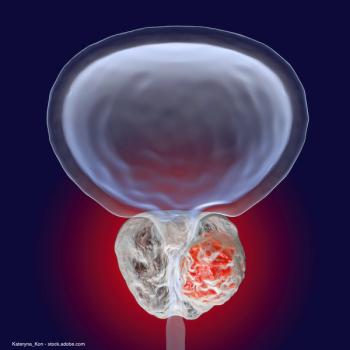
“The transperineal [prostate biopsy] approach is safer because the needles are passed through the perineal skin…so, we can sterilize that skin and if we enter through that passageway, we mitigate, if not eliminate, the risk of infection and sepsis,” says Matthew J. Allaway, MD.

“Transgender and gender-diverse people are at a higher risk of a multitude of mental health diagnoses, [which] really lends itself to a sensitive psycho-social history regardless of the specialty,” says David A. Klein, MD, MPH.
“The 3 major barriers we face [are] training, equipment, and reimbursement,” says Matthew A. Allaway, MD.

“The notable feature was that the bleeding risk is very small. In our particular group, it was less than 1%,” says Jai Seth, MD.

“This is an important form of providing health care, especially for people who have a lot of limitations in coming for in-person visits,” says Nitya E. Abraham, MD.

“From a clinician’s perspective…these medications and these diagnoses happen when there’s not enough care from the start,” says David A. Klein, MD, MPH.
“We found a majority of patients with televisits were satisfied, with many saying it was easy to schedule, easy to comfortably share sensitive information with their doctor, and with the most surprising [finding] being 80% saying they would choose it again over an in-person visit,” says Christina Shin, BA.

“In terms of patients having Botox, we have to be individualized to some extent where if you feel someone's at very high risk of bleeding…then maybe you will stop the blood thinners,” says Jai Seth, MD.
“Botox to [the] bladder has, in some ways, changed the paradigm of treatment for [overactive bladder],” says Jai Seth, MD.
“The MRI/ultrasound-guided transperineal approach allows easy access to anterior prostate tumors,” says Marc A. Bjurlin, DO, MSc, FACOS, in this video.

“[Patients] want to ensure that all of their episodes of UTIs are seen as a chronic condition that’s really debilitating in their life, and not just single episodes for which they need antibiotics,” says Victoria C. Scott, MD.