

“The message is to please consider kidney preservation for these patients with TA low-grade disease,” says Seth P. Lerner, MD.
“The message is to please consider kidney preservation for these patients with TA low-grade disease,” says Seth P. Lerner, MD.

J. Curtis Nickel, MD, FRCSC, discusses the origins of saw palmetto as an herbal therapy and how it was developed to treat lower urinary tract symptoms.

“This is an attempt to provide the clinicians with the most recent available data and evidence, and therefore, tell them how this particular imaging…may affect their decision making for the treatment and management of their patients,” says Hossein Jadvar, MD, PhD.

“I think this really now suggests that Rezum is a financially viable procedure across these different treatment settings…the reimbursement now is really quite favorable,” says David M. Albala, MD.
“Andrea and I lead this from [a] President/Vice President standpoint, but we also have a group of leaders from around the world, really representing all ethnicities, genders and others, because we wanted to make sure [that] we're inclusive, andmeet the needs and expectations of everybody,” says Philippe E. Spiess, MD, MS, FRCSC, FACS.
“The main question we were interested in answering was what the impact of future climate under different scenarios of climate change would have on the incidence of kidney stone disease, using South Carolina as a model state,” says Jason Kaufman.
“I think that these data firmly establish UGN-101, or Jelmyto, as a bona fide treatment option for kidney preservation for patients with low-grade, non-invasive urothelial cancer in the upper urinary tract,” says Seth P. Lerner, MD.
“PSMA is a very exciting development in the field of nuclear medicine,” says Hossein Jadvar, MD, PhD.

From a rambunctious kitten to a whole family of animals, we have some great guests on the latest episode of Uranimals, a video series featuring urologists and their pets.
“There is a rather extensive process of how to develop appropriate use criteria. It is primarily based on literature and evidence, systematic reviews, and analysis of those data,” says Hossein Jadvar, MD, PhD.
“Of the 42 patients who achieved a complete response, 41 of those were evaluable for duration of response, which was the focus of the manuscript that was just published last month,” says Seth P. Lerner, MD.
“I really foresee this becoming a very critical society in this area for many, many years to come,” says Philippe E. Spiess, MD, MS, FRCSC, FACS.

“Our case discussion for January 18 is going to be focused on a patient who initially has biochemically recurrent prostate cancer [and] progresses to metastatic disease,” says Veda N. Giri, MD.

“We need to understand what the treatment [means] to them as individuals, and how they perceive the benefit of the treatment,” says Cornelia Haag, Molkenteller, MD, PhD.

“This analysis of this publication confirms the link between efficacy and the patient perception, and that the results are actually meaningful to the patients as well,” says Cornelia Haag-Molkenteller, MD. PhD.

“I think in specialized cases, especially for patients [who] need focal therapy or want focal therapy, or [for whom] you're really trying to minimize any nerve damage or urethral damage…these are excellent therapies,” says Jennifer Linehan, MD.
“You can be 2 to 3 mm from another organ and still safely treat the tissue that you want to,” says Jennifer Linehan, MD.
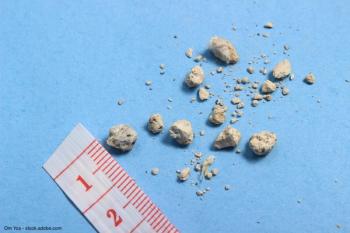
Investigators evaluated data from the Continuous National Health and Nutrition Examination Survey.
“Going into this study, we thought that potentially patients who had a stent placed with the string left in place were at higher risk of having a complication…But we found that they weren't at higher risk of a complication,” says Amy E. Krambeck, MD.
In a cohort of nearly 30,000 patients, more than half had cystoscopy-based stent removal within 6 months post ureteroscopy, investigators reported.

Welcome to another installment of Uranimals, our video series featuring urologists and their pets.
“I currently make regular use of a peripheral nerve block during PCNL…with the intent of, of limiting my patients exposure to and the need for opioids,” says Jared S. Winoker, MD.
“I think discussing it and talking about the different techniques out there [is important],” says Svetlana Avulova, MD.

“In addition to having a well-rounded urology residency experience, where you're gaining surgical exposure to all the different aspects of urology, I think it's really important to add on and delve into a fellowship in gender affirming surgery,” says Geolani Dy, MD.

“Physicians should take better care of their own personal needs [and] create some boundaries…for a more balanced life,” says William Lynes, MD.

“I believe we are getting to an era where we will be able to cure a significant subset of patients who we are not able to cure today,” says Neil H. Bander, MD.
“The decrease of frequency in doing these procedures may not put improving the techniques of the procedure at the forefront of the surgeon's mind,” says Svetlana Avulova, MD.
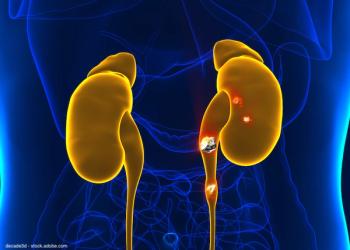
“[Kidney stones] really seems like something that we should be devoting significant resources and effort to trying to figure out the root causes and also better treatments and therapies for,” says Jonathan E. Shoag, MD.
“We should really try to adapt, know what we're doing to the specific patient based on their risk factors, prepare them appropriately, and understand that it's a dangerous complication. We should do everything we can to prevent it,” says Naeem Bhojani, MD, FRCSC.

“Take care of yourself, so we can take care of other people,” says Diana Londoño, MD.