
“We really need to listen to what people care about and speak to that,” says Shirley Lee, CRNP-FNP, MPH.
“We really need to listen to what people care about and speak to that,” says Shirley Lee, CRNP-FNP, MPH.

“We had fantastic completion of the study, and we were very pleased with the results,” says Samantha Pulliam, MD.

“We talked about patient buy in but family caregiver buy in is just as important, especially when we're talking about cancer,” says Shirley Lee, CRNP-FNP.

“We…just need to apply operational efficiencies that are utilized in other industries [to] health care,” says Shirley Lee, CRNP-FNP, MPH.

“Status quo EHR [and] status quo documenting [are] not going to give us the insights that we really need about how [patients are] doing now, and what are the opportunities we have to improve their care,” says Shirley Lee, CRNP-FNP, MPH.

“Clinically speaking, it really can harm patients to have gaps in both the data and their care,” says Shirley Lee, CRNP-FNP, MPH.

“If approved, tebipenem could provide a new oral treatment option for patients with cUTI who have limited or no alternative oral options," says Angela Talley, MD.

“I think we are good at treating the cancer but maybe not great at treating the patient as a whole. And that is an area that we can improve going forward based on research like this,” says Amy N. Luckenbaugh, MD.

In this conversation, Acacia Brush Perko, Esq, and Kenton H. Steele, Esq, discuss the qualities that comprise a good expert witness in a malpractice lawsuit.

“We kind of expected that treatment type wouldn't make a ton of difference in terms of…mental health outcomes after either surgery or radiation…but we were very clearly able to find groups of people who were at risk for poor mental health outcomes,” says Amy N. Luckenbaugh, MD.

“Oral tebipenem pivoxil hydrobromide and intravenous ertapenem had a similar safety and tolerability profile,” says Angela Talley, MD.
“I think it's important to look at our practice from the consumer standpoint and see what we look like to our patients,” says Polina X. Reyblat, MD.

“I think the take home message is not to take sacral neuromodulation off the table,” says Sarah Martin, DO.

“The take-home message is that there is a new form of lithotripsy,” says Jonathan D. Harper, MD.

“Patients need to understand that even if you tell them that you may be doing this as an ambulatory procedure, they may actually have to stay afterwards, depending on what you find in the operating room or what happens in the postoperative period,” says Michael A. Palese, MD.
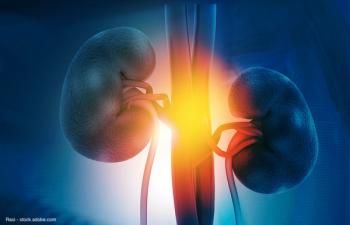
“We saw that this appears to be a safe treatment with very little bleeding,” says Jonathan D. Harper, MD.

“Of those patients that did the test phase 82% of them actually went on to full implants,” says Sarah Martin, DO.
“I think urology is inherently gendered,” says Polina X. Reyblat, MD.

“There are not enough male reproductive health specialists across the country at the present moment,” says Akanksha Mehta, MD, MS.
“One thing from our study that you can take home [is] no matter what the surgery is, small changes right after surgery can actually tell you more than we usually give them credit for,” says Sevag Demirjian, MD.
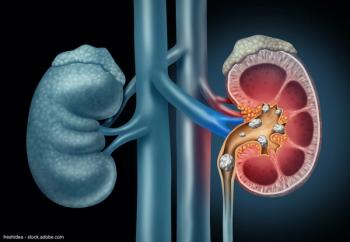
“The take home message would be that in patients with prior history of kidney stone episodes…receiving 24-hour urine testing prior to starting pharmacologic preventive therapy is associated with a lower probability of a subsequent stone-related event,” says Ryan Hsi, MD, FACS.

“[The prediction model] worked way better than we expected that it would work,” says Sevag Demirjian, MD.

“Botox has been a wonderful drug for many, many years,” says Min Dong, MD.

“I think the take home message is that [IsoPSA is] an easy test to use,” says Eric A. Klein, MD.
“I view OAB as a problem for many women that hasn't gotten the attention that it's needed over the decades,” says Alexandra Rogers, MD.

Abstracts highlight topics such as sacral neuromodulation and percutaneous tibial nerve stimulation.
The device is indicated for overactive bladder, chronic fecal incontinence, and non-obstructive urinary retention.

“The proportion of clinics that employ an onsite urologist, where the urologist is integrated into the flow of that clinic, is relatively small,” says Akanksha Mehta, MD, MS.

“I think that we keep getting better and better tools…[and] I think understanding how to utilize these tools will be a challenge in the future,” says David M. Schuster, MD, FACR.

“The idea is to develop strategies that reduce the likelihood of needing a biopsy or improving the sensitivity of the biopsy to find a high-grade cancer, one that's treatable,” says Eric A. Klein, MD.