
"After 6 months, about 77% of this group have more than 50% improvement on their main symptom," says John Heesakkers, MD, PhD.
"After 6 months, about 77% of this group have more than 50% improvement on their main symptom," says John Heesakkers, MD, PhD.
“I think there's a mindset out there that you have to have experienced a particular mental health crisis or some other major sort of breaking point event in your medical career. That's not actually my story,” says Colin P. West, MD, PhD.
“Remote supervision is something that we are utilizing now and look forward to even growing further,” says Lisa J. Finkelstein, DO, FACOS.

“I would classify hidden burdens as things which we don't appreciate on the surface, or that aren't obvious that are associated with erectile dysfunction,” says John J. Mulcahy, MD, PhD.
"The hazard ratio was 0.42, which is a 58% reduction of an MFS event in favor of the combination arm," says Neal D. Shore, MD, FACS.
The update was presented at the 2023 American Urological Association Annual Meeting in Chicago, Illinois.
"Among the 76 men–who had an average age of about 70 and a PSA value of 4.4–up to 99% of them were able to find recurrent cancers," says Brian Helfand, MD, PhD.
"What we noticed is that even though it's not in the NCCN guidelines, a lot of urologists are using oral Relugolix in combination with other prostate cancer medications in similar numbers to the injectables," says Jason M. Hafron, MD.
"We found that on average, [a] patient went into surgery with a GFR of about 55, and came out with a GFR of about 44," says Steven Campbell, MD, PhD.
"Overall, we found that Prostate Health Index above 55 preoperatively was associated with any incidental prostate cancer as well as clinically significant prostate cancer," says Eric Li, MD.

“For a lot of settings, a lot of patients, and in a lot of domains within urology, audio visits are equivalent in terms of satisfaction and outcomes to video visits,” says Kara L. Watts, MD.

"Not only do we lose patients and we lose this opportunity to actually take good care of them, but it actually undermines their trust in us as a profession," says A. Lenore Ackerman, MD, PhD.
“It's pretty apparent that if physicians are not going to be reimbursed properly for telehealth, they're not going to use utilize it,” says Lisa J. Finkelstein, DO, FACOS.
“Allowing the waiver to continue indefinitely would be a tremendous win for telehealth for both sides, the patients and the health care providers,” says Kara L. Watts, MD.

“In terms of next steps, we are collaborating with other institutions…to see how our model performs in their patient populations,” says Eric Li, MD.
"In the periods where BCG utilization dropped, we saw a concomitant increase in mitomycin C," says Brian Chun, MD.
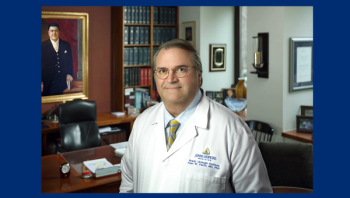
“He’s had just such a huge impact for me as a role model, a teacher, a wonderful support system, just such a kind-hearted person,” says Stacy Loeb, MD, MSc, PhD (hon).
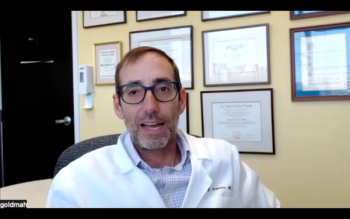
“Waiting for others to fix health care is not a good strategy. Instead, be determined to begin your journey to your mountaintop of joy and fulfillment,” says Scott A. MacDiarmid, MD, FRCPSC.
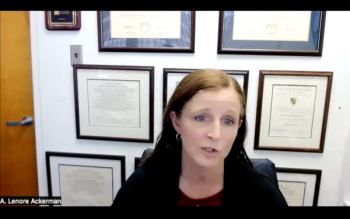
"Even just the process of getting that β3 agonist is going to cost them time and energy and effort that can be quite frustrating and take a lot out of you," says A. Lenore Ackerman, MD, PhD.
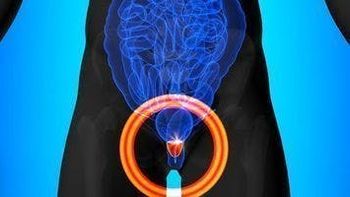
“We were actually quite pleased with how well our model performed, particularly in the independent cohort that was separate from our training cohort,” says Eric Li, MD.
"We are optimistic about this study, because it has the potential not just only for vesicovaginal fistula treatment, but it can be also used in the treatment of burns for other fistula types," says Ilaha Isali, MD.
Chandler Park, MD, discusses lessons from the ARASENS and TITAN trials on the use of triplet vs doublet therapy in patients with metastatic hormone-sensitive prostate cancer.

“The first thing I'd say is that we know these devices are safe,” says Colin Goudelocke, MD.
“I think clinicians can really take away that we have more work to be done in this space of evaluating patients with microhematuria, specifically when it comes to looking at assessments of upper tract urothelial carcinoma or renal cell carcinoma,” says Jacob Taylor, MD, MPH.

“We want to minimize our negative biopsies and diagnosis of grade group 1 cancers,” says Rashid Siddiqui, MD.

“I would say that these conditions are highly heterogeneous, and we've identified a number of factors that relate to different ways that the disease progresses and different ways that patients feel about the progression of their disease,” says Alisa J. Stephens-Shields, PhD.
“We might find that there's a certain type of patient that really thrives on interacting with the device and playing an active role in his or her therapy,” says Colin Goudelocke, MD.
“What we need now are biomarkers to know if the medication is going to work or not,” says Park.

"Understanding work productivity and activity impairment in the context of the treatment decisions are vital, not just for the provider who has to counsel on treatment benefits and risks, but also to the patient who's making the ultimate decision," says Angela Smith, MD, MS.