
Rana R. McKay, MD, FASCO, shares results from the ARASEC study, which evaluated darolutamide plus ADT in mHSPC using a novel external control-arm design.
Rana R. McKay, MD, FASCO, shares results from the ARASEC study, which evaluated darolutamide plus ADT in mHSPC using a novel external control-arm design.
In this video, recorded at the 2026 American Urological Association Annual Meeting in Washington, DC, Murilo De Almeida Luz, MD, gives an overview of the DAROL study design and key findings.

The phase 1/2 ResQ133A-NMIBC trial (NCT06800963) is evaluating intravesical recombinant BCG in patients with BCG-naïve high-risk NMIBC across US sites, with safety as the primary end point and complete response and disease-free survival as secondary end points, building on European data showing 50% response rates and no dose-limiting toxicities in BCG-unresponsive disease.
Michael S. Cookson, MD, MMHC, FACS, unpacks the significance of the phase 2 ARASEC trial evaluating darolutamide in mHSPC.

The INTIBIA Pivotal Study—the first sham-controlled, double-blind RCT of an implantable tibial nerve stimulation device—demonstrated significantly greater clinically meaningful improvements in symptom bother, health-related quality of life, and patient global impression at 3 months compared with sham, with durable benefits through 12 months.
Chad A. Reichard, MD, highlights real-world data presented at AUA 2026 on re-induction with nadofaragene firadenovec in patients with BCG-unresponsive non–muscle-invasive bladder cancer.
ARASEC provides US-based, contemporary evidence supporting darolutamide plus ADT in metastatic hormone-sensitive prostate cancer, demonstrating a 71% reduction in prostate cancer-specific mortality compared with a historical ADT control—while its use of propensity score matching with an external phase 3 control arm represents a novel trial design that may inform future studies in rapidly evolving treatment landscapes.
Health services research at UNC is informing community-based outreach efforts in prostate cancer—including engagement with HBCUs and patient groups across North Carolina—by centering patient and community perspectives to identify and address the barriers that prevent evidence-based care from reaching those who need it most.
A real-world analysis found that PSADT was undocumented in most patients with high-risk biochemical recurrence of prostate cancer, potentially delaying treatment initiation and underestimating progression risk.

Krishnan discusses how prolapse stage, patient lifestyle, and nuanced mesh counseling inform individualized decision-making around robotic sacrocolpopexy vs vaginal reconstructive repair.
The 2026 AUA Annual Meeting will feature significant bladder cancer data, a plenary lecture on screening and overdetection, and programming that integrates advanced practice providers across sessions, against a backdrop of AUA-driven policy wins including removal of the vaginal estrogen black box warning and early steps toward a federal Office of Men's Health.

Isaac Y. Kim, MD, PhD, MBA, reflects on concerning trends in prostate cancer mortality, emphasizing how advances in diagnostics, treatment, and artificial intelligence may improve outcomes in the future.

Yeonsoo Sara Lee, MD, highlights the key networking and education opportunities she's most looking forward to at AUA 2026.

In the final installment of this 4-part series, Ravi D. Chauhan, MD, FACS, and R. Jonathan Henderson, MD, discuss the clinical value of enhanced cystoscopic imaging technologies and the operational barriers that may limit broader adoption in NMIBC care.
In part 3 of this 4-part series, Ravi D. Chauhan, MD, FACS, and R. Jonathan Henderson, MD, discuss practical strategies for communicating with pathologists when CIS is not clearly addressed in NMIBC pathology reports.
In part 2 of this 4-part series, Ravi D. Chauhan, MD, FACS, and R. Jonathan Henderson, MD, examine how collaboration among urologists and pathologists, along with renewed attention to bladder mapping techniques, may improve CIS detection in NMIBC.
In this opening segment, Ravi D. Chauhan, MD, FACS, and R. Jonathan Henderson, MD, discuss how underreporting of CIS in pathology reports may limit access to guideline-supported therapies for patients with NMIBC.

Charles R. Powell, MD, highlights 12-month data on the Neuspera System for urge urinary incontinence, reflecting on ideal candidates and the treatment's role alongside other SNM options.
Martin Gleave, MD, FRCSC, FACS, explains how the adaptive, biomarker-driven GUNS trial uses neoadjuvant therapy to link genomic subtypes with treatment response.

Advances in laser technology, morcellator design, and anesthetic approach have substantially improved HoLEP efficiency and patient recovery over the past decade, while surgeon-owned procedural checklists and pre-morcellation hemostasis remain the most critical safety practices for avoiding morcellator injury.

Jennifer U. Miles-Thomas, MD, MBA, reflects on the key pillars to building successful surgeon/advanced practice providers partnerships.
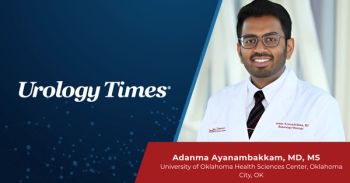
In the FIT-001 trial, the combination of darlifarnib and cabozantinib demonstrated promising early antitumor activity in patients with ccRCC who had previously progressed on cabozantinib.

Song Jiang, MD, discusses evolving biomarker approaches that may redefine care in NMIBC.
Song Jiang, MD, PhD, discusses the balance between efficacy and safety data when considering the role for BCG/ICI combinations in BCG-naive NMIBC.
Charles R. Powell, MD, discusses how the rise of GLP-1–associated weight loss may influence outcomes and device management in sacral neuromodulation.
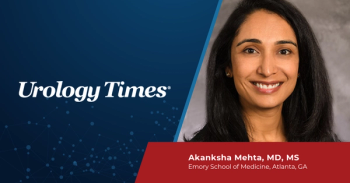
Akanksha Mehta, MD, MS, discusses why the updated vasectomy guideline expands its focus on fertility restoration, emphasizing patient counseling on reversal and individualized decision-making for future family building.
Adanma Ayanambakkam, MD, MS, discusses the FIT-001 trial and early findings on the safety profile for darlifarnib plus cabozantinib in ccRCC.

Helen L. Bernie, DO, MPH, discusses how expanded TRT labeling could improve care for men with idiopathic hypogonadism.
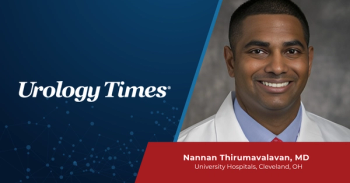
Nannan Thirumavalavan, MD, reflects on how the FDA’s testosterone labeling changes, informed by the TRAVERSE trial, have influenced TRT prescribing and clinician confidence over the past year.

Daniel J. George, MD, highlights survey findings on the role of caregivers in the treatment journey for patients with metastatic prostate cancer.