Now Playing
Health services research at UNC is informing community-based outreach efforts in prostate cancer—including engagement with HBCUs and patient groups across North Carolina—by centering patient and community perspectives to identify and address the barriers that prevent evidence-based care from reaching those who need it most.
Clinical trials establish what works in
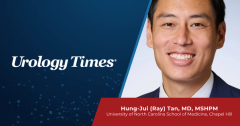
Tan, speaking with Urology Times at the 2026 AUA Annual Meeting in Washington, DC, described health services research as a discipline oriented around the gap between evidence and delivery.
"Clinical trials tell us what are the procedures, tests, and interventions that can really provide the most benefit to patients," he said. "What health services research does is tell us how we deliver that care to patients." Identifying where those delivery gaps exist is a traditional function of the field, but Tan emphasized that the most valuable work goes further—centering the perspectives of patients and communities to understand the specific barriers that prevent optimal care from reaching them.
That orientation has shaped UNC's approach to prostate cancer outreach across North Carolina. Through a dedicated men's health program supported by philanthropy, the division has been able to engage directly with community groups across the state rather than waiting for patients to navigate their way to an academic medical center.
"A lot of times when you're coming from an academic institution, you have sort of one lens that you're viewing through," Tan said. "To be able to see the issue from different perspectives provides a lot of value."
Recent outreach efforts have included engagement with historically Black colleges and universities—an important focus given the disproportionate burden of prostate cancer among Black men, who face higher incidence and mortality rates than any other demographic group in the United States. Tan framed these partnerships not only as educational opportunities but as channels for implementing change.
"It provides outlets where you can actually implement change—really trying to reduce the burden overall for the state," he said.
The community engagement work also surfaces something that aggregate data cannot: what patients and communities actually understand about cancer screening, what misconceptions exist, and what structural or social factors prevent meaningful shared decision-making during clinical encounters.
"It's really eye opening to hear their perspectives and to understand where they're coming from—what their perception of cancers are and what's preventing them from getting cancer screening, what's preventing them from really having a good quality decision with the person that they're seeing," Tan said.
The goal, he emphasized, is to close the distance between what the evidence recommends and what patients actually experience.
"Health services research will allow us to go from not just what the ideal is, but actually get real care to be closer to that."