
"We have more younger members here at the annual meeting than we've ever had before. We want to make that a priority," says Evan R. Goldfischer, MD, MBA, FACS.
"We have more younger members here at the annual meeting than we've ever had before. We want to make that a priority," says Evan R. Goldfischer, MD, MBA, FACS.

“Don't make assumptions about any patients,” says Diana K. Bowen, MD.

Webster also shares his advice for young urologists entering community practice.
"We're seeing that it's beneficial to the patient—it’s easier, they don't require a general anesthetic, and we don't have to bring him to the hospital," says Dr. Hafron.

“The bar is high; we want to be curing these patients, not just delaying a recurrence of their cancer,” says Arlene O. Siefker-Radtke, MD.

"What we know for sure is [PSMA-PET is] just simply better imaging in terms of accuracy," says Ashley Ross, MD, PhD.

“We have to separate the need for germline testing and somatic testing,” explains Emmanuel S. Antonarakis, MD.

“What’s important is that we get these studies approved so that our patients aren’t suffering any further economic burdens by having this new type of imaging being put forward,” says David Albala, MD.

“There’s a lot of clinical utility to genetic testing, and there are familial implications and clinical trial implications,” explains Neal Shore, MD.

“The association between CKD and end-stage renal failure and increasing risk of kidney cancer is a really striking and important association to be aware of,” says Sarah P. Psutka, MD, MS.
A focused discussion on prostate-specific membrane antigen (PSMA) as a target for imaging and treatment for patients with prostate cancer.

“We do know that for these specific racial minorities, more time and more tools need to be invested in order to have both the rates of PSA discussion and PSA testing equal to those that White men have,” says Hanan Goldberg, MD, MSc.

Expert panelists review risk stratification strategies for patients with prostate cancer and summarize the evolving use of conventional versus newer imaging modalities for diagnosis, treatment selection, and monitoring of these patients.
“The takeaway is that sacral neuromodulation works well for men with overactive bladder and fecal incontinence, but perhaps less well for pelvic pain. We should see it as one of many multimodal treatments that we could offer for men with chronic pelvic pain,” says Dr. Elterman.

“You can't just have all or none treatments. You've got to have a middle ground for people who are going to look for that,” says John R. Valvo, MD.

“Cigarette smoking and continued smoking exposes patients [with bladder cancer] to a lot of continued risk, and I don't think we're doing our job as a doctor by ignoring this critical part of counseling and education,” says Dr. Matulewicz.

“It didn't happen overnight. The way we built the program was an iterative process,” says Shubham Gupta, MD.
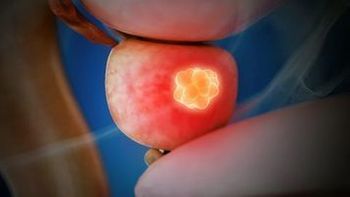
“What was found in the sub stratification study was that overall survival favored the addition of darolutamide to ADT and docetaxel in all stratification subgroups,” says Ronald Tutrone, MD, FACS, CPI.
“This equation that is true for White men, where more discussion leads to more PSA testing, did not hold for racial minorities,” says Hanan Goldberg, MD, MSc.

“We really need to understand patient selection and treatment sequencing,” says Rana McKay, MD.

“The biggest finding is that we are seeing a steady increase in women representation in the field of urology,” says Teresa L. Danforth, MD.

“With this study, we gained a better understanding of the features of third line therapy for overactive bladder, that patients find favorable and unfavorable,” says Anjali Kapur, MD.
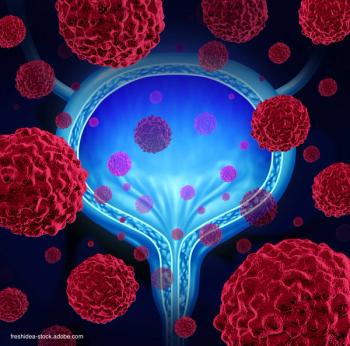
“We used this study as a first step in understanding at a baseline what patients with non–muscle-invasive bladder cancer thought and what they believe to be risk factors for their bladder cancer,” says Richard S. Matulewicz, MD, MSCI.

“So yes, these transperineal biopsies are more painful right in the moment, but immediately following that, these patients are comfortable," says John Myrga, MD.

“The short-term goals are really community building [and] relationship building,” says Randy Vince Jr, MD.
Rana McKay, MD, says that given the frontline shift from anti-VEGF monotherapy to immunotherapy doublets for advanced renal cell carcinoma, many of the studies informing the second-line setting have become “somewhat antiquated.”

“What we found from that was the sepsis rate was about 5%... Putting that in perspective, it's about 1 out of every 20 patients that will get this complication,” says Dr. Chew.
“I think anecdotally speaking there have been a lot of practices and states corroborating our results,” says Rutul Patel, DO, MS.
Rana McKay, MD, says the CheckMate-214, KEYNOTE-426, CheckMate-9ER, and CLEAR trials have revolutionized the first-line treatment paradigm in advanced renal cell carcinoma.

“We wanted to help provide an understanding of what factors guide patient choice of third line therapy for overactive bladder,” says Anjali Kapur, MD.