
“Every year, we see our reimbursements go down. Every year, there seem to be some sort of patch,” says Jonathan Rubenstein, MD.
“Every year, we see our reimbursements go down. Every year, there seem to be some sort of patch,” says Jonathan Rubenstein, MD.
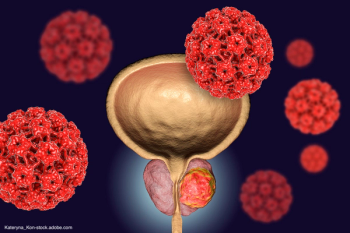
“There are a slew of ongoing trials looking at 177Lu-PSMA-617 in earlier stages of disease,” says Praful Ravi, MB, BChir, MRCP.
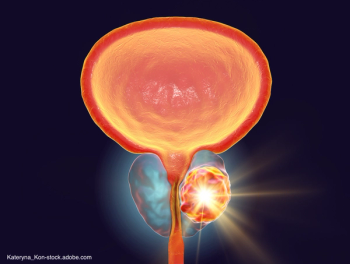
“We have to remember that this is not a cure for prostate cancer…right now, it is another tool in the toolbox,” says Praful Ravi, MB, BChir, MRCP.

“We found many factors in urology that were associated with the inability to follow through with a video visit,” says Kevin Shee, MD, PhD.
Slovin says what’s interesting about the CAR-T platform she’s been exploring is that “we see pretty exquisite sensitivity to the cancer cells.”

"[Low-grade prostate cancer] is a really interesting field right now," says Kevin Shee, MD, PhD.
“The takeaway from that talk was that it's critically important to review drug plan options, particularly if the patient's on a high-cost drug,” says Kelly L. Stratton, MD, FACS.

“The idea of generally screening everyone right now is not only costly, but it's not recognizing the fact that this comes with a lot of limitations,” says Mark A. Moyad, MD, MPH.

Ashley E. Ross, MD, PhD, provides an overview of his institution’s new protocol for this subset of patients.
“[The 2022 Huggins Medal Lecture from Harry Herr, MD] was a fascinating talk, and something that I think anyone could learn from,” says Kelly L. Stratton, MD, FACS.
“It was vitamin E and selenium in 2011-2012. There was a lot of hype about it. People were very excited. They lost their excitement in urology about it, but then along came vitamin D,” says Mark A. Moyad, MD, MPH.

“I think [it was a] great opportunity to catch up on what is going on with PSMA-PET and theranostics and then also understand that that landscape will change over the near future,” says Kelly L. Stratton, MD, FACS.

“It really was a multidisciplinary effort to pull the data together [and] provide the clinical implications [of] the genetic markers,” says Veda N. Giri, MD.
“It's very interesting to see how this continues to progress as a field,” says Kelly L. Stratton, MD FACS.

“Clinicians should do whatever they're able to try to limit or reduce the need for an intraoperative transfusion,” says Timothy D. Lyon, MD, FACS.
“The bulk of what we’re all grappling with are these new data for combining PARP inhibitors with androgen receptor–targeted agents in molecularly unselected populations,” says Tanya Dorff, MD.

“Major bladder reconstructive surgeries have the most room for improvement, particularly surgeries involving a bowel anastomosis,” says Sarah Hecht, MD.
“As people think about how we can do stone surgery more effectively, less morbidly for our patients, and less invasively, I think we're going to see robots enter our picture,” says Thomas Chi, MD.

“We need to be focusing our efforts on early exposure to the field for women and underrepresented groups,” says Bridget Lang Findlay, MD.

“It's important to put out information that's both accurate and helps to supplement in-office decision making in an outpatient setting,” says Daniel Bockelman.

Laura Bukavina, MD, MPH, discusses a highlight from the 2022 Society of Urologic Oncology Annual Meeting.
“We've got a lot of movement in terms of understanding how stones form, some pharmaceutical interventions that we can use to prevent stones, and then how we can get even less invasive to try to get stones in the least morbid way for our patients,” says Thomas Chi, MD.

Dr Gershman summarizes recent imaging advances and remaining unmet needs for patients with prostate cancer, and envisions how the use of artificial intelligence may impact the field in the future.
A practical approach to how urologists might best communicate with radiologists and other clinicians regarding mpMRI results for patients with prostate cancer, with an emphasis on optimizing patient care.

“Perspectives on testosterone therapy and its use as it pertains to prostate cancer have certainly progressed over [the] years,” Diana Magee, MD, MPH, MSc.
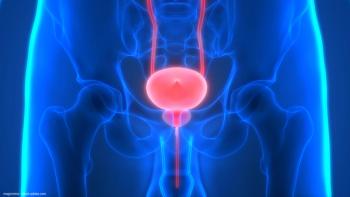
Laura Bukavina, MD, MPH, summarizes a presentation from the 2022 Society of Urologic Oncology Annual Meeting from Sarah P. Psutka, MD, MS.

Dr Andriole shares remaining unmet needs in prostate cancer risk assessment and shares his hopes for the future.
An expert urologist summarizes the available CV and CU data for the various pre-biopsy biomarker test options, and opines on how use of these tests might impact patient risk stratification, subsequent management, and/or health outcomes.

“It’s important for us to get the tools necessary to deal with patients who come with a unique set of difficulties,” says Laura Bukavina, MD, MPH.

“I just hope that people are as enthusiastic about this new company, as [I] and my coauthors are,” says Ruchika Talwar, MD.