
Richard Harris, MD, FACS, provides pointers for young physicians just starting out in the field.
Richard Harris, MD, FACS, provides pointers for young physicians just starting out in the field.

Expert urologist Boris Gershman, MD shares his approach to prostate cancer diagnosis, staging, and risk stratification, highlighting the increasing use of advanced imaging modalities in recent years.

Gerald Andriole, MD presents a historical perspective on risk assessment workflow in patients suspected of having prostate cancer, and discusses how pre-biopsy biomarker tests can address clinical challenges and unmet needs.
“One of the things that drives me to be a part of advanced prostate cancer care is that literally every 6 months, we are having major trials read out guideline-based changes in care,” says Jason Hafron, MD.

“This is a huge topic within all academic medicine right now, whether it’s urology or otherwise,” says Moben Mirza, MD, FACS.

“Ultimately it really does come down to the discussion with the patient,” says Bradley McGregor, MD.

“In terms of both numbers of centers [administering radionuclides] as well as the amount of drug that’s available, [both] are going to increase over the next several months and certainly, year,” says Scott T. Tagawa, MD, MS, FACP.
Panelists review the recent FDA approval of the PSMA-targeted therapy Lutetium Lu 177 vipivotide tetraxetan for patients with metastatic castration-resistant prostate cancer and discuss additional settings in which it, and other PSMA-targeted treatments, might be used in the future.

Drs Albala, Andriole, Ross, and Ulaner sum up recent advances and remaining unmet needs in the field of prostate cancer imaging and share hopes for the future.

“At this time, there are at least 2 classes of therapeutic agents which are used for patients with certain germline or somatic genetic mutations,” says Emmanuel S. Antonarakis, MD.
HIF-2α inhibitors, such as belzutifan (Welireg), are a promising new class of agents emerging in the renal cell carcinoma treatment paradigm, explains Eric Jonasch, MD.

“It's a really simple tool to predict your out-of-pocket costs,” says Benjamin Pockros, MD, MBA, of Medicare Plan Finder.

“Many urologists in large group practices are doing genetic testing, especially for their high-risk patients,” says Emmanuel S. Antonarakis, MD.
177Lu-PSMA-617 is approved for the treatment of patients with PSMA-positive metastatic castration-resistant prostate cancer in the post androgen receptor pathway inhibition, post taxane-based chemotherapy setting.

Emerging research includes combining radionuclides with other agents and exploring novel approaches to targeting PSMA, such as antibodies.

Moben Mirza, MD, FACS, discusses the need to move toward an optimal number of urology residency applications for both the individual applicants and the residency programs.
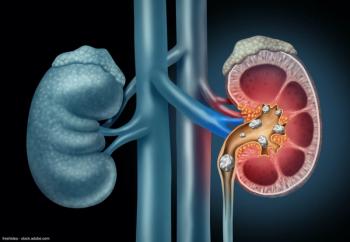
“We were able to develop a machine learning model that had decent accuracy…in predicting which patients would have an additional stone event and which patients wouldn't,” says Kevin Shee, MD, PhD.

Bipolar androgen therapy is being explored in trials with enzalutamide (Xtandi), olaparib (Lynparza), and nivolumab (Opdivo), explains Laura Sena MD, PhD.

“Stereotactic radiation can delay the initiation of systemic therapy; it can locally control oligometastatic RCC patients for as much as 2 years,” says Raquibul Hannan, MD, PhD.
“Prostate cancer is…a BRCA-linked cancer, so we can increase the messaging surrounding prostate cancer on social media platforms, we can increase the amount of awareness on the genetic link that exists with prostate cancer, so that patients are also more empowered to bring this up with their providers,” says Sameer Thakker, MD.

Thought leaders discuss the possibility of using artificial intelligence to help interpret PSMA-PET results.

Panelists discuss how they typically document prostate cancer patient eligibility when ordering PSMA-PET imaging, and share strategies to optimize insurance coverage and reimbursement.

Matthew Galsky, MD, discusses the discordant results of the pivotal phase 3 CheckMate-274 and IMvigor010 trials of adjuvant immunotherapy in urothelial cancer.

Raquibul Hannan, MD, PhD, describes patients with renal cell carcinoma who may be appropriate for treatment with stereotactic radiotherapy.
“This is different from other standard-of-care therapies for prostate cancer because usually we are inhibiting androgen receptor (AR) activity and here we’re actually stimulating AR,” explained Laura Anne Sena, MD, PhD.
“In the adjuvant setting, we have a ‘double biomarker problem.’ Not only don’t we know which drugs work best in which patients, we actually don’t even know which patients need additional systemic treatment because many patients are already cured with surgery,” says Matthew Galsky, MD.

“This is the perfect situation for the development of biomarkers to inform [patient selection for] adjuvant treatment with immune checkpoint blockade,” says Matthew Galsky, MD.

“What we found is that the use of these drugs and novel hormonal therapies and chemotherapy in the metastatic castration-sensitive setting was relatively low,” said Stephen J. Freedland, MD.

"In Arkansas, for example, we now have half the urologists that there were 25 years ago, and that's with an increasing population. That's a representation of what's going on across the country," says R. Jonathan Henderson, MD.

“It was overall received very positively by applicants and programs,” says Moben Mirza MD.