

Explore the role of biopsies in managing ccRCC, especially in elderly patients, to optimize treatment decisions and preserve kidney function.
Explore the role of biopsies in managing ccRCC, especially in elderly patients, to optimize treatment decisions and preserve kidney function.

New analysis reveals promising outcomes for black men with mHSPC, showing comparable survival rates and significant PSA suppression in treatment responses.

“What [we] found was that those men who received a penile implant had a significant reduction in depression and psychological distress," says Mohit Khera, MD, MBA, MPH.

In this video, part 4 of a 4-part series, panelists discuss how primary care providers can address patient questions on prostate cancer screening.

"Patients are having a hard time getting diagnosed because physicians are leaving medical training and medical education without getting this solid curriculum around female sexual dysfunction," says Maria Uloko, MD.
In this video, part 3 of a 4-part series, panelists discuss treatment planning for prostate cancer, particularly in older patients.
In this video, part 2 of a 4-part series, panelists discuss the increasing prevalence of de novo metastatic hormone-sensitive prostate cancer.
In this video, part 1 of a 4-part series, panelists discuss the nuances and challenges of prostate cancer screening.

Panelists discuss how they approach a typical bladder cancer case of a 79-year-old man with hematuria, including initial diagnostic procedures, the importance of proper tumor measurement during resection, BCG therapy protocols, and management options for BCG-unresponsive disease with a focus on nadofaragene firadenovec (Adstiladrin).
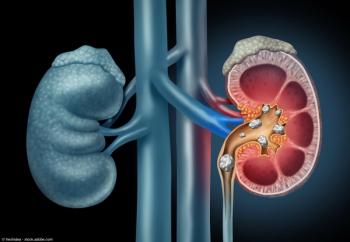
Jared S. Winoker, MD, addresses the wide range of stone burdens treated by the CVAC system for the study.

Panelists discuss how pembrolizumab, a PD-1 inhibitor, offers a systemic immunotherapy option for high-risk, BCG-unresponsive non–muscle-invasive bladder cancer (NMIBC) by enhancing the immune system’s ability to target cancer cells, with intravenous administration and careful monitoring for immune-related adverse effects.

Paul E. Dato, MD, discusses how a 63-year-old Black man with recurrent hormone-sensitive prostate cancer (HSPC) presented with high-grade disease and multiple metastases after initial prostatectomy, requiring accurate staging and comprehensive treatment planning.
Paul E. Dato, MD, discusses how patient-specific factors such as age, tumor volume, comorbidities, and treatment adherence are critical for therapy selection, emphasizing the importance of assessing frailty rather than age alone and the value of multidisciplinary care.
Panelists discuss how recently FDA-approved therapies, including nadofaragene firadenovec, gemcitabine, and docetaxel, offer alternative treatment options for BCG-unresponsive high-risk non–muscle-invasive bladder cancer (NMIBC), each with distinct mechanisms and administration methods.

A prostate cancer expert breaks down likelihood of a diagnosis of metastatic prostate cancer and touches on available treatment options.

The AI tool outperformed MRI in assessing for SVI.

Karyn S. Eilber, MD, discusses treatment of genitourinary syndrome of menopause.
The risk of stricture formation was 4.6% in the TFL cohort vs 2.4% in the holmium laser cohort.

According to Adam B. Weiner, MD, a urologist at Cedars-Sinai Medical Center, men should begin prostate cancer screening around ages 50 to 55.

"There was a significant increase in overall fatigue after performing flexible ureteroscopy," says Sarah Razavi, MD.

Research reveals that lower PSA levels in metastatic hormone-sensitive prostate cancer significantly delay disease progression and improve patient outcomes.
Explore treatment options for small renal masses, including surveillance, surgery, and biopsy, while understanding the role of ccRCC PET in diagnosis.
Explore the latest advancements in metastatic hormone-sensitive prostate cancer treatment, highlighting effective agents and clinical trial outcomes.
Explore the strengths and weaknesses of imaging modalities like CT, MRI, and ultrasound in diagnosing ccRCC and enhancing patient care.

Panelist discusses how hospitals benefit from adopting aqua ablation therapy by improving surgical efficiency, reducing turnover times, enabling outpatient procedures, and providing a highly effective treatment option that can enhance patient outcomes while preserving sexual function.
Explore the critical underrepresentation of black men in metastatic hormone sensitive prostate cancer trials and its implications for treatment outcomes.
Research highlights the significant benefits of achieving ultra-low PSA levels in metastatic hormone-sensitive prostate cancer, delaying disease progression effectively.

“I think it does give us confidence that clinical trials can predict how these drugs will work in the real world," says Stephen J. Freedland, MD.
Panelists discuss how non–muscle-invasive bladder cancer (NMIBC) is staged, graded, and treated according to risk stratification, with detailed explanations of low-, intermediate-, and high-risk categories and corresponding treatment pathways.
“The key finding is [that] this might be, in itself, a novel risk factor for bladder cancer," says Laura E. Davis, MD.