

"I think that it's so important right now to really, really stand as your own brand and really, really have a cultivated patient population that you're after," says Gia Ching.
"I think that it's so important right now to really, really stand as your own brand and really, really have a cultivated patient population that you're after," says Gia Ching.

A panelist discusses how recent advances in transurethral resection of bladder tumor (TURBT) include enhanced visualization techniques like fluorescence-guided surgery and narrow-band imaging to improve tumor detection and complete resection, while radical cystectomy remains a critical option for high-risk NMIBC patients who fail conservative therapies.

“There's state advocacy work groups and other public policy work groups where folks can remain involved and keep pushing to improve the delivery of health care,” says Juan J. Andino, MD, MBA.
“This is another therapeutic that adds to UroGen [profile] as a potential treatment that could be used to preserve kidneys while treating low grade upper tract urothelial carcinoma going forward,” says Sarah P. Psutka, MD, MSc.

"We are now in the golden era of BPH/BPO for both diagnostics and therapeutics," says Wayne Kuang, MD.

Katie S. Murray, DO, offers advice to urologists considering the adoption of newer treatment modalities for BCG-unresponsive non–muscle-invasive bladder cancer (NMIBC), encouraging them to integrate these therapies into practice in light of the positive clinical trial data while emphasizing the potential for improved patient outcomes and the importance of staying informed about evolving treatment options.

“Women not only tend to present with more aggressive disease, but they also have a higher probability of having what we call variant histology, so non-urothelial carcinoma,” says Ava Saidian, MD.

As the year comes to a close, we revisit some of this year’s top video content from Urology Times.

“These types of technologies can really make office urology much more efficient, which I think is very, very promising and one of the most promising areas in artificial intelligence,” says Chad Ellimoottil, MD, MS.
"We're asking the bladder to come have a seat and to give voice to surgical choice," says Wayne Kuang, MD.
"There's a number of emerging modalities in the primary focal ablation space that are in trial at this time," says Kara L. Watts, MD.

Panelists discuss how the management of metastatic castration-resistant prostate cancer with a homologous recombination repair (HRR) alteration involves targeted therapies, such as PARP inhibitors, to exploit the genetic vulnerability and improve treatment response.
Katie S. Murray, DO, discusses the promising clinical trial data showing that over 50% of patients with BCG-unresponsive non–muscle-invasive bladder cancer (NMIBC) experience a complete response after 3 months of treatment, comparing these outcomes with her own clinical experience, and highlights the importance of long-term follow-up to assess the durability of response in patients receiving newer therapies.
"We're excited about the science behind it, but we're also excited for our patients that if they can have access to this, maybe we can delay or completely avoid radical cystectomy or further aggressive treatments," says Shreyas S. Joshi, MD, MPH.

A panelist discusses how identifying intermediate-risk patients, managing disease heterogeneity in non–muscle-invasive bladder cancer, and addressing long-term care needs present key challenges in patient care while highlighting recent treatment advances that offer promising solutions.
Dr. De La Cerda provides an overview of a patient case involving a 68 year-old male presenting with severe back pain, with an analysis of the clinical presentation, workup, and medical history.

“I think there's a lot to be done and combination therapies, other drugs that can be instilled into this device. It's a bright future,” says Siamak Daneshmand, MD.
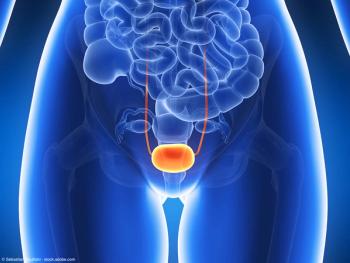
"We're trying to be the coach to our patients," says Wayne Kuang, MD.

“In some ways, it can be used to help if you want to get a biopsy to prove or confirm—it can be used to help detect in that range, too,” says Michael S. Cookson, MD, MMHC, FACS.

“In that randomized trial, we have level 1 evidence showing that patients have less pain and faster return of bowel function when you work at low pressure,” says Ronney Abaza, MD.
"There are only 2 major organs you can't transplant: the brain and the bladder. So let's take care of the bladder," says Wayne Kuang, MD.

“Some of the main implications for urologists is that the risk adapted utilization of BCG, which has been implemented as guidelines, should continue,” says Madison M. Wahlen.
A panelist discusses how Non-muscle Invasive Bladder Cancer (NMIBC) treatment varies by risk stratification (low, intermediate, and high-risk), with BCG immunotherapy being standard for high-risk patients, while newer options like pembrolizumab and gene therapies are emerging for BCG-unresponsive cases, and treatment decisions between intravesical versus systemic therapy depend on risk level and previous treatment response.
“The other aspects of the waivers and the things that remain in flux and are not fully fleshed out are going to be things like interstate telehealth,” says Juan J. Andino, MD, MBA.

"What's unique about our conference is the focus is not on just showcasing what our institute has to offer; the real focus is on networking and collaborating with the top institutes in the nation," says Raveen Syan, MD, FPMRS.

"The main benefit, I guess, for Aquablation over TURP, is the fact that the sexual side effects are much better when compared to TURP," says Mohamad Baker Berjaoui, MD.

“We really want to understand whether by using this beta emitter, together with the combination of cabazantinib and the nivolumab, we're getting better outcomes than we would expect with the doublet alone,” says Eric Jonasch, MD.

Chad Ellimoottil, MD, MS, details specific concerns surrounding the future of telehealth as Congress weighs the decision to extend flexibilities.
“What we've been working on is a giant 30,000 patient database study using the National Cancer Database to see exactly what the rates are of upstaging and downstaging for these larger kidney tumors,” says Taylor Goodstein, MD.