

Pastuszak discusses the evolving nature of understanding how testosterone therapy post-radiation for prostate cancer may beneficial or harmful to patients, and how to navigate the decision.
Pastuszak discusses the evolving nature of understanding how testosterone therapy post-radiation for prostate cancer may beneficial or harmful to patients, and how to navigate the decision.

Soumyajit Roy, MS, MBBS, explains how findings showing 5-year biochemical recurrence status may predict prostate cancer cure should alter the clinician-patient interaction.
Zaorsky discusses the patient safety misconceptions around radiotherapy for RCC, and considering patient-reported outcomes in future randomized controlled trials.

Findings from RAPTOR suggest 5-year biochemical recurrence may be a good indication of prostate cancer cure status.
Zaorsky discusses his team's ASTRO 2024 abstract showing clear benefit of radiotherapy and ablation in reduced kidney effects in patients with RCC.

"Patient-reported satisfaction scores were high for both telehealth and inpatient visits for both new and established encounters," says Daniel Carson, MD, MS.
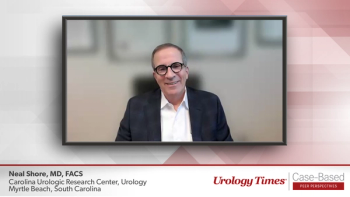
Neal Shore, MD, FACS, discusses the progress of a 65-year-old patient with mCRPC through various treatments and evaluation for Lutetium-177 therapy based on his PSMA PET scan and MRI.
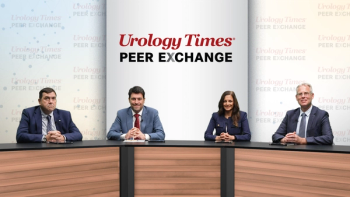
Panelists discuss how standard treatment options for non–muscle-invasive bladder cancer (NMIBC) include BCG therapy, exploring its mechanism of action in enhancing the immune response while also examining management strategies for intermediate and high-risk patients, optimal outcomes with single-agent BCG, and the discrepancies between observed rates of recurrence and progression in clinical practice and reported data.
Panelists discuss how non–muscle-invasive bladder cancer (NMIBC) presents with specific symptoms and diagnostic procedures, emphasize the significant economic burden on health care systems, and highlight key risk factors like smoking and occupational exposure while also addressing the critical importance of accurate staging for guiding treatment decisions and the potential consequences of incorrect staging on patient outcomes.

The panelist discusses how incorporating chemotherapy into combination treatments for metastatic prostate cancer presents challenges such as increased resource requirements, the need for interdisciplinary collaboration, and potential inconveniences for patients, including more frequent clinic visits and laboratory monitoring.
Fred Saad, CQ, MD, FRCS, FCAHS, discusses how combining therapies like androgen receptor–targeted agents, androgen deprivation therapy, and docetaxel can potentially improve outcomes for metastatic prostate cancer patients, with treatment selection influenced by factors such as disease volume and risk level.

Van As makes the case for clinical evidence supporting the priority of SBRT, describing its convenience and cost-effectiveness without compromising outcomes.

Blanchard provides an update on the SABRE trial, assessing an iodinated hydrogel space used for SBRT treatment in patients with prostate cancer.
Dandapani highlights her team's promising findings around combination Ra-223, SBRT and ADT therapy for metastatic castrate sensitive prostate cancer.

The panel concludes by addressing unmet needs in prostate cancer management, with a particular focus on improving risk stratification methods.

"As we expected, the MRIs with contrast were far more expensive," says Benjamin Pockros, MD, MBA.

“If you haven't used HYDROS before, or if you're concerned about doing bigger glands or tackling more difficult cases, I think we've shown in our first 35-40,000 cases that Aquablation, the therapy, is a valid therapy,” says Lewis S. Kriteman, MD, FACS.

"The idea is to keep improving these devices," says Ana Lidia Flores-Mireles, PhD.
"One of the things I think that's really interesting is we're seeing the development of a lot of AI predictive models of who might progress to urosepsis and who might be at higher risk for progression of their infection to have greater health consequences," says A. Lenore Ackerman, MD, PhD.

"Of those that met the primary end point, they remained free of progression at a median of 31 months and counting," says Nicholas G. Nickols, MD, PhD.

"The evolution is continuing, now with a decade of human use of Aquablation, we can now take this to a same-day procedure––discharge the same calendar day," says Kevin C. Zorn, MD, FRCSC, FACS.

"[One] of the things that makes the technology really interesting, in my mind, for CVAC, is that it's not just a suction device," says Thomas Chi, MD, MBA.

“What probably should be happening is that we should be reserving these antibiotics only for those situations in which someone has a multi-drug-resistant infection for which there are options that are not available otherwise,” says A. Lenore Ackerman, MD, PhD.
"[Although] we were very excited about the finding in this study showing that Unfold AI could be superior to MRI in detecting extracapsular disease, our next step is to validate this in a multi-institutional, prospective manner," says Shyam Natarjan, PhD.

"My specific career path is really not at all like my mentors, and I think that's fine, actually. It's great, because I'm doing what I want to do and not feeling constrained to go down any particular pathway," says Stacy Loeb, MD, MSc, PhD (Hon).
Panelists discuss how the treatment landscape for metastatic castration-resistant prostate cancer (mCRPC) is rapidly evolving through advancements in precision medicine and novel therapies, while emphasizing the importance of ongoing education for community oncologists to stay updated on these changes.
The panel explores promising biomarker research that has the potential to significantly impact patient care in prostate cancer.
Prostate cancer specialists share their insights on anticipated future advancements that could significantly influence prostate cancer management strategies.
Michael Gorin, MD discusses the impact of next-day imaging and the potential imaging improvements as physicians await the results of the CLARIFY trial.