

"The primary aim is looking at the dose-limiting toxicity of this drug combination," says Kelly L. Stratton, MD, FACS.
"The primary aim is looking at the dose-limiting toxicity of this drug combination," says Kelly L. Stratton, MD, FACS.

"It's my opinion that no patient population benefits more from a miniaturized technique than a pediatric patient," says John Michael DiBianco, MD.

"The success rate is amazing," says Shaya Taghechian, MD, of Bulkamid.

“What we've shown with our data and through our experience, is that by using this technology, we're able to preserve more normal kidney and disrupt less of the normal kidney,” says Michael D. Stifelman, MD.

"One of the biggest considerations we have in imaging pediatric patients is radiation exposure," says Katherine Chan, MD, MPH.

Looking to the future treatment landscape in prostate cancer, the panel provides closing thoughts on the trajectory of the utilization of PSMA-PET imaging and the unmet needs it might address.

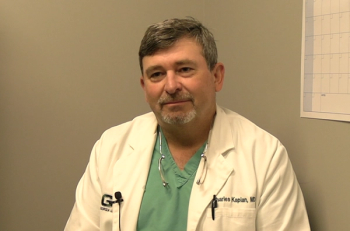
"I feel like there's still a lot of lack of knowledge about the more advanced treatments for men's health; specifically, penile implants," says Charles Kaplan, MD.

Gary D. Steinberg, MD, summarizes his major takeaway from the AUA 2024 conference and shares his insights on the potentially practice-changing developments he anticipates in the near future for the management of non-muscle-invasive bladder cancer (NMIBC).

"We found that over time, when you are controlling for possible competing risk of death because of age, that there was an estimated 44% incidence of cognitive impairment diagnosis at 15 years and 17% for manual dexterity diagnosis at 15 years," says Jacqueline Zillioux, MD.

“This study really bridges the gap between STAMPEDE and PROTEUS and provides the opportunity for patients to get either surgery or radiation therapy,” says Kelly L. Stratton, MD, FACS.

"Kidney stones in children are quite a bit different than in adults," says Katherine Chan, MD, MPH.
“There was a consistent request for more access to knowledge [and] access to guidelines,” says Jessica L. Wenzel, MD, MPH.

“What we found was that pyuria, or the incidence of white blood cells in the urinalysis, was a big driver for treating patients with antibiotics,” says Briony K. Varda, MD, MPH.

"The first part is how much [are patients] bothered by the symptoms?" says Akhil Das, MD, FACS.

"You have to have a passion for it. If you have a passion for it, it's easy to do," says Shaya Taghechian, MD.

"We found a 25% incidence of cognitive impairment just based on this telephone test," says Jacqueline Zillioux, MD.

"I think that having some clinical guidelines would be very much beneficial for us in midlevel practice," says Adity Dutta, MSN, AGACNP-BC.

The panel concludes by offering key takeaways on the evolving treatment landscape for BCG-unresponsive non–muscle invasive bladder cancer.
Experts on non–muscle invasive bladder cancer discuss promising developments in the overall treatment landscape, highlighting potentially practice-changing clinical research.

"Unique to this study is that we'll be using Orgovyx," says Kelly L. Stratton, MD, FACS.

"I'd be curious to see a validated study on whether prostate sizes have increased over time. I suspect the answer will be yes," says Joseph Song, MD.

"Pediatric patients do have a somewhat heterogeneous or variable presentation of their stone disease. A lot of that is dependent upon their age," says Katherine Chan, MD, MPH.
Experts on prostate cancer discuss the benefits to multidisciplinary care as it pertains to PSMA-PET imaging.
Prostate cancer specialists discuss challenges associated with imaging in clinical practice.

The panel offers key takeaways on the evolving landscape for imaging and biopsy in prostate cancer, highlighting the role for fusion-guided biopsy in the diagnosis and management of prostate cancer.
Prostate cancer specialists provide insights on the integration of fusion biopsy into clinical practice and how it has impacted treatment paradigms.

Ben H. Chew, MD, MSc, FRCSC, and Naeem Bhojani, MD, FRCSC, on Urology Times' recent survey of reusable vs disposable cystoscopes.

"I can say that I do see a vast number of different types of patient populations," says Adity Dutta, MSN, AGACNP-BC.
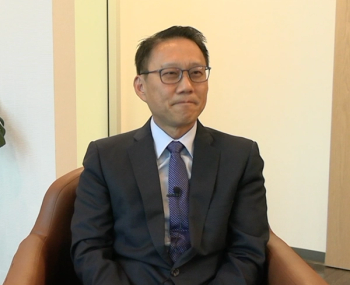
Lee discusses findings from a study presented at the 2024 American Urological Association Annual Meeting.