
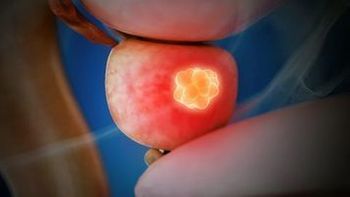
“What was found in the sub stratification study was that overall survival favored the addition of darolutamide to ADT and docetaxel in all stratification subgroups,” says Ronald Tutrone, MD, FACS, CPI.
“What was found in the sub stratification study was that overall survival favored the addition of darolutamide to ADT and docetaxel in all stratification subgroups,” says Ronald Tutrone, MD, FACS, CPI.

“This equation that is true for White men, where more discussion leads to more PSA testing, did not hold for racial minorities,” says Hanan Goldberg, MD, MSc.

“We really need to understand patient selection and treatment sequencing,” says Rana McKay, MD.

“The biggest finding is that we are seeing a steady increase in women representation in the field of urology,” says Teresa L. Danforth, MD.

“With this study, we gained a better understanding of the features of third line therapy for overactive bladder, that patients find favorable and unfavorable,” says Anjali Kapur, MD.
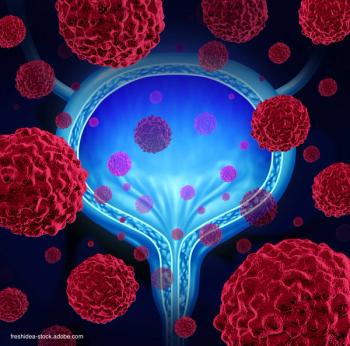
“We used this study as a first step in understanding at a baseline what patients with non–muscle-invasive bladder cancer thought and what they believe to be risk factors for their bladder cancer,” says Richard S. Matulewicz, MD, MSCI.

“So yes, these transperineal biopsies are more painful right in the moment, but immediately following that, these patients are comfortable," says John Myrga, MD.

“The short-term goals are really community building [and] relationship building,” says Randy Vince Jr, MD.
Rana McKay, MD, says that given the frontline shift from anti-VEGF monotherapy to immunotherapy doublets for advanced renal cell carcinoma, many of the studies informing the second-line setting have become “somewhat antiquated.”

“What we found from that was the sepsis rate was about 5%... Putting that in perspective, it's about 1 out of every 20 patients that will get this complication,” says Dr. Chew.

“I think anecdotally speaking there have been a lot of practices and states corroborating our results,” says Rutul Patel, DO, MS.
Rana McKay, MD, says the CheckMate-214, KEYNOTE-426, CheckMate-9ER, and CLEAR trials have revolutionized the first-line treatment paradigm in advanced renal cell carcinoma.
“We wanted to help provide an understanding of what factors guide patient choice of third line therapy for overactive bladder,” says Anjali Kapur, MD.
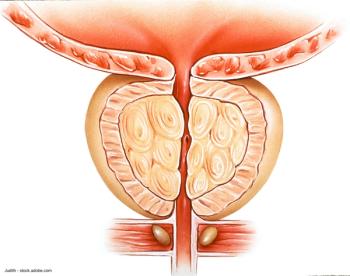
“For practicing urologists, I think it's important for us to recognize that when it comes to these techniques, even with Rezum, there's a variety of ways of doing them," says Bilal Chughtai, MD.

Jeffrey Tosoian, MD, MPH, recaps recent updates from the TheraP, ARAMIS, TITAN, ARASENS, and ATLAS prostate cancer trials.
“Once you get involved, more things pop up, and it’s a lot of fun. You meet a lot of interesting people and get a lot of great experiences,” says Daniel Igel, MD.

Treatment of azoospermia after exogenous testosterone use may require aggressive medical therapy, according to Kelli Gross, MD.

“It’s pretty clear that over the past 50 years we've seen innovations in BPH treatment both from the utilization of technology and also from the patient outcome and experience standpoint,” says Bradley Gill, MD, MS.
“We have helped developed policies at the national level as far as parental leave for residents and fellows, helping to streamline a lot of that process with the American Board of Urology,” says Daniel Igel, MD.
“We found that the adverse event rates have dropped dramatically, to about a third of what it was reported in the pivotal trial, but at the same time still had the same net benefits in terms of efficacy when it comes to Q max, symptomatic improvement, as well as PVR," said Bilal Chughtai, MD.

Physician Coach Support is a free resource that provides confidential, one-on-one peer support for clinicians.

“You do need to be a little bit careful because of the risk of priapism,” says Joshua A. Broghammer, MD.

Study authors found a rise in public interest in vasectomies, “particularly in states where abortion is or is expected to be prohibited.”

“I think that we’re going to see more and more advances in how we use mpMRI from a pre-treatment planning perspective,” William P. Parker, MD.

“Even though this is a really large study, and it appears that vitamin D may not be a sole contributor to improving urinary incontinence or overactive bladder, there may be a subgroup of men who could potentially respond,” says Alayne Markland, DO.

"Bulking agents changed the paradigm of stress urinary incontinence treatment considerably," says Eric S. Rovner, MD.

“One of the first pieces of advice I would give is to make sure you have the OR space available for the equipment,” says Jennifer A. Linehan, MD.
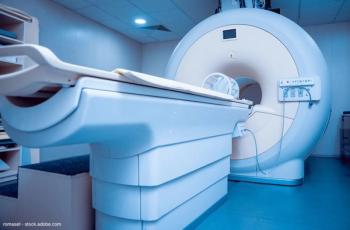
William P. Parker, MD, discusses the initial use of MRI and emergence of multiparametric MRI in the prostate cancer paradigm.

Joshua A. Broghammer, MD, discusses the development and use of intracavernosal injections for the treatment of patients with erectile dysfunction.
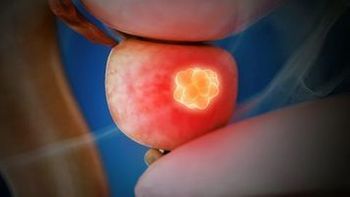
Stephanie Berg, MD, highlights the key findings of the PEACE-1 and ARASENS trials in patients with metastatic castration-sensitive prostate cancer.