
“In other words, there's a 72% less chance of recurrence with oral erdafitinib than with standard of care. The problem is tolerability,” says James W.F. Catto, PhD, FRCS.
“In other words, there's a 72% less chance of recurrence with oral erdafitinib than with standard of care. The problem is tolerability,” says James W.F. Catto, PhD, FRCS.

“The recommended phase 2 dose was dose level 2, so 8 mg/kg of SG with EV 1.25mg/kg,” says Bradley McGregor, MD.

“We have not previously managed to beat first-line chemotherapy in any trial in unselected first-line urothelial cancer, so this is a big step in that direction,” says Thomas B. Powles, MBBS, MRCP, MD.

“These data from the MAGNITUDE study demonstrate the risk-benefit profile for the combination of niraparib plus abiraterone acetate for patients with metastatic CRPC and BRCA mutations and establishes a new standard of care for these patients,” says Kim Nguyen N. Chi, MD, FRCPC.

A brief review of the evolving realm of prostate cancer care centered on the significance of identifying high-risk cases and addressing the complexities of risk stratification and prognosis.

Overview of hurdles and advancements in utilizing advanced imaging techniques for prostate cancer diagnosis, including agent availability, scheduling, facility preferences, and reimbursement.

A discussion surrounding the changing landscape of early-stage prostate cancer screening and rise in metastatic disease cases, focusing on the importance of timely intervention and patient-focused care.
Insight into advancements in prostate cancer imaging using PSMA agents like gallium and F-18, their unique characteristics, and the considerations in choosing the right radiotracer for accurate detection.

“This is the first study in upper tract urothelial carcinoma to show that ctDNA may be used to refine clinical staging and prognosis in these patients prior to surgery,” says Heather L. Huelster, MD.

“In fact, we actually found that there were more lawsuits that were directed at physicians who did not recommend active surveillance when it was an appropriate treatment strategy,” says Timothy J. Daskivich, MD, MSHPM.
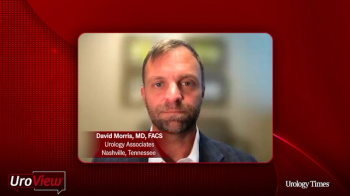
Delve into the strategic process of selecting ideal partners in cancer care as key opinion leaders share insights on building trust, effective communication, and optimizing patient outcomes through collaborative decision making.

Explore how David Morris, MD, FACS, and Benjamin Garmezy, MD, join forces to enhance patient outcomes in advanced prostate cancer through their innovative and collaborative precision medicine strategies.
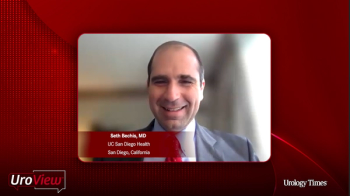
Seth Bechis, MD, discusses the rising use of ureteroscopy in treating urinary stones due to technological advancements, emphasizing its adaptability, improved imaging, and patient outcomes compared to other procedures, and shares an anecdote highlighting its benefits in terms of recovery and adaptability for patients' lifestyles.
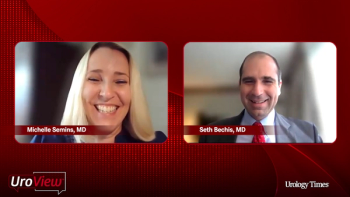
In this Urology Times UroView program, Dr Michelle Semins and Dr Seth Bechis discuss the evolving significance of intra-renal pressure monitoring in treating urinary stones, noting the rising prevalence of stones, the various treatment options available, and the increasing preference for ureteroscopy due to technological advancements.

“Concerningly, when we look at our community population, more than a third just didn't know where to go,” says Raveen Syan, MD, FPMRS.

“Where we are with this, I think that our results do not support the theory that agonists have a higher cardiovascular risk than antagonists,” says E. David Crawford, MD.
Amir H. Lebastchi, MD, provides perspectives on the VIOLETTE study and underscores the importance of future head-to-head trials to gain a deeper understanding of various treatment approaches.

"In this study, we sought to evaluate the utility of a non-invasive biomarker—ctDNA—in predicting muscle-invasive and non–organ-confined staging of upper tract urothelial carcinoma," says Heather L. Huelster, MD.

“Providers can use this information to counsel patients that that initial sticker shock goes away once you stick with that medication,” says Katherine Shapiro, MD.

"We're calling upon urologists and primary care physicians to start the conversation and normalize discussion about erectile dysfunction with their patients before they fall through the cracks and ended up victims of these predatory online services," says Jack Vercnocke, MD.

"Hopefully this law will allow more patients with advanced prostate cancer to gain access to these medications, and to take it without substantially changing the quality of their life when it comes to financial consequences," says Benjamin Pockros, MD.
Experts close their panel on OAB by identifying treatment pathways for patients who have an unsatisfactory response to third-line therapy.

"The main thing that we were surprised by was that at this point in time, ChatGPT couldn't give us consistent results," says Athena Barrett.

"Hopefully this gives patients and providers information that they can use to inform and set reasonable expectations of what patient's lives will look like after treatment," says Samuel L. Washington III, MD, MAS.
Explore the transformative journey of prostate cancer imaging techniques, from conventional methods to cutting-edge PET scans like F-18 PSMA, and how FDA approvals have shaped their adoption.
Join David Albala, MD, as he explores the use of advanced imaging techniques in prostate cancer diagnosis and management, highlighting PSMA-PET scans and their pivotal role in modern prostate cancer care.

“When you're talking about Medicare patients who are on multiple medications, and this is not the only thing that they're taking, to pay over $100 for 1 medication is sometimes not possible,” says Katherine Shapiro, MD.
“Company 3 was the most surprising; the cost was $5220 per year for 10 20-mg [tadalafil] pills per month,” says Jack Vercnocke, MD.