

"The providers–the nurses and the physicians and the extenders–are checking out and burning out, which is affecting quality and delivery. To me, it's a national health care crisis," says Scott A. MacDiarmid, MD, FRCPSC.
"The providers–the nurses and the physicians and the extenders–are checking out and burning out, which is affecting quality and delivery. To me, it's a national health care crisis," says Scott A. MacDiarmid, MD, FRCPSC.

"We did not find that there were any clotting or thrombotic complications in those who did stop their aspirin," says Smita De, MD, PhD.
"We are really engaged on ensuring that a lot of the progress that had been made and the care that was delivered through the pandemic is able to continue on," says Joshua Langston, MD.
"The background for this paper stems from the increasingly identified need to do a better job of management of urinary tract infection, not only from a recognition standpoint, but also from a diagnostic and treatment standpoint," says Roger R. Dmochowski, MD, MMHC, FACS.
"The biggest thing that we're seeing in prostate cancer now, and I think will continue to evolve, is really getting into narrowing our different types and stratifying patients differently," says Benjamin H. Lowentritt, MD, FACS.

"Being able to utilize advanced practice providers to extend us, to take care of our patients, [and] to treat them in a way that is beneficial and satisfying for them as a job is really important," says Neal Patel, MD.
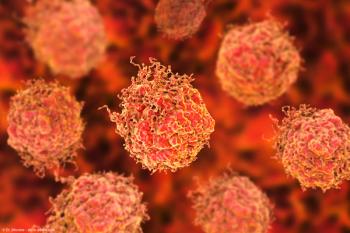
"There are a couple of really exciting directions we want to take this work in," says Charles Parker, MD.
Experts converse on the evolving methods for real-time intra-renal pressure monitoring, its benefits in improving surgical procedures, and the potential for future automated adjustments based on the monitored data.
Drs Bechis and Semins discuss their approaches to employing ureteral access sheaths, reviewing assessing the ureter's caliber, dilation techniques, and the potential need for stenting post-sheath use, considering patient history and logistical factors like on-call availability.

"So, my takeaway with this part of the conversation is that you can use a 0.01% estradiol cream, 1 gram, twice a week, for any peri or postmenopausal patient, and they can safely take that forever," Ashley G. Winter, MD.
“One important takeaway that we wanted to hammer home is that AI will not replace urologists, but urologists who use AI will replace those that don't,” says Neal Patel, MD.
The SpaceOAR rectal spacer phase 3 trial showed reduced toxicity and improved quality of life, leading to FDA approval, but device-related side effects have emerged with broader clinical use.
Dr Hamstra describes the three FDA-approved rectal spacers SpaceOAR, Barrigel, and BioProtect, noting differences in placement technique, advantages, potential risks, and the need for long-term clinical data on patient outcomes.
"For those people in the intervention arm who did get the assay, the doctors were more likely to prefer active treatment with surgery or radiation compared to the control group," says Adam B. Murphy, MD, MBA, MSCI.
"Overactive bladder symptoms have been shown to be influenced by these other areas in their life that can create a lot of stress and problems," says Raveen Syan, MD, FPMRS.
"This all started because of the tidal wave of new therapies that are coming out for bladder cancer," says Jonathan Henderson, MD.

"There was also an emphasis on using pathways and navigation to help facilitate this large group of patients that are being seen by urologists," says Arpeet Shah, MD.

“Anytime as a urologist you have a patient who is peri or postmenopausal who is coming through your door, and they have a history of a urinary tract infection, this should be the first thought in your mind,” says Ashley G. Winter, MD.

David Albala, MD, shares closing advice on using PSMA-PET scans in prostate cancer management and making informed patient selection decisions based on guidelines and practical insights.
"They found that about 68% of the patients with a PSA less than 1 actually had a positive test. And that's really important," says Jason M. Hafron, MD.
"I think it may provide better care. What has been shown though, with some things, is that it can make mistakes and tries to cover them up, and that can be a problem also," says E. David Crawford, MD.

“It's 2023. We have a lot of other options. I'm not really sure that would be my frontline therapy for my dad or a family member,” says Kevin C. Zorn, MD, FRCSC, FACS.

“It's important that everyone understands that once women move up the ranks from becoming residents to fellows to attending, and when they're attendings if they move up in the leadership, that they remain available for questions, guidance, mentorship, [and] sponsorship,” says Jennifer Miles-Thomas, MD.
"Urologists can play a central role in helping women through the symptoms that are associated with hormone issues," says Sarah K. Girardi, MD, FACS.

"We're all going through the same thing, so we should not be reinventing the wheel," says Dr. Kari Bailey.
Drs Semins and Bechis discuss the utility and benefits of ureteral access sheaths, emphasizing their role in optimizing visualization, reducing intra-renal pressure, and potentially mitigating postoperative complications, while also noting the importance of size selection and highlighting emerging technologies that measure pressures and manage thermal injury.
Dr Michelle Semins discusses strategies to minimize elevated intra-renal pressure, emphasizing the principle of ALARA (as low as reasonably achievable) by reducing inflow and increasing outflow, and suggesting tools and techniques such as stopcocks, gravity bags, ureter access sheaths, and new suction devices, while also highlighting the importance of controlling other risk factors like bacteria.

"Most complications that happened, they happened within the first 48 hours postoperatively. Blood transfusions were by far the biggest contributor to this," says Matthew Epstein, MD.


Explore strategies for seamless coordination between urologists and medical oncologists to ensure uninterrupted, patient-focused care in prostate cancer treatment.