
"Since 2021, there have been significant changes made to documentation and billing, where now our documentation can be more focused," says Jyoti Chouhan, DO, PharmD, FACS.
"Since 2021, there have been significant changes made to documentation and billing, where now our documentation can be more focused," says Jyoti Chouhan, DO, PharmD, FACS.

Anthony V. D’Amico, MD, PhD, discusses the choice between external beam radiation therapy and brachytherapy in patients with prostate cancer.

"The NCCN guidelines are unique in that they're almost constantly updated in real time," says Edward M. Schaeffer, MD, PhD.
"Once you've decided that this is important to you, a good place to start is to identify your pain points; pay attention to what annoys you and don't be complacent about it," says Sarah Hecht, MD.

"Prostate cancer showed a decreased risk, which we thought was very interesting, because it was the only cancer for which that signal existed, that there is possibly a protective effect of these medications," says Conor Driscoll, MD.
In the first installment of this series, Juan Montoya, MD, discusses the results of the phase 3 pivotal trial of a polyethylene glycol-based hydrogel spacer, reviews real-world data on this product, and provides insights on the evolving practice standards for perirectal spacing in prostate cancer.
Karim Fizazi, MD, PhD, discusses safety data from the phase 3 TALAPRO-2 trial, which explored talazoparib plus enzalutamide in patients with metastatic castration-resistant prostate cancer.
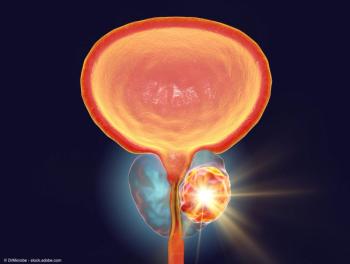
"Catheters go in, [and] they come out within 2 to 3 days for my patients. Therefore, the perioperative period is very easy for patients, whereas radical surgery requires catheters for 7 to 10 days," says Kevin R. Basralian, MD.
"Since transforming the BPH market, Aquablation has as given a degree of confidence for the surgeon as well as for the patient," says Ravi Munver, MD.

"I think one of the key things is when we look at things like sensitivity and specificity, sensitivity is very much reliant on the incidence of a disease or the state of the disease," says Brian F. Chapin, MD.
Karim Fizazi, MD, PhD, highlights the TALAPRO-2 trial, which led to the FDA approval of talazoparib plus enzalutamide for patients with HRR gene–mutated metastatic castration-resistant prostate cancer.

Delving deeper into PSMA-PET results interpretation and information sharing, panelists outline the most critical information needed from radiologists and urologists on a patient’s multidisciplinary care team.
Experts share potential solutions to overcome the clinical challenges of using PSMA-PET in practice, including use of reader training programs.

"There are a lot of exciting data that are coming out, and, of course, a lot of physicians and physician-scientists [who] are interested in these questions, and we’re working on that," says Sophia C. Kamran, MD.
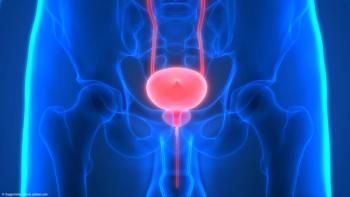
“Looking at the impressive results for cohort K, with enfortumab, it's amazing what that is going to provide our patients,” says Joshua J. Meeks, MD, PhD.

"Integration of APPs can be useful to address some of the issues we have nowadays such as access and shortages," says Omer Raheem, MD, MSc, MCh Urol, MCRSI.
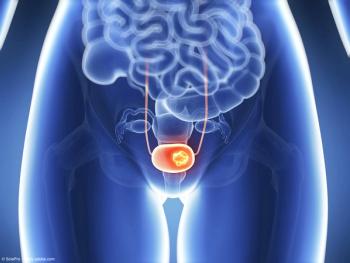
"If there’s recurrence of muscle-invasive bladder cancer within the bladder, you can perform salvage cystectomy at that point…. It is a bit more complex, so it’s great to have a high-volume surgeon who has performed these before," says Sophia C. Kamran, MD.
“We found some BRCA1 and BRCA2 mutations, as well as CDK12 mutations, in our cohort of patients with intraductal carcinoma of the prostate. Those are things that you could use now for clinical decision-making with PARP inhibitors with their approved indications,” says Benjamin Miron, MD.
“The field of advanced RCC is evolving very quickly to a precision medicine approach where we're trying to individualize therapies,” says Thomas E. Hutson, DO, PharmD, FACP.
“These are high-risk patients and they do have a high likelihood of having advanced or metastatic disease in the future,” says Benjamin Miron, MD.
“The goal at the end of the day is to get exposure of your patient [with renal cell carcinoma] to as many of the most active agents as possible,” says Thomas E. Hutson, DO, PharmD, FACP.

“Those pipeline programs that actually foster a sense of community and family, those are the pipeline programs that really do well,” says Randy Vince, MD, MS.
“Our data show that low T is an independent risk factor for adverse peri-op outcomes after transurethral prostate surgery,” says Jasmine Lin, MD.
Dr Cookson discusses the challenges of using PSMA-PET imaging in prostate cancer, including reimbursement and patient access.

“We know that with that low toxicity and good functional outcomes, it's an excellent treatment to offer patients,” says Sophia C. Kamran, MD.

Dr Sellinger details the range of clinical guidelines on the use of PSMA-PET imaging in prostate cancer and which he is most likely to follow.

"For one thing, we're really interested in looking at plant-based diets in patients who are at high genetic risk for prostate cancer," says Stacy Loeb, MD, MSc.
“It's very helpful when we're looking at how we counsel patients about the stage of their disease,” says Brian F. Chapin, MD.

“Surprisingly, testosterone was not independently associated with frailty on our analysis, but on multivariable analysis, both hospital frailty risk score and low preoperative T were independently associated with 180-day readmission,” says Jasmine Lin, MD.
"Nonmetastatic castration-resistant prostate cancer remains an incurable disease state," says Alicia Morgans, MD.