

“I would say that overall, the oncologic outcomes are equivalent between the [bladder-sparing treatment and radical cystectomy] for well-selected patients,” says Sophia C. Kamran, MD.
“I would say that overall, the oncologic outcomes are equivalent between the [bladder-sparing treatment and radical cystectomy] for well-selected patients,” says Sophia C. Kamran, MD.

"We found that consuming more plant-based food was associated with significantly better scores for the urinary domains of the quality of life questionnaire," says Stacy Loeb, MD, MSc.
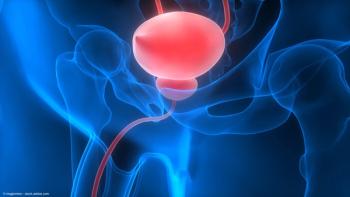
“We're still very interested in early-stage bladder cancer, those at high risk do not respond to BCG,” says Joshua J. Meeks, MD, PhD.
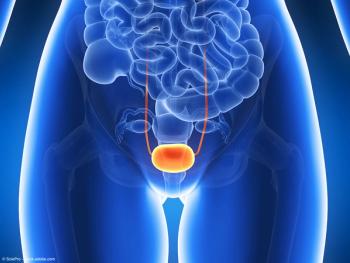
“There's not a perfect chemotherapy; there are a lot of different options, and then other factors to consider would be the field and the dose,” says Sophia Kamran, MD.
"There continues to be immense interest in urinary markers for bladder cancer," says Badrinath Konety, MD, MBA.
“I think the importance of this is that these are more accurate than our current imaging studies in helping us to better counsel patients on the expected treatment options given their current situation,” says Brian F. Chapin, MD.

The panel reviews clinical data and provides real-world insight on how use of PSMA-PET imaging has impacted the management of patients with prostate cancer.
Experts discuss practical considerations on selection among available PSMA-PET tracer options for prostate cancer imaging, including regional availability, scheduling, and preparation requirements.
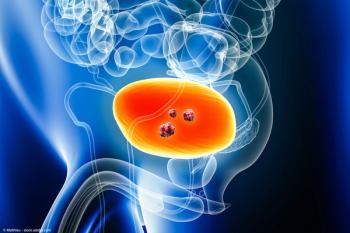
“I would say that patients who have a very poor bladder function to start with would be a better candidate for radical cystectomy,” says Sophia C. Kamran, MD.
“There are a lot of different ways that we can potentially use these complementary and alternative therapies to help mitigate symptoms in our patients across the realm of urology,” said Sarah P. Psutka, MD.
“Obviously it's important to have options when we're looking at the various tracers that we're using for evaluation of patients with prostate cancer,” says Brian F. Chapin, MD.
"We found in both unadjusted and adjusted analyses that patients seemed to discontinue enzalutamide and apalutamide at slightly earlier time points than darolutamide," said Alicia Morgans, MD.
Rohan Garje, MD, highlights the need for molecular profiling of sarcomatoid urothelial carcinoma tumors as a gateway to advancing the treatment paradigm for this rare bladder cancer variant.
“It’s very important to really talk to the patients and understand any toxicities because the side effects are well managed if they’re caught early,” says Shilpa Gupta, MD.

“It's hard for us as physicians to think about anything other than continuing to put the accelerator into the red zone. But sometimes, a little bit of self-awareness can allow you to sustain a career for many years longer,” says Colin P. West, MD, PhD.

"It pretty much has been adopted around the world so that about 80% of men who are diagnosed with low-risk prostate cancer go on active surveillance. In Sweden, it's about 80%. That's considered the goal. But the United States has been slow in adopting this," says William J. Catalona, MD.

“We've made great strides with bladder preservation on many fronts,” says Sophia C. Kamran, MD.
Shilpa Gupta, MD, discusses long-term outcomes of the EV-103 trial, which explored the first-line combination of enfortumab vedotin and pembrolizumab in cisplatin-ineligible patients with locally advanced or metastatic urothelial carcinoma.
“Our ultimate goal is to come up with strategies that really enhance the life expectancy and the treatment options for our patients with urothelial cancer,” says Arlene O. Siefker-Radtke, MD.

“We will never be satisfied with doing ‘just good enough’ for our patients,” says Colin P. West, MD, PhD.
The panel reviews the similarities and differences between the FDA-approved PSMA-PET tracer options for prostate cancer imaging.
Phillip Koo, MD, defines prostate-specific membrane antigen (PSMA) and explains the rationale for use as a target in PET-based prostate cancer imaging.

"In this trial, and in all the major IO/TKI trials, the checkpoint inhibitor stopped at 2 years. In this trial it was about 25% of patients who made it to that time point," says Brian I. Rini, MD.
"Unfortunately, I don't think that the triplet of cabo/nivo/ipi is ready as the current dosing for use in RCC with variant histology," says Bradley McGregor, MD.
"All the patients said that they were pleased with the acupuncture that they received, and about 75% said that they would refer other people going through BCG to acupuncture," says Sarah P. Psutka, MD, MS.
"There was a striking decreased survival for patients who had sarcomatoid histology compared to the ones who had the classic variant urothelial histology," says Rohan Garje, MD.
David Olmos, MBBS, MSc, PhD, discusses research presented at the ASCO 2023 Annual Meeting assessing outcomes with first-line novel hormonal therapy or taxane therapy in metastatic castration-resistant prostate cancer based on patients' BRCA/HRR status.
"The overall survival, Kaplan Meier curves, are maintained with a hazard ratio of 0.79 for the intent-to-treat patient population of lenvatinib/pembrolizumab versus sunitinib," said Thomas E. Hutson, DO, PharmD, FACP.
"Our research focused on the outcomes at 6 months, [and we] were looking at disease recurrence and hernia occurrence," says Jennifer Nguyen.
"About 80% of the patients who underwent treatment showed a very strong reduction in tryptase levels," says Praveen Thumbikat, DVM, PhD.