

Opinion|Videos|October 7, 2024
Inclusion of Chemotherapy and Impact on Outcomes From the ARASENS Trial
Author(s)Fred Saad, CQ, MD, FRCS, FCAHS
Key Takeaways
- Chemotherapy, particularly docetaxel, significantly influences the adverse event profile, with common side effects including neutropenia, fatigue, and diarrhea.
- The ARASENS trial findings align with previous studies, confirming the consistency of observed adverse effects with clinical practice.
Fred Saad, CQ, MD, FRCS, FCAHS, discusses how the inclusion of chemotherapy, particularly docetaxel, in combination therapies for metastatic prostate cancer alters the adverse event profile, noting that while the ARASENS trial found adverse effects to be largely consistent with previous docetaxel studies, they consider whether this aligns with observations in clinical practice.
Advertisement
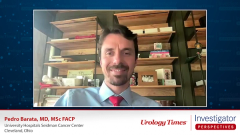
Video Content above is prompted by the following:
- How does inclusion of chemotherapy affect the adverse event profile? In the ARASENS trial (NCT02799602), authors concluded that many of the adverse effects were consistent with those observed in previous studies with docetaxel. Is this consistent with what you see in clinical practice?
Advertisement
Related to this article
Pasritamig is being evaluated with or without JNJ-9401 in the ongoing phase 3 KLK2-comPAS trial.
These FAQs outline key recommendations from ASTRO's updated guideline on shorter-course radiation therapy for localized prostate cancer.

Updated CAPItello-281 data support capivasertib plus abiraterone in PTEN-deficient mHSPC, according to Daniel J. George, MD.
Benjamin Garmezy, MD, discusses personalizing mHSPC treatment intensification based on disease burden, molecular biomarkers, and patient-specific factors.
Biomarkers including HRR mutations, PTEN loss, and PSMA expression can guide triplet selection in mHSPC, according to Benjamin Garmezy, MD.

Alicia Morgans, MD, discusses ARACOG findings on cognitive outcomes with darolutamide vs enzalutamide and the influence of genetic dementia risk.

Aaron Berger, MD, discusses patient selection for ARPI treatment holidays, monitoring during interruptions, and the role of testosterone recovery in interpreting PSA kinetics.
Tamim Niazi, MDCM, reviews DASL-HiCaP findings showing improved metastasis-free survival with darolutamide added to ADT and radiation therapy.
Advertisement
Advertisement
Trending on Urology Times
1
FDA grants De Novo authorization to Virtuoso Robotic System for bladder tumor resection
2
Pasritamig combination yields 73% PSA response rate in phase 1 mCRPC study
3
Q&A: Suzanne B. Merrill, MD, FACS, on perioperative therapy in MIBC
4
SureCore needle: Interim data show longer, less fragmented cores
5