

Opinion|Videos|October 21, 2024
Insights From ARANOTE and Clinical Practice
Author(s)Fred Saad, CQ, MD, FRCS, FCAHS
Key Takeaways
- The ARANOTE trial enables personalized cancer treatment, allowing oncologists to tailor therapy based on individual patient needs and clinical situations.
- Flexibility in the trial design accommodates varying patient profiles, optimizing treatment outcomes and enhancing therapeutic decision-making.
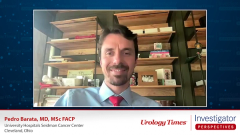
Fred Saad, CQ, MD, FRCS, FCAHS, discusses how the ARANOTE trial results support using darolutamide plus androgen deprivation therapy in a broad range of patients with metastatic hormone-sensitive prostate cancer, offering flexibility in treatment choices by providing an effective non-chemotherapy option that can be tailored to individual patient needs and preferences.
Advertisement
Video Content above is prompted by the following:
- Which patients and clinical situations would this approach be best suited for? How does the ARANOTE trial provide flexibility to the physician and the patient?
Advertisement
Related to this article
Chad R. Ritch, MD, MBA, FACS, discusses how PSMA-PET informs staging, treatment planning, recurrence workup, and the interpretation of equivocal findings.

Jeffrey M. Spier, MD, discusses how fatigue may impact patient quality-of-life and when dose reduction may be an appropriate treatment strategy.

Jeffrey M. Spier, MD, reviews evidence on ARPI dose reduction in prostate cancer and discusses monitoring treatment response, tolerability, and dose reescalation.
Jeffrey M. Spier, MD, discusses managing ARPI-related fatigue through dose adjustments, patient monitoring, and strategies to maintain treatment adherence.

Moderators and participants reviewed ARANOTE, ARACOG, and ARASEC data and how they inform individualized treatment for mCSPC.

Jack R. Andrews, MD, discusses BED-PSMA-411 findings comparing PSMA-PET detection rates and urinary excretion in prostate cancer biochemical recurrence.
VIR-5500 is a PSMA-targeted PRO-XTEN dual-masked T-cell engager entering phase 3 development for prostate cancer.

Abraham Morgentaler, MD, reviews evidence showing no association between testosterone therapy and prostate cancer risk and explains the saturation model of androgen action.
Advertisement
Advertisement
Trending on Urology Times
1
How PSMA-PET shapes staging and recurrence workup in prostate cancer
2
European Commission approves perioperative pembrolizumab plus enfortumab vedotin for MIBC
3
Engy Habashy, MD, on the role of androgens in GSM management
4
ESMO 2026: Key presentations across genitourinary oncology
5