Take a look through some of the notable data presentations at this year's ESMO Congress.
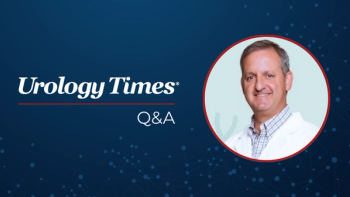
"The main issue in DC now is the Medicare Physician Fee Schedule," says Scott Sellinger, MD, FACS.
At the
On the policy front, Sellinger highlighted LUGPA’s advocacy successes, including contributing to a 2.5% Medicare Physician Fee Schedule increase earlier in the year. However, he noted ongoing concerns about unsustainable reimbursement rates that fail to keep pace with inflation and rising overhead costs. Other major legislative focuses include restoring telehealth access for Medicare beneficiaries, which ended after the public health emergency, and ensuring fair reimbursement for in-office drug dispensing, critical to maintaining access and financial stability for independent practices.
Addressing workforce challenges, Sellinger discussed LUGPA’s Urology Resident Summit, which introduces over 100 urology residents annually to the business side of medicine and the benefits of independent practice. He concluded by expressing gratitude for the opportunity to represent approximately 2200 urologists across 140 U.S. practices. Sellinger is a urologist with Advanced Urology Institute in Tallahassee, Florida.
Sellinger: What we try to do is cater to both our physicians and our administrators. We have a dyad model in LUGPA, and many of our participants come from all over the country. We have folks who are actually in the trenches doing urology work, and then we have others who are the administrators at all different levels of administration within urology practices. Close to probably about 1000 people came to the meeting this year, so we're very excited about that. It's a great number of folks to come together.
We do a lot of networking here. Some of it is structured, some not structured. Sometimes, it's just when you're coming out of the bathroom, you meet somebody, and you can talk. Other times, we have set meetings and meeting rooms, and then on Thursday, we do our CME program. This year, we're highlighting some new advances in bladder cancer treatments, some areas of [kidney] stones that are a little bit new to the program, and then of course prostate cancer gets a fair amount of attention. We have our practice administrator workshops that occur throughout the day on Thursday as well, and then on Friday is really the nuts and bolts of what we do in LUGPA, and that's the advocacy work that we do. We're going to have Dr Greg Murphy, who is one of the urologists who’s in Congress. He's in the House of Representatives from North Carolina. He'll be speaking with us on Friday morning, and then [there are] a bunch of other sessions that apply to various areas of interest within urology groups. Throughout the day, we have breakout sessions, and then finally, on Saturday, we have Chef Rick Bayless, who's going to give us a very fun and entertaining keynote speech. We've got a lot going on.
Sellinger: Well, hopefully they'll come to my presidential address [on Friday] morning, because that's what I'm going to talk about. My focus is going to be on staying the course and working to be sure that we understand where our calling is, that we are independent urologists and we need to stand strong, and it's important for us, especially the ones of us who are older, to communicate that to many of our young urologists and our young administrators who need that reinforcement that they're on the right path, that independent urology is still here [and is] here to stay, because there are a lot of headwinds. I mean, frankly, it's tough to compete against the hospital systems and the academic centers that are trying to lure many of our good folks who are coming out of training. Those places need those people too, of course, but we need to be able to show those physicians and young administrators that independence still has its place, and that we're strong and that and that we have a future.
Sellinger: [On Friday], we'll have Dr [Mara] Holton, who is chair of our Health Policy Committee, and she will be up on stage and going over a lot of this, so that will be very informative for our members. The main issue in DC now is the Medicare Physician Fee Schedule. We did have a 2.5% increase that we were able to win earlier this year, and although LUGPA can't take full credit for that, we certainly were a big part of it. We do our fly-ins to DC, we meet with legislators, and we express our opinions and our support for the importance of paying physicians enough to be able to keep our practices open. Our concern, of course, is that practice overhead continues to go up, staff expenses go up, supplies go up, and it's an unsustainable model when the Physician Fee Schedule stays flat in spite of inflation—or even goes down. It's just not sustainable. So we hope that our lawmakers can understand that and come up with a better formula, maybe something that's tied to the Medical Economic Index, which is really what we'd like to do. That's our primary focus.
[Another area that has] been very important is telehealth. During [the] COVID[-19 pandemic,] we were able to provide telehealth services to Medicare beneficiaries. That all ended at the end of the public health emergency [period on] October 1, and so we are at a point now where telehealth services are not available to most of our Medicare beneficiaries. That’s a problem, and we need to be able to bring that back. We have great bipartisan support, so it really isn't a Democrat or Republican issue. Telehealth is very important.
And then I think seniors' access to drugs is a big issue. We need to have a model where seniors can afford drugs and that they can be accessible for them. But in order for independent urology practices to be able to provide those drugs at the buy-and-bill level, we need to be able to have at least a margin that allows us to pay for our cost to do that, and so we need to make sure that we have continuation of some sort of a model that allows us to get a margin that is compatible with being able to run a practice, and so we hope to see that in some legislative action as well soon.
Sellinger: We know that for every urology resident who's coming out of training right now, there are about 10 job opportunities. That's a scary number if you're in a practice that needs urologists right now, because it's very competitive. One of the things that we've done at LUGPA is we do a Resident Summit every year where we invite residents who are in urology. They can be any year in urology. Initially, when we did it, it was more [aimed at residents who were] toward the end of their training, but now we open it up to all urologists. We have over 100 residents now that come to this meeting. The idea is really to expose them to what can happen after you leave residency training, because you don't get that when you're in residency. You learn how to operate, you learn how to take care of patients, but you really don't learn about the business of medicine or what to really expect. This is something that we've been very proud of for the close to 10 years we've had a Resident Summit, and it just keeps growing and growing. LUGPA practices can come to the residency summit and participate and send members of their groups to help these young doctors understand and learn about independent practice. This is very important to us again, to counter some of the shifts that have been occurring away from independent practice toward hospital-employed models, for example.
Sellinger: The only thing I would say is that I'm very honored and humbled to be the president of LUGPA and to have this opportunity to represent 2200 urologists and over 140 practices in the US. It's really a great honor to be able to be in that position. If you had said to me 20 years ago that I'd be sitting here today doing this, I would have said, "You're absolutely crazy. There's no way." And here I am. [I'm] proud to be here.