
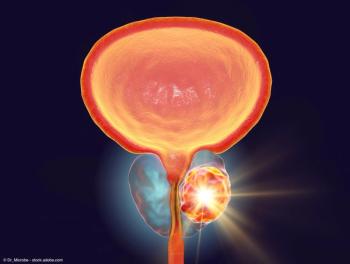
The addition of Ra223 to enzalutamide was associated with a 31% reduction in the risk of progression or death compared with enzalutamide alone.

Benjamin P. Saylor is Strategic Content Lead for the MJH Life Sciences® brands Contemporary OB/GYN®, Contemporary Pediatrics®, and Urology Times®.
The addition of Ra223 to enzalutamide was associated with a 31% reduction in the risk of progression or death compared with enzalutamide alone.
"There was a significant increase in overall fatigue after performing flexible ureteroscopy," says Sarah Razavi, MD.

“I think it does give us confidence that clinical trials can predict how these drugs will work in the real world," says Stephen J. Freedland, MD.
"The black box warning affects that ability for them to get access to that critical drug, vaginal estrogen," says Yahir A. Santiago-Lastra, MD.

Among the guideline’s recommendations is the use of local low-dose vaginal estrogen as first-line therapy for GSM.

The study was published in JCO Oncology Practice.

John Michael DiBianco, MD, discusses findings from the BLUES trial.

The data are to be presented at an upcoming medical conference.

Investigators found that benefits of treatments that are observed in trials also appear in the real world.

"It’s a very good time to be taking care of patients with bladder cancer," says Joshua J. Meeks, MD, PhD.

Grace Khaner and Melissa A. Laudano, MD, share their thoughts on the potential for expanding the use of vibegron early in treatment for OAB.

Jennifer Miles-Thomas, MD, URPS, MBA, discusses the AUA's legislative priorities along with issues in medicine related to artificial intelligence.
DiBianco discusses findings from the Better Lithotripsy and Ureteroscopy Evaluation of Stenting trial.

"Developing a relationship with your legislator is just as important at the state level as it is at the federal level," says Hans Arora, MD, PhD.

“I think the best thing about these guidelines is their actual existence,” says Karyn S. Eilber, MD.

"To me, the key take-home is that the benefits that we see in clinical trials, we actually can replicate in the real world," says Stephen J. Freedland, MD.


The investigators reported an overall incidence of AEs of 29.6%.

“It's going to be an important time for US urologists to identify that this is becoming the standard of care," says Joshua J. Meeks, MD, PhD.

The investigators reported that ultra-low PSA responses “were associated with prolonged rPFS and delayed progression to mCRPC and PSA progression.”

The study population was able to avoid 952 cystoscopies and 70 CT scans, according to the investigators.
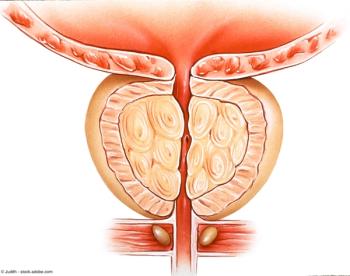
No device- or procedure-related serious AEs were observed through 12 months across the entire study population

The investigators reported that treatment with darolutamide reduced the risk of radiological progression or death by 49% in Black men.
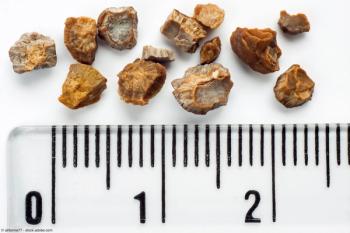
The investigators reported a median stone clearance of 96.44%.

In cohort A, the cystectomy-free rate at 36 months was 84%.

More than 80% of patients in both groups had a full recovery of testosterone.

"I would argue that UGN-102 may very well represent a well-tolerated alternative to TURBT as primary treatment for patients with low-grade disease,” says Sandip M. Prasad, MD, MPhil.

The investigators reported that the median Kaplan-Meier estimate of DOR was 24.2 months.

"97% [of patients] remain progression free, and 84.5% avoided cystectomy, highlighting cretostimogene’s bladder-sparing potential,” said Mark D. Tyson II, MD, MPH.

“In the patients with CIS, the probability of a continued complete response at 36 months was 92% vs 67.7%," said Neal D. Shore, MD, FACS.