
Data from the pivotal BREEZE study indicated a mean IPSS improvement of 37% in patients receiving the system.

Benjamin P. Saylor is Strategic Content Lead for the MJH Life Sciences® brands Contemporary OB/GYN®, Contemporary Pediatrics®, and Urology Times®.
Data from the pivotal BREEZE study indicated a mean IPSS improvement of 37% in patients receiving the system.

Daré Bioscience said the sildenafil cream’s availability will expand to other states throughout December 2025 and early 2026.
The approval is supported by results from the randomized ProVIDE study.

The investigators reported a high-grade CR rate at any time of 72.4% (21 of 29 patients).

DFS rate was 85.3% at 6 months (95% CI, 71.6-92.7), 74.3% at 12 months (95% CI, 59.2-84.6), and 69.2% at 18 months (95% CI, 53.4-80.6).
In patients with high-grade T1 disease, high-grade EFS was 100% and 3 months and at 6 months and 87.5% at 9 months.

Following treatment with SYNC-T, all bone metastases had resolved in 7 of the 13 patients.

The overall CR rate was 83.7% (95% CI, 70.3-92.7).

Forty-one of the 85 patients experienced disease persistence, progression, or recurrence.

Complete response at any time was 92% (23/25 patients), 84% (21/25) at 3 months, 87% (20/23) at 6 months, and 85% (17/20) at 9 months.
The data come just days after the FDA approved IsoPSA to aid in the diagnosis of high-grade prostate cancer.

For micro-ultrasound compared with true cancer status, estimated sensitivity was 0.8000.

Health care providers and allied health care professionals described insertion and removal of the system as “straightforward” and done in less than 5 minutes.
At a median follow-up of 25.8 months, the CR rate at any time was 75.5%.

The investigators reported that new onset of CNS-related conditions was lower in patients in the apalutamide cohort at 12 months and 24 months post index.
The phase 3 AMPLITUDE trial evaluated the safety and efficacy of adding niraparib to abiraterone acetate plus prednisone in patients with mHSPC.
Take a look through the top readouts in urologic oncology from ESMO 2025.


The mean baseline FACT-G total score for the niraparib group was 79.7 (standard deviation [SD], 14.9) and was 79.3 (SD, 15.2) for the placebo group.

In patients who were ctDNA positive, median DFS was 9.9 months (95% CI: 7.2-12.7) in the atezolizumab group vs 4.8 months (95% CI: 4.1-8.3) in the placebo group.
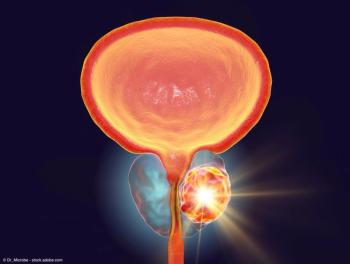
“Overall, the combination of saruparib plus an ARPI was well tolerated," Arun Azad, PhD, MBBS.

Regarding the primary end point, “4 patients showed a partial response, leading to a response rate of 17%," said Srikala S. Sridhar, MD, MSc, FRCPC.
Stephen J. Freedland, MD, reported that with combination enzalutamide/leuprolide, the risk of death was 40.3% lower vs leuprolide alone.
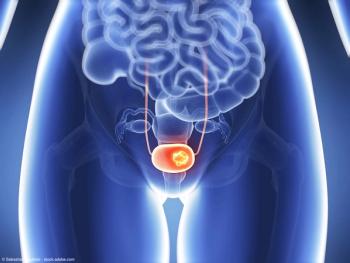
“This is the first trial to show an overall survival benefit in this population,” Christof Vulsteke, MD, PhD, noted.

Andrea Necchi, MD, reported a pCR rate of 38% (95% CI, 28%-49%) for cohort 1 vs 28% (95% Ci, 16%-44%) for cohort 2.

“POTOMAC met its primary end point of disease-free survival in the ITT [intent-to-treat] population," said Maria De Santis, MD.
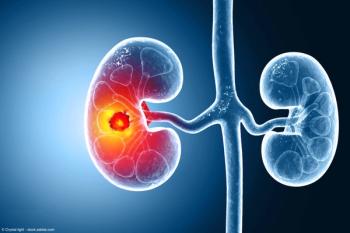
"Observed efficacy of pembrolizumab plus lenvatinib were confirmatory of prior observations for this combination," said Cristina Suarez Rodriguez, MD, PhD.

“With 5 years of follow-up, median overall survival is longer with nivolumab vs placebo on interim analysis," said Matthew D. Galsky, MD.
"The addition of perioperative durvalumab to neoadjuvant chemotherapy significantly improved event-free survival and overall survival without adversely affecting patient-reported outcomes,” said Michiel van der Heijden, MD, PhD.

The grade 3-5 AE rate was 78.9% (95% CI, 70.8-85.6) in the 75 mg/m2 arm vs 61.2% (95% CI, 51.9-69.9) in the 50 mg/m2 arm (P =.0024).