

By the data cut-off date of January 31, 2023, investigators reported that 30% of patients with nonmetastatic castration-resistant prostate cancer had received darolutamide for at least 4 years, and 24% of were still receiving the agent.

Benjamin P. Saylor is Strategic Content Lead for the MJH Life Sciences® brands Contemporary OB/GYN®, Contemporary Pediatrics®, and Urology Times®.
By the data cut-off date of January 31, 2023, investigators reported that 30% of patients with nonmetastatic castration-resistant prostate cancer had received darolutamide for at least 4 years, and 24% of were still receiving the agent.

The FDA will be evaluating findings from cohorts A and K from the phase 1b/2 EV-103 trial.
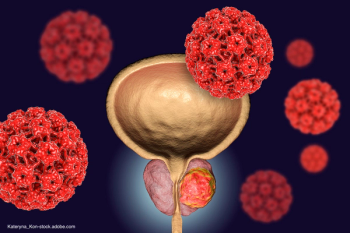
The regimen consists of an alpha prostate-specific membrane antigen-targeted radionuclide therapy (225Ac-J591), an androgen receptor signaling inhibitor, and pembrolizumab.

"We want to make sure that independent urology continues to thrive by recruiting new people to independent urology. That's what we're going to try and do," said Evan R. Goldfischer, MD.

"Specifically for our transgender and gender-diverse patients, there are still insurance issues and access issues in general," said Diana K. Bowen, MD.

In an interview during the 2022 LUGPA Annual Meeting, Jason M. Hafron, MD, shared advice on optimizing advanced prostate cancer clinics, recapped the biggest advances in urologic cancer treatment in 2022, and discussed how Jelmyto treatment for UTUC has evolved over time.
In an interview during the 2022 LUGPA Annual Meeting, Ashley Ross, MD, PhD, discussed angoing advances and unmet needs in prostate cancer.
The findings are from the EV-103 trial and were presented at the 2022 ESMO Congress by lead investigator Jonathan E. Rosenberg, MD.
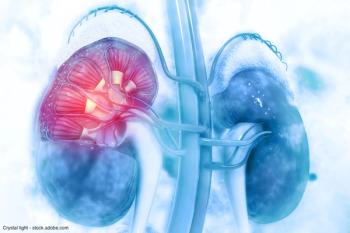
“Further analysis of patient subsets with this unique trial should help inform future research,” said lead investigator Mohamad Allaf, MD.

"Our goal is to understand the lived experiences of people on gender-affirming hormonal therapy, as it relates to their urinary and sexual health,” said first author Paige De Rosa, MD, urology resident at the University of Iowa, Iowa City.

Senior author Kevin Ginsburg, MD, said he and his coauthors observed wide variation by practice in the use of active surveillance in this patient population.

The median time between PSA progression and metastasis was 7.0 months for darolutamide compared with 5.6 months for placebo.

“Darolutamide, unlike enzalutamide, does not affect cabazitaxel systemic exposure, justifying their use in combination,” the authors wrote in their poster.
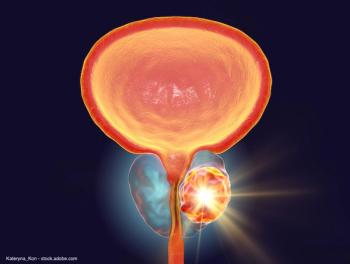
“The clinical implications are that lutetium PSMA has similar overall survival to cabazitaxel, a proven life-prolonging therapy, but with fewer adverse events and better patient-reported outcomes," said Michael S. Hoffman, MBBS (Hons), FRACP, FAANMS.

“Overall, these data…provide new insights about survival in patients receiving avelumab first-line maintenance in the JAVELIN Bladder 100 trial with or without second-line treatment," says Joaquim Bellmunt, MD, PhD.
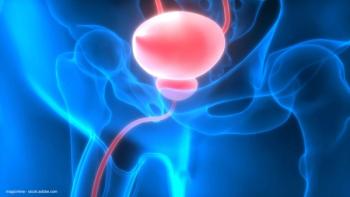
"This study does not support further investigation of cabozantinib alone as a maintenance therapy after platinum-based chemotherapy in unselected patients with advanced urothelial cancer,” said Robert J. Jones, MA, PhD, MBChB.

The investigators report that no device or procedure-related serious adverse events have occurred.

“With proper training and proper technique, there really can be drastic changes that can be made without having to do a surgical intervention,” commented first author Alissa Tyler, RN.

The hematuria monitor (HM) was discussed in a late-breaking abstract at the 2022 American Urological Association Annual Meeting in New Orleans, Louisiana.

At 2, 3, and 5 weeks after surgery, the stone removal rate was higher in the test group vs the control group (P < .05).

“Our results showed significant improvement in postoperative urgency and UUI (P = .005) with no significant change in IIEF-5 score at 6-month follow-up compared to baseline,” wrote the authors.

In this interview, Christopher L. Amling, MD, FACS, discusses the development of anatomic radical prostatectomy and how the technique transformed the surgical treatment of prostate cancer.

In this installment of Urology Times' 50th Anniversary Innovation Celebration, Ekene A. Enemchukwu, MD, MPH, discusses the development of β3 agonists for the treatment of overactive bladder.

In this installment of our 50th Anniversary Innovation Celebration, Anthony Zietman, MD, discusses the development of radiation therapy for prostate cancer.

"It’s important to recognize that there has been a shift in the way we approach ADT," says David F. Jarrard, MD.

"Overall, these findings tell us that not everyone can undergo a same-day surgery for BPH," says Michael A. Palese, MD.

“I think that this updated analysis of KEYNOTE-564 further supports adjuvant pembrolizumab as a new standard of care for patients with RCC with high risk of recurrence,” said Toni K. Choueiri, MD.

“I think what we're showing here is that the overall survival benefit, as well as the safety analysis, regardless of the number of comorbidities, was rather significant,” said study coauthor Neal D. Shore, MD.

In this installment of the Urology Times' 50th Anniversary Innovation Celebration, Melissa R. Kaufman, MD, PhD, FACS, discusses the significance of onabotulinumtoxinA treatment in patients with overactive bladder.

The investigators reported that overall perioperative transfusion rates were significantly lower in patients undergoing robot-assisted radical cystectomy.