

“At 365 days, the rate of return procedures was lowest for the UroLift. The rate of return procedures was higher after Rezum versus UroLift,” says Steven A. Kaplan, MD.

Benjamin P. Saylor is Strategic Content Lead for the MJH Life Sciences® brands Contemporary OB/GYN®, Contemporary Pediatrics®, and Urology Times®.
“At 365 days, the rate of return procedures was lowest for the UroLift. The rate of return procedures was higher after Rezum versus UroLift,” says Steven A. Kaplan, MD.

“Darolutamide was associated with a reduction in locally invasive procedures and delayed time to deterioration in patient health-related quality of life with respect to urinary and bowel symptoms,” says Neal D. Shore, MD, FACS.

“In a real-world clinical setting, providers representing a broad range of practice styles, settings, education, and experience readily adopted IsoPSA to help risk stratify and generated about a 50% reduction in the number of prostate biopsies recommended,” said Eric A. Klein, MD.

“Level 1 data on shock wave therapy for ED is still pending. It should not be marketed as having such,” says James Weinberger, MD, MBA.

The novel oncolytic immunotherapy CG0070 is also currently being explored as a in a phase 3 monotherapy trial.

In a news release, Checkmate -274 primary investigator Matthew Galsky, MD, hailed the approval as a “major milestone for patients who have undergone major surgery to remove the bladder or parts of the urinary tract and are in need of additional treatment approaches that can help reduce the risk of their UC returning."

Investigators report that high urinary cotinine levels are associated with a greater risk of recurrence in smokers.
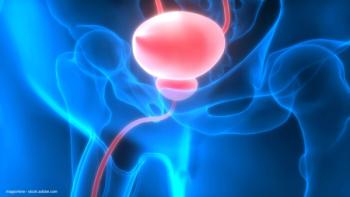
Integrating immunotherapy into bladder-sparing approaches may enhance the efficacy and uptake of these strategies in bladder cancer.
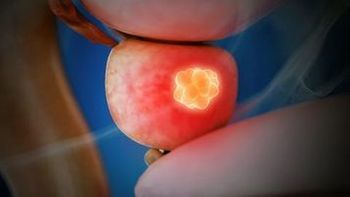
The regimen was associated with an approximately 2.5-year absolute benefit in median radiographic progression-free survival versus standard care.

Patients with African ancestry were also less likely to be treated on clinical trials versus patients with European ancestry, the investigators reported.

A 1-year bladder-intact disease-free survival rate of 89% was observed across the entire phase 2 study cohort.
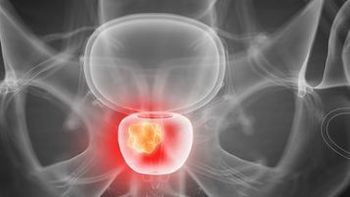
The treatment was also well tolerated, results from an ongoing phase 1/2a dose escalation study indicate.

The recently released AUA 2020 Annual Census Report also contained notable data regarding telemedicine utilization.

The test can help clinician determine whether a second procedure would be of benefit to a patient.
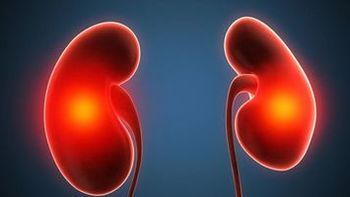
Substudy 03B is enrolling patients with disease progression after treatment with PD-1/PD-L1 inhibitors and VEGF-tyrosine kinase inhibitors.

The anonymous online survey, is meant to gain information “from urologists about the current survivorship care that is provided for survivors of prostate cancer,” according to Stacy Loeb, MD, MSc.

“[Urologists are] very comfortable giving agents in the bladder, so [CG0070] really fits in line with what we give,” says investigator Edward Uchio, MD.

“Among patients treated with apalutamide, molecular signatures indicative of increased immune activity, decreased vascularization, or decreased proliferative capacity at baseline were each independently associated with long-term response,” reported Felix Y. Feng, MD.

After adjusting for crossover using a preplanned sensitivity analysis, investigators for the pivotal phase 3 TITAN trial found a 48% reduction in the risk of death in patients treated with apalutamide plus ADT versus ADT alone.

“These findings indicate that darolutamide is an effective and well-tolerated androgen receptor inhibitor as an early treatment option for patients with [nmCRPC],” reported Neal D. Shore, MD.

Patients undergoing pouch diversion reported significantly more regret than patients undergoing neobladder or ileal conduit.

The in-depth interview covers the data that led to the NMIBC approval, outlines the appropriate patient population for pembrolizumab, and reviews side-effect management with the immune checkpoint inhibitor.
Of 13 studies evaluated by investigators for the meta-analysis, only 1 was a randomized controlled trial.
Investigators also reported that a subgroup of patients with 1 or more target kidney lesions experienced kidney tumor reduction and other benefits from the combination treatment.

The FDA has granted fast track designation to EPI-7386, an oral, highly selective N-terminal domain inhibitor of the androgen receptor for treatment of mCRPC resistant to standard-of-care treatment.

A multidisciplinary panel outlines criteria for stratifying risk for genitourinary malignancy in patients with microhematuria.

The FDA approved an additional recommended dosage of 400 mg every 6 weeks for the anti-PD-1 therapy pembrolizumab (Keytruda), across all adult indications, including monotherapy and combination therapy, Merck reported.

J. Brantley Thrasher, MD, executive director of the American Board of Urology, spoke with Urology Times about what the ABU is doing to reduce the burden on urologists and their practice.

Henry Rosevear, MD, talks about how he and his practice are coping with the COVID-19 pandemic.

Jeb Bush touched on a range of issues in health care and politics and shared a few personal anecdotes about his famous family with LUGPA members at the association’s annual meeting in Chicago.