

The panel reviews the similarities and differences between the FDA-approved PSMA-PET tracer options for prostate cancer imaging.

Cookson, professor and chair of urology at the University of Oklahoma Health Sciences Center in Oklahoma City, is co-editor in chief of Urology Times®.
The panel reviews the similarities and differences between the FDA-approved PSMA-PET tracer options for prostate cancer imaging.
Phillip Koo, MD, defines prostate-specific membrane antigen (PSMA) and explains the rationale for use as a target in PET-based prostate cancer imaging.

Scott Sellinger, MD, FACS, shares a historical perspective on use of conventional imaging modalities in prostate cancer.
Michael Cookson, MD, MMHC, explains the NCCN criteria used to stratify patients with clinically localized prostate cancer into risk groups.
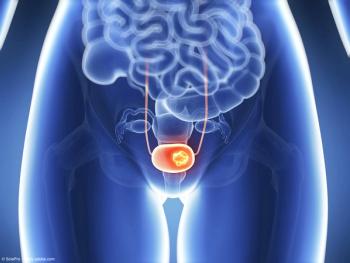
"We anticipate that in the next decade, breakthroughs in genetic profiling of tumors for precision therapies will further reduce suffering and death from bladder cancer," writes Michael S. Cookson, MD, MMHC.

"AI has...been increasingly utilized in the field of medicine, including cancer research, because of its potential to improve diagnostic accuracy, prognosis prediction, and personalized treatment planning," writes Michael S. Cookson, MD, MMHC.

"We are...entering a new era for patients with urologic malignancies. Furthermore, we are expanding our reach and influence in patient care designed to improve outcomes," writes Michael S. Cookson, MD, MMHC.
"Cancer doesn’t take a holiday or vacation, and it doesn’t care about a pandemic. Our efforts to reduce deaths from prostate cancer through screening and early detection must continue," writes Michael S. Cookson, MD, MMHC.

"What we still need to trial is the use of treatment intensification or triple therapy in men with high-risk localized and/or locally advanced disease," writes Michael S. Cookson, MD, MMHC.
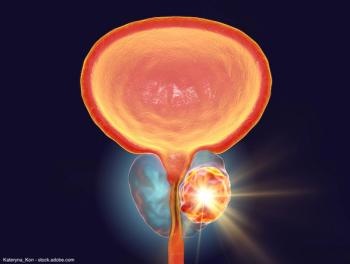
"As we celebrate 50 years of successes, the Gleason grading system deserves recognition," writes Michael S. Cookson, MD, MMHC.
"The future is bright for immunotherapy in bladder cancer," writes Michael S. Cookson, MD, MMHC.

"As we celebrate the tremendous victories against cancer and commemorate 5 decades of progress, we are also reminded of the harsh reality that we have a war still to be won," writes Michael S. Cookson, MD, MMHC, co–editor in chief of Urology Times.

"The Will Rogers phenomenon continues to be impactful, and when combined with a precision treatment, the outcomes of this disease state will be “doubly improved” for generations to come," writes Michael S. Cookson, MD, MMHC.
"After a long period of stagnation and inertia, the bladder cancer space is alive and full of innovation and activation," writes Michael S. Cookson, MD, MMHC.