
Michael S. Cookson, MD, MMHC, FACS, unpacks the significance of the phase 2 ARASEC trial evaluating darolutamide in mHSPC.

Cookson, professor and chair of urology at the University of Oklahoma Health Sciences Center in Oklahoma City, is co-editor in chief of Urology Times®.
Michael S. Cookson, MD, MMHC, FACS, unpacks the significance of the phase 2 ARASEC trial evaluating darolutamide in mHSPC.
ARASEC provides US-based, contemporary evidence supporting darolutamide plus ADT in metastatic hormone-sensitive prostate cancer, demonstrating a 71% reduction in prostate cancer-specific mortality compared with a historical ADT control—while its use of propensity score matching with an external phase 3 control arm represents a novel trial design that may inform future studies in rapidly evolving treatment landscapes.

"If 2025 showed us anything, it is the power of combining scientific progress with public engagement," writes Michael S. Cookson, MD, MMHC, FACS.
Michael S. Cookson, MD, MMHC, FACS, shares his thoughts on the most exciting recent advances in bladder cancer treatment.
One notable trend is the shift of therapies originally reserved for heavily pretreated, castration-resistant prostate cancer into earlier phases of disease.

"As urologists, we should be proactive and creative as we find new ways to attract, retain and train the next generation," writes Michael S. Cookson, MD, MMHC, FACS.

"As clinicians, researchers, and advocates, this moment invites us to reflect on how far we’ve come—and how much further we must go," writes Michael S. Cookson, MD, MMHC, FACS.

In this video, part 4 of a 4-part series, panelists discuss how primary care providers can address patient questions on prostate cancer screening.
In this video, part 3 of a 4-part series, panelists discuss treatment planning for prostate cancer, particularly in older patients.
In this video, part 2 of a 4-part series, panelists discuss the increasing prevalence of de novo metastatic hormone-sensitive prostate cancer.
In this video, part 1 of a 4-part series, panelists discuss the nuances and challenges of prostate cancer screening.
"We must lobby to maintain our current funding levels and push for increased support to continue driving progress in cancer care," says Michael S. Cookson, MD, MMHC, FACS.

"The increasing expenses associated with bladder cancer treatment highlight wider issues regarding the sustainability of health care expenditures in the US," writes Michael S. Cookson, MD, MMHC, FACS.

“In some ways, it can be used to help if you want to get a biopsy to prove or confirm—it can be used to help detect in that range, too,” says Michael S. Cookson, MD, MMHC, FACS.

“I think having the ability to monitor patients with imaging and using things like PSMA-PET is good, but yet we're we sometimes have pitfalls with PSMA-PET too,” says Michael Cookson, MD.

"The landscape of prostate cancer management has evolved significantly over the past 30 years, with [active surveillance], advances in imaging and genetics, and improvements in the treatment of high-risk disease marking key areas of progress," writes Michael S. Cookson, MD, MMHC.

"I predict the future treatment for men with truly high-risk prostate cancer will see a fusion of what was thought to be standard local treatments combined with multimodality therapies that were initially impactful only in the more advanced disease state," writes Michael S. Cookson, MD, MMHC, FACS.

"I predict 2024 will be a banner year for progress in the management of [NMIBC], and not only will we be moving the needle but also turning up the volume in this historically quiet space," writes Michael S. Cookson, MD, MMHC, FACS.

"Keeping up-to-date is challenging, and rapid progress that is now occurring in our field is truly amazing," writes Michael S. Cookson, MD, MMHC, FACS.
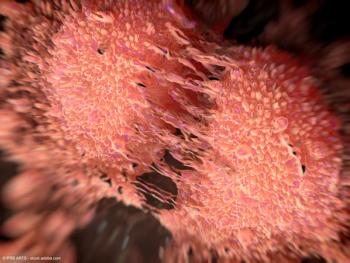
"Despite challenges, ongoing research and advancements in risk stratification, imaging techniques, and targeted therapies are paving the way for personalized and precision medicine approaches in prostate cancer management," writes Michael S. Cookson, MD, MMHC, FACS.

Experts summarize how the use of PSMA-PET imaging has impacted the field to date and share their hopes for the future.
The panel discusses the possibility of PSMA-PET becoming the standard-of-care imaging modality for prostate cancer, which may obviate the need for conventional imaging and bone scans, and then touches on the increasing availability of PSMA-targeted radiotherapies.
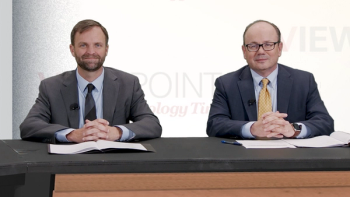
Drs Cookson and Sellinger discuss the remaining unmet needs in imaging for patients with prostate cancer.
The panel shares their perspectives on the transition to virtual multidisciplinary tumor boards for patients with prostate cancer after the COVID-19 pandemic.
Delving deeper into PSMA-PET results interpretation and information sharing, panelists outline the most critical information needed from radiologists and urologists on a patient’s multidisciplinary care team.
Experts share potential solutions to overcome the clinical challenges of using PSMA-PET in practice, including use of reader training programs.
Dr Cookson discusses the challenges of using PSMA-PET imaging in prostate cancer, including reimbursement and patient access.

Dr Sellinger details the range of clinical guidelines on the use of PSMA-PET imaging in prostate cancer and which he is most likely to follow.
The panel reviews clinical data and provides real-world insight on how use of PSMA-PET imaging has impacted the management of patients with prostate cancer.
Experts discuss practical considerations on selection among available PSMA-PET tracer options for prostate cancer imaging, including regional availability, scheduling, and preparation requirements.

January 4th 2022

September 26th 2022