



Benign Conditions
Latest News

Advertisement
Latest Videos



CME Content




Advertisement
More News
Other pipeline products discussed in this round-up include agents for metastatic urothelial cancer, clear cell renal cell carcinoma, and stress urinary incontinence.

Also read about expansions to an intermittent catheter line, a new radiofrequency treatment for improving local vaginal circulation, an app for men navigating fertility challenges, and more.

Other topics covered in this year's take-home messages for basic science (benign) include interstitial cystitis/bladder pain syndrome and bladder cancer.

"We must better identify patients with higher risk factors for recurrence and follow them more effectively," writes Stephen Y. Nakada, MD.

Many urologists don't follow guidelines calling on them to image their patients after ureteroscopic stone disease treatment, researchers say.

These videos demonstrate significant advances in percutaneous nephrolithotomy technique that can serve to optimize outcomes, reduce OR time, and help achieve optimal results.
The AUA 2018 take-home messages in outcomes also covered topics such as environmental exposures and bladder cancer and onabotulinumtoxinA (Botox) treatment for patients with overactive bladder.
Contrast-enhanced ultrasound for detecting renal cell carcinoma recurrence following ablation and new protocols for low-dose computed tomography in stone patients were among the other research highlights in imaging at the AUA annual meeting.

A mobile app for stone metaphylaxis and an algorithm defining specific indications for stent omissions were among the other highlights in endourology/stones at AUA 2018.

This article discusses the risk of depression and suicide in men, focusing on increased risk in men with genitourinary cancer and other urologic conditions.
To help you sift the enormous scientific program and prioritize your schedule at the AUA annual meeting, the editors have called upon Urology Times’ editorial advisory board to identify the key research across multiple areas of the specialty.
Findings from a cost-effectiveness analysis provide useful information for physicians, patients, and payers about available treatments for lower urinary tract symptoms due to BPH, according to the authors who conducted it.
A 75-year-old male with a long history of nephrolithiasis has been suffering with recurrent urinary tract infections and debilitating dysuria. After obtaining urine from the left renal pelvis, which appeared clear, a retrograde pyelogram is performed. What is your next step?
A new study suggests that metallic Resonance ureteral stents are a good option for management of malignant ureteral obstruction because they promote strong long-term outcomes.
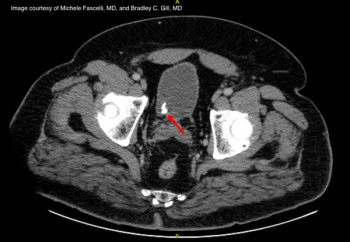
An elderly male with hypertension, lumbar spinal stenosis, morbid obesity, and ED presents with acute right-sided worsening of his chronic back pain. A distal right ureteral stone is found on CT and his symptoms respond well to medical therapy, but he later develops severe right flank pain.
In another potential sign of racial disparities in urologic care, a new study finds that urologic restoration surgery is significantly less likely to be used to treat African-American men with stress urinary incontinence than Caucasian men, although African-Americans appear to have higher rates of SUI.

Findings of a retrospective study confirm that unplanned encounters are common after ureteroscopy.

A recent study "revealed that inadequate pain control, presence of a ureteral stent, and a first-time stone treatment were the most common reasons for unplanned utilization of health care services [following ureteroscopy]," writes Brian R. Matlaga, MD, MPH.
A 42-year-old female undergoes right percutaneous nephrolithotomy (PCNL) for a complete staghorn calculus. As a routine after PCNL, a chest-x-ray was obtained using fluoroscopy. What abnormality is seen?
Other products highlighted in this round-up include a plate for studying infections caused by the long-term use of catheters and a new indication for sunitinib malate (SUTENT).

When treating kidney stones, debate continues over the use of dusting versus basketing. In this interview, Olivier Traxer, MD, describes both methods, lists his preferred laser settings, and explains why he changed the way he uses ureteral access sheaths.
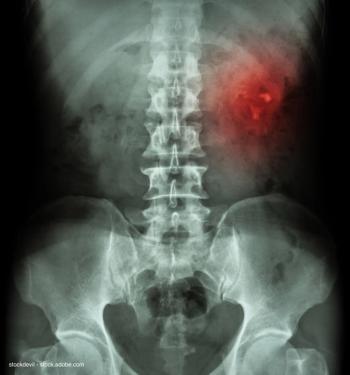
A study analyzing stone-free rates after ureteroscopy suggests that urologists might consider applying refined patient selection criteria in order to achieve better outcomes.
Reconstruction of anterior compartment defects using magnetic resonance-visible vaginal mesh implants in combination with post-surgical three-dimensional imaging is feasible and yields reproducible results, researchers report.
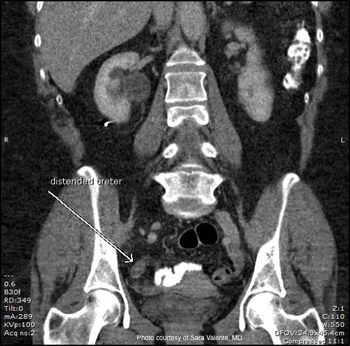
A 61-year-old female complains of acute-onset right-sided flank and abdominal pain. She describes associated nausea, but denied urinary symptoms, hematuria, fever, or chills.
Advertisement
Advertisement
Trending on Urology Times
1
Managing BPH Before Prostate Radiotherapy: Options Compared
2
FAQs: The 2026 AUA Guideline on Medical Management of Kidney Stones
3
PSMA-PET in clinical practice: Juan Gómez Rivas, MD, on barriers to access
4
FDA grants RMAT designation to EG110A for neurogenic detrusor overactivity
5