





Genomic Testing
Latest News
Advertisement
Latest Videos






CME Content


Advertisement
More News

Test your knowledge of this quiz on the Canadian Urological Association's recommendations for germline genetic testing in prostate cancer management.
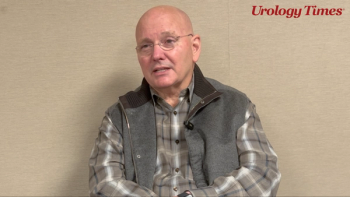
Sieber shares his thoughts on the potential for universal genetic testing to become a standard of care practice for patients with prostate cancer.
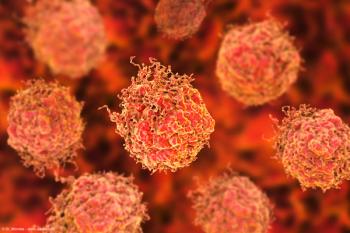
“Our study highlights the potential of epigenomic profiling from a simple blood draw to provide a real-time, non-invasive readout of PSMA expression that corresponds with treatment response," says Jacob E. Berchuck, MD.

"I'm hopeful that the decisions are more informed in terms of actual science," says Daniel Kwon, MD.
“Before long, what we do, how we do it, and when we do it might solely be based off of those genetic testing results,” says Tim Richardson, MD.

"Whenever they discuss germline testing, an important part of that is this pretest counseling process where you talk about the pros and the cons," says Daniel Kwon, MD.
APPs can help in introducing genetic testing and in the interpretation of results, according to Kara Cossis, PA-C, MPH.
Tim A. Richardson, MD, outlines the 2 key scenarios for utilizing genetic testing in clinical practice.

Data demonstrated wide variation in the proportion of patients recommended for testing and showed that barriers to testing remain.

"[Veterans] may be missing out on potentially life-saving treatments, and their family might also be missing out on some benefits as well," says Daniel Kwon, MD.
“Opportunity wise, I always say that if you don't perform the test, then you're limiting treatment options for your patients,” says Kara Cossis, PA-C, MPH.

In total, 33.3% of patients with a VUS also had positive lymph node involvement and required adjuvant ADT compared with only 16.2% of patients who did not have a VUS.
Daniel Kwon, MD, on germline testing for prostate cancer in veterans with service-connected benefits
"We were trying to understand how veterans were making decisions about germline testing for their prostate cancer," says Daniel Kwon, MD.
“It is critical that urologists understand when to order germline testing, are comfortable with actually ordering these tests, and integrate medical geneticists when appropriate," says Aditya Bagrodia, MD, FACS.

Patients with high P-CARE scores had an increased risk of any, metastatic, and fatal prostate cancer compared with patients with median P-CARE scores.
Patients with elevated CTC count at baseline experienced poor complete response rates and worsened PFS and OS.
“NSD2 is a cancer specific collaborator of the androgen receptor that essentially rewires its activity to support prostate cancer development," says Abhijit Parolia, PhD,

Patients who had mutations in the ERCC2, ATM, or RB1 genes were more than 5 times more likely to achieve a pathologic complete response following cisplatin-based chemotherapy.
"The scale of that linkage and the manner with which we were able to do it is really exciting and opens the door for a lot of future discovery," says Michael S. Leapman, MD, MHS.

"We wanted to look at the importance of genetic testing in patients with GU cancer and the impact that it has on their treatment decision-making, and the pathways that we put them on," says Mouneeb Choudry, MD.

"What we found is that across the board, all 16 scores did relatively well with the association between an elevated polygenic risk score and prostate cancer incidence," says Randy A. Vince Jr, MD, MS.

"I think the biggest take-home message is just the importance of genetic testing," says Adri Durant, MD.
"Having a better understanding of which PGVs are really putting patients at an increased risk vs others, I think would definitely be something that needs more investigation," says Mouneeb Choudry, MD.
here was a higher concordance of somatic alterations between tissue and ctDNA testing in patients with metastases vs those without.

"Of patients with bladder cancer, 100% of the pathogenic variants would have been missed based on current guidelines," says Adri Durant, MD.
Advertisement
Advertisement
Trending on Urology Times
1
Avoiding False Positives on Prostate Cancer PSMA PET Scans
2
Experts review evidence on testosterone and prostate cancer
3
Carotuximab plus apalutamide shows interim PFS benefit in mCRPC
4
Aglatimagene besadenovec shows sustained immune remodeling in localized prostate cancer
5