





Prostate Cancer
Latest News
Advertisement
Latest Videos


CME Content








Advertisement
More News

Explore the transformative journey of prostate cancer imaging techniques, from conventional methods to cutting-edge PET scans like F-18 PSMA, and how FDA approvals have shaped their adoption.
Join David Albala, MD, as he explores the use of advanced imaging techniques in prostate cancer diagnosis and management, highlighting PSMA-PET scans and their pivotal role in modern prostate cancer care.

“The ClarityDX Prostate test will reduce the number of unnecessary prostate biopsies, which are invasive, uncomfortable, and carry some risk,” says John D. Lewis, PhD.
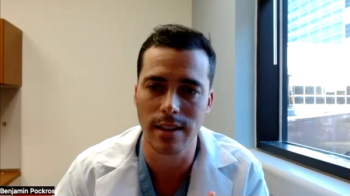
"It's really a monumental change for patients, and it is a massive win for our health care system," says Benjamin Pockros, MD.
Dr. Amir H. Lebastchi elaborates on his approach to integrating MRI and ultrasound fusion-based technology for guiding treatment selection and tailoring therapy for patients with prostate cancer.
Amir H. Lebastchi, MD, outlines his general strategy for active surveillance in prostate cancer patients, emphasizing the role of MRI and fusion-guided prostate biopsy.

Preliminary findings from the study showed a decrease in PSA levels across all doses of PDS0301 assessed.

The phase 2 study explored the investigational agent BXCL701 in combination with pembrolizumab in patients with small cell neuroendocrine prostate cancer.

“I think this study gives us actual numbers, so we can have a sense of how much time people will take off over time,” says Samuel L. Washington, MD, MAS.
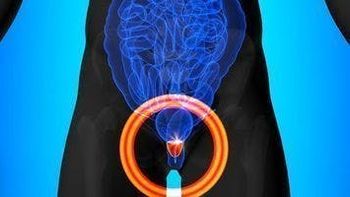
"A lot of patients with prostate cancer are going to receive one of these agents," says Tanya B. Dorff, MD.
"It's not just teaching all about prostate cancer; it's real life and how people are experiencing prostate cancer," says David F. Mobley, MD.
Dr. Amir H. Lebastchi reviews retrospective data comparing software-based and cognitive-based fusion biopsy approaches, providing valuable insights into the findings.
Amir H. Lebastchi, MD, explores the evolving landscape in the context of fusion-guided prostate biopsy methods.

In the second article of the series, Paul Sieber, MD, shares best practices for the administration of leuprolide in patients with advanced/metastatic prostate cancer.

“There are always other aspects of care other than that immediate treatment period that's needed,” says Samuel L. Washington III, MD.
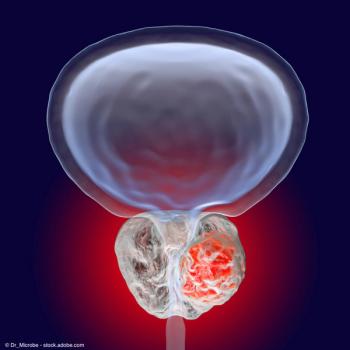
Patients who underwent treatment with SBRT demonstrated a 5-year disease control rate of 96%, compared with 95% among patients who underwent conventionally fractionated radiation therapy.

In the first article of this series, Benjamin H. Lowentritt, MD, FACS, gives an overview of micronized abiraterone and its role in the treatment of patients with metastatic castrate-resistant prostate cancer.
In the second interview of the series, Paul Sieber, MD, provides expert insights on the management of adverse effects seen in patients receiving leuprolide for the treatment of advanced/metastatic prostate cancer.

Dr Amir H. Lebastchi delves into the latest advancements and evolving tactics in the field of prostate cancer biopsy and diagnostic procedures.
Amir H. Lebastchi, MD, provides insights into the current prostate cancer landscape, emphasizing the importance of prostate cancer screening and early detection.


Experts Naveen Kella, MD, and Dr. Shadi Esfahani, MD, MPH, consider the continued impact of PSMA PET imaging on prostate cancer management and emerging modalities that could revolutionize patient care.

"I think what should be more appropriate is that the initial treatment decision does not impact [survival], but I don't think you can say that intervening aggressively for this lethal disease does not alter the course," says Isaac Y. Kim, MD, PhD, MBA.

The PSE test was shown to improve the predictive accuracy of a standard PSA test from 55% to 94%.
Advertisement
Advertisement
Trending on Urology Times
1
Experts discuss the challenge of detecting CIS in bladder cancer
2
Study shows durable 3-year outcomes with first-line gemcitabine/docetaxel in NMIBC
3
Phase 3 trial launches of CAIX-targeted radiopharmaceutical for ccRCC
4
Kathryn Gessner, MD, PhD, on the challenges of selecting patients for bladder preservation
5