






Prostate Cancer
Latest News
Advertisement
Latest Videos







CME Content








Advertisement
More News
UCSF is West Coast leader for the innovative, minimally invasive treatment for prostate cancer patients.

Paul M. Yonover, MD, FACS, offers closing thoughts on unmet needs and clinical challenges surrounding the treatment of prostate cancer.
An expert on prostate cancer discusses treatment considerations for patients with high-risk prostate cancer who have high disease burden and other comorbidities.
A urology specialist reviews the case of a 78-year-old patient with metastatic prostate cancer, analyzes their risk level and prognosis, and discusses frontline treatment.
Paul M. Yonover, MD, FACS, reviews treatment options available for patients with high-risk prostate cancer following radical prostatectomy.
A comprehensive overview of treatment options available for patients with prostate cancer and factors that influence treatment decisions.
An expert on prostate cancer discusses the clinical application of imaging and biomarker testing for patients with prostate cancer.
Paul M. Yonover, MD, FACS, a urology specialist, reviews the case of a 66-year-old man with prostate cancer and offers his initial impressions.

“So many times, partners were left in the dark. They didn't have a clue what their partner who had prostate cancer was going through, and we felt that we could fill that void,” says Neil H. Baum, MD.

In the first article of this series, Nilay Gandhi, MD, explains the treatment and management of patients with advanced/metastatic prostate cancer and details the options for androgen deprivation therapy.

Factors impacting the choice between gallium 68 and fluorine 18 PSMA PET tracers, including half-lives, institutional capabilities, access to resources, detection rates, reimbursement constraints, and potential differences in interpretation.
Naveen Kella, MD, and Dr. Shadi Esfahani, MD, MPH, discuss the consensus between clinical guidelines for PSMA PET CT usage in prostate cancer, emphasizing multidisciplinary collaboration and the importance of urologists' involvement.

The inclusion of PAE in the American Urological Association BPH Guidelines offers a non-surgical alternative that can provide long-term relief with minimal downtime and fewer complications, according to the United Urology Group.

“The driving force for this was understanding whether we have made improvements as surgeons over time in how we're able to remove the prostate, but then also what types of functional outcomes patients have with regards to urinary function and sexual function,” says Udit Singhal, MD.

Expert urologist Naveen Kella, MD, shares his perspective on the advent of PSMA PET-CT imaging in patients with prostate cancer, addressing both benefits and limitations to this approach.

"It was really wonderful to work with a lot of our coauthors for the chapters because they really are thought leaders in the field," says Edward M. Schaeffer, MD, PhD.

In the first interview of the series, Nilay Gandhi, MD, provides an overview of advanced/metastatic prostate cancer and the role of androgen deprivation therapy in treating patients.
Key opinion leaders discuss how PSMA PET CT tracers, including gallium 68 and fluorine 18, are revolutionizing prostate cancer patient management and with accurate and early detection of disease spread.
A review of available PSMA PET tracers for prostate cancer detection, covering sensitivity, specificity, access to therapy, and reimbursement impacting patient care.
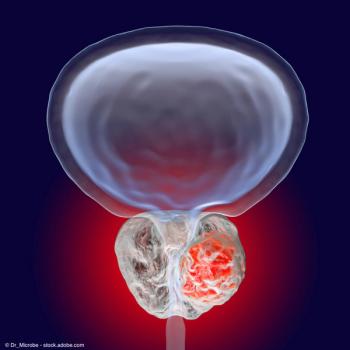
“Where I have found that it has been incredibly useful has been in those unfavorable intermediate-risk patients or those individuals who are kind of borderline at the risk spectrum,” says Rana R. McKay, MD.

The Focal One high intensity focused ultrasound system uses precision sound waves to destroy prostate tumor tissue and spare healthy tissue, reducing the risk of side effects that would lower a patient's quality of life.

“I was of course flattered when Dr. Walsh and Janet Worthington approached me to take the lead on editing and writing this fifth version of the book,” says Edward M. Schaeffer, MD, PhD.

"FPSA is an important, inexpensive, and readily available test in our risk-stratification toolbox," writes Badar M. Mian, MD.

Joshi Alumkal, MD, highlights findings from the phase 3 ARASENS trial that led to the FDA approval of darolutamide for use in combination with docetaxel for the treatment of patients with metastatic hormone-sensitive prostate cancer.
In the third article of this series, Amar U. Kishan, MD, provides clinical insights on the use of perirectal spacers for patients who receive hypofractionated radiation or SBRT.
Advertisement
Advertisement
Trending on Urology Times
1
Experts discuss the challenge of detecting CIS in bladder cancer
2
Study shows durable 3-year outcomes with first-line gemcitabine/docetaxel in NMIBC
3
Phase 3 trial launches of CAIX-targeted radiopharmaceutical for ccRCC
4
Kathryn Gessner, MD, PhD, on the challenges of selecting patients for bladder preservation
5