




Prostate Cancer
Latest News

UCSF prostate cancer expert Dr. Eric J. Small elected ASCO President for 2025-26 term
By UCSF Health
Advertisement
Latest Videos







CME Content








Advertisement
More News

Comprehensive insights on the utilization of rectal spacers with proton beam radiation and brachytherapy in prostate cancer.

In this episode, David M. Albala, MD, and Sanoj Punnen, MD, discuss precision medicine and the use of biomarker tests in prostate cancer screening and detection.

Dr. Shawn Zimberg and Dr. Dean Laganosky discuss the BioProtect Balloon Transplant System, a rectal spacer for use in prostate cancer radiation.

"We're entering an era of more trauma-informed care, and trying to be sensitive to the fact that some of these invasive procedures can be a trigger for people because they're in that moment of feeling helpless and they don't have really a lot of control over the situation," says Heidi J. Rayala, MD.
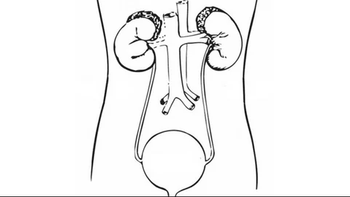
Experts on prostate cancer outline the best candidates for rectal spacing and outline factors that influence rectal spacer placement.
Prostate cancer specialists provide insights on stereotactic body radiation therapy (SBRT) and hypofractionation and their relationship to optimal rectal spacing.
“The study highlights the importance of considering how altering cell metabolism could impact prostate cancer and its response to treatment," says Jenna Giafaglione.
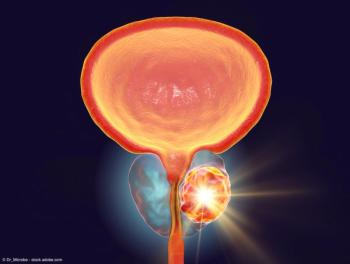
“This next-generation rectal spacing option is the first of its kind...and has the potential to provide an enhanced degree of protection from the genitourinary and rectal effects of prostate cancer radiation therapy,” said Dr. Laganosky.

Overall, Black men were 24% less likely to receive or be prescribed a novel hormonal therapy agent compared with White men.

In the third article of this series, Paul E. Dato, MD, provides comprehensive insights on the multidisciplinary care of patients with metastatic castration-resistant prostate cancer.
Urologists offer their perspectives on toxicity seen in patients with prostate cancer who are undergoing radiation treatment.
Experts on prostate cancer discuss the risks, complications, and safety considerations for patients with prostate cancer who are considering radiation therapy.
In this installment, expert Paul E. Dato, MD, discusses the value of a multidisciplinary team in managing patients with mCRPC and considers how his institution ensures patients receive best available therapy.

“Health literacy pushed people towards active surveillance, which I thought was an interesting finding,” says Adam B. Murphy, MD, MBA, MSCI.
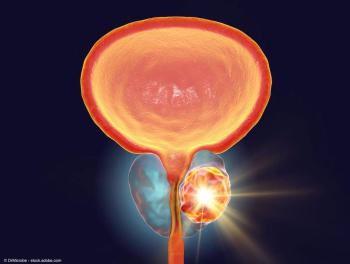
The research projects are assessing combination therapies in advanced prostate cancer that include the use of relugolix.
Dr Daniel Allan Hamstra highlights ongoing and planned trials investigating rectal spacers in patients with prostate cancer undergoing radiation therapy that he hopes will provide more data on toxicity reduction and preservation of sexual function.
Recommendations for the Use of Rectal Spacers in Clinical Practice for Patients With Prostate Cancer
Dr Hamstra recommends rectal spacers in certain prostate cancer patients to reduce rectal toxicity, allow dose escalation, and preserve sexual function, but advises judicious use due to potential complications and lack of long-term quality of life data with newer spacers.

In the second article of this series, Benjamin H. Lowentritt, MD, FACS, provides clinical insights on micronized abiraterone as a treatment for patients with prostate cancer.

The FDA has approved enzalutamide for use with or without a GnRH analog therapy for the treatment of patients with nonmetastatic castration-sensitive prostate cancer.

"I think the main take-home message from our study is that this is a really powerful prognostic prediction tool," says Charles Parker, MD.
“These findings suggest that to reduce health disparities for Veterans in the prevention of prostate cancer, clinicians should consider an individual Veteran’s risk for prostate cancer including factors such as race and age," says Kyung Min Lee, PhD.

"This large registry study with data from varied practice settings, incorporating the most commonly used treatment modalities, provides useful data on the long-term mortality outcomes," writes Badar M. Mian, MD.
“I think the takeaway from the active surveillance [session] is that we've increased the utilization of active surveillance for low-risk appropriate men,” says David S. Morris, MD, FACS.
Analysis of SpaceOAR trial and pooled data found reduced penile bulb radiation dose correlated with better preservation of sexual function over long-term follow-up, suggesting rectal spacers help maintain erectile function in some men with prostate cancer undergoing radiation therapy.
Advertisement
Advertisement
Trending on Urology Times
1
Experts discuss the challenge of detecting CIS in bladder cancer
2
Study shows durable 3-year outcomes with first-line gemcitabine/docetaxel in NMIBC
3
Phase 3 trial launches of CAIX-targeted radiopharmaceutical for ccRCC
4
Kathryn Gessner, MD, PhD, on the challenges of selecting patients for bladder preservation
5