



Prostate Cancer
Latest News

Advertisement
Latest Videos


CME Content








Advertisement
More News

The panel shares their perspectives on the transition to virtual multidisciplinary tumor boards for patients with prostate cancer after the COVID-19 pandemic.

"I would say that the take-home message of the study is that these immunosuppressive medications have alterations in the microbiology in a lot of these organs and a lot of these tumors," says Conor Driscoll, MD.

"Northwestern Madison's urology program has a very robust clinical research enterprise," says Edward M. Schaeffer, MD, PhD.

Anthony V. D’Amico, MD, PhD, discusses the choice between external beam radiation therapy and brachytherapy in patients with prostate cancer.

"The NCCN guidelines are unique in that they're almost constantly updated in real time," says Edward M. Schaeffer, MD, PhD.

"Prostate cancer showed a decreased risk, which we thought was very interesting, because it was the only cancer for which that signal existed, that there is possibly a protective effect of these medications," says Conor Driscoll, MD.
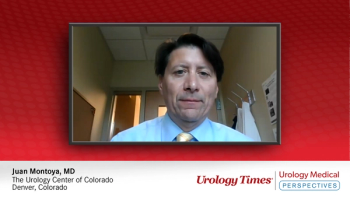
In the first installment of this series, Juan Montoya, MD, discusses the results of the phase 3 pivotal trial of a polyethylene glycol-based hydrogel spacer, reviews real-world data on this product, and provides insights on the evolving practice standards for perirectal spacing in prostate cancer.
Karim Fizazi, MD, PhD, discusses safety data from the phase 3 TALAPRO-2 trial, which explored talazoparib plus enzalutamide in patients with metastatic castration-resistant prostate cancer.

The new space includes a clinical laboratory for IsoPSA testing, labs for research and development, offices, and manufacturing spaces for production and distribution of in vitro diagnostic kits.
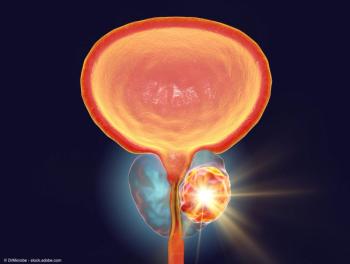
"Catheters go in, [and] they come out within 2 to 3 days for my patients. Therefore, the perioperative period is very easy for patients, whereas radical surgery requires catheters for 7 to 10 days," says Kevin R. Basralian, MD.
Delving deeper into PSMA-PET results interpretation and information sharing, panelists outline the most critical information needed from radiologists and urologists on a patient’s multidisciplinary care team.
Experts share potential solutions to overcome the clinical challenges of using PSMA-PET in practice, including use of reader training programs.
"About 29% of our high-risk patients tested AI biomarker negative, and they could thus be spared the long-term [adverse] effects of ADT for 2 to 3 years," says Andrew J. Armstrong, MD, MSc.

"Clinicians have opportunities to reduce patient subjective and objective financial burden if they continue to self-educate and communicate with patients and consider [financial toxicitiy] an adverse effect of treatment," write Alexandria A. Spellman, MD, MS, and Deborah R. Kaye, MD, MS.
“We found some BRCA1 and BRCA2 mutations, as well as CDK12 mutations, in our cohort of patients with intraductal carcinoma of the prostate. Those are things that you could use now for clinical decision-making with PARP inhibitors with their approved indications,” says Benjamin Miron, MD.
“These are high-risk patients and they do have a high likelihood of having advanced or metastatic disease in the future,” says Benjamin Miron, MD.

The approval is based on findings from the phase 3 TALAPRO-2 trial.
Dr Cookson discusses the challenges of using PSMA-PET imaging in prostate cancer, including reimbursement and patient access.

Dr Sellinger details the range of clinical guidelines on the use of PSMA-PET imaging in prostate cancer and which he is most likely to follow.

"For one thing, we're really interested in looking at plant-based diets in patients who are at high genetic risk for prostate cancer," says Stacy Loeb, MD, MSc.
"Nonmetastatic castration-resistant prostate cancer remains an incurable disease state," says Alicia Morgans, MD.

"The most alarming finding is that there were 0 instances of DREs in the NAMCS dataset over the entire 5-year period, and there were no PSAs conducted in American Indian/Alaska Native men after 2014,” says Christopher M. Gillette, PhD.
"This [guideline]... is probably the most broad in scope and incorporates a lot of the things that were missing or not yet mature enough to be included in the previous guidelines," says Badrinath Konety, MD, MBA.
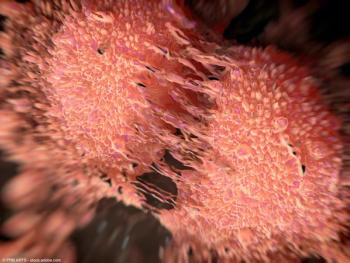
"We successfully demonstrated that the overexpression of TRAF4 prompts the conversion of androgen-sensitive prostate cancer cells into castration-resistant cells,” says Ping Yi, PhD.
The panel reviews clinical data and provides real-world insight on how use of PSMA-PET imaging has impacted the management of patients with prostate cancer.
Advertisement
Advertisement
Trending on Urology Times
1
Experts discuss the challenge of detecting CIS in bladder cancer
2
Study shows durable 3-year outcomes with first-line gemcitabine/docetaxel in NMIBC
3
Phase 3 trial launches of CAIX-targeted radiopharmaceutical for ccRCC
4
Kathryn Gessner, MD, PhD, on the challenges of selecting patients for bladder preservation
5