

Prostate Cancer
Latest News
Advertisement
Latest Videos



CME Content







Advertisement
More News
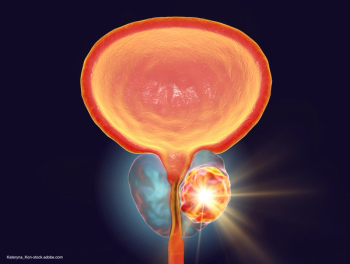
Study participants were randomly assigned to receive 6 months of HT plus local therapy or 6 months of HT alone.

“Where we really need to see change is talking about what the patient wants, what they're worried about, and what would work best for them,” says Angela Fagerlin, PhD.
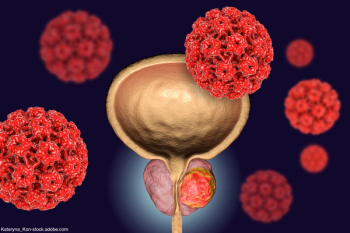
The application for darolutamide in the European Union is supported by findings from the phase 3 ARASENS trial.

“If there is such a clear difference between what different physicians are recommending, that calls into the need for patients to be more involved in decisions,” says Angela Fagerlin, PhD.

“I think this is a nice cluster of podcasts that really go at this from different angles,” says Stacy Loeb, MD, MSc.
The phase 2 SALV-ENZA trial explored whether the addition of enzalutamide to salvage radiation therapy could improve outcomes in patients with high-risk, PSA-recurrent prostate cancer after radical prostatectomy.

"I think what you're going to see is more of the urologic end points, the different cancers, especially prostate cancer," says Mark Moyad, MD, MPH.

FACT-RNT is the first tool to measure patient reported outcomes associated with radionuclide therapy for prostate cancer.

The double-blind phase 3 KEYNOTE-991 trial had enrolled 1251 patients.

“We need to do better, and men in America deserve a better chance at long-term, good outcomes from their prostate cancer discovery,” says Michael S. Cookson, MD, MMHC.

“So many patients with prostate cancer qualify for genetic testing, but it's currently underutilized,” says Stacy Loeb, MD, MSc.
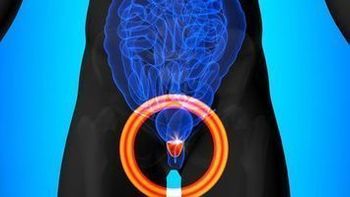
“The benefits can be reaped by the vast majority of patients and because we're really undertreating these patients, we need to make a conscious effort to overcome whatever barriers are facing us,” says Alicia Morgans, MD, MPH.
“If outcomes are improved for patients who take this combination — or in patients whose cancer is still progressing after being treated with hormone-based chemotherapy alone — this could be a big step forward in caring for these patients," says Moshe Ornstein, MD, MA.
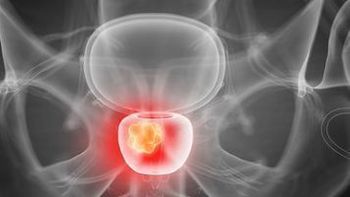
“Vertebral fragility fractures are often asymptomatic and overlooked but are known to decrease quality of life, and can also affect mortality,” the authors wrote.
Dr. Freedland closes his discussion by highlighting remaining unmet needs in mCRPC treatment and providing some clinical pearls for community oncologists treating patients with the disease.
Dr Stephen J. Freedland muses on how the utilization of AR pathway inhibitors and docetaxel in earlier lines of prostate cancer treatment has impacted subsequent treatment selection in mCRPC.
Stephen J. Freedland, MD, explains the treatment regimen he would have chosen for the patient with mCRPC in the presented case and outlines which factors, including clinical data, inform his treatment decision-making.
Dr Stephen J. Freedland reviews the available treatment options for patients with metastatic castration-resistant prostate cancer (mCRPC), visceral disease, and no actionable genomic alterations, who received prior treatment with docetaxel and AR-targeted therapy.
Stephen J. Freedland, MD, presents the case of a 67-year-old man with metastatic prostate cancer and give his initial impression.
In response to the findings, The American Cancer Society is launching IMPACT, an initiative aimed at reducing prostate cancer mortality.

“We don’t want to subject patients to a therapeutic strategy that they are unlikely to benefit from,” says Atish D. Choudhury, MD, PhD.

The environmental footprint of prostate MRI and prostate biopsy is similar to a round-trip flight from London to Paris, according to the authors.
In this interview, Arvin K. George, MD, gives an overview of the current state of focal therapy and also discusses 2 clinical trials evaluating new technologies in the space.

"Even though most of the end points had been negative and found no benefit, I think there are a couple of findings that we've learned in 2022 that surprised me," says Mark A. Moyad, MD, MPH.

"We are...entering a new era for patients with urologic malignancies. Furthermore, we are expanding our reach and influence in patient care designed to improve outcomes," writes Michael S. Cookson, MD, MMHC.
Advertisement
Advertisement
Trending on Urology Times
1
Clinical Application of MMAI Score in Patients with Prostate Cancer
2
FDA approves capivasertib plus abiraterone and prednisone for PTEN-deficient mHSPC
3
FDA approves adjuvant belzutifan with pembrolizumab for ccRCC
4
Kevin Zorn, MD, on selecting among different MIST options for BPH
5