




Prostate Cancer
Latest News
Advertisement
Latest Videos

CME Content







Advertisement
More News
Panelists consider how they have incorporated some newer imaging modalities, including PSMA-PET, into their clinical practice, and discuss the terminology that urologists and radiologists have recently used to describe these modalities.
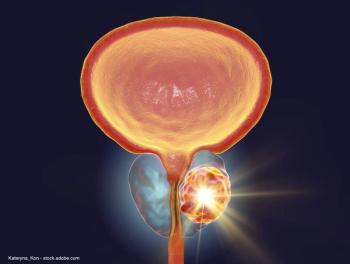
“I think this trial will pave the way for patients with high-risk prostate cancer to be treated in 5 weeks instead of 8 weeks," said Tamim M. Niazi, MD.
A focused discussion on prostate-specific membrane antigen (PSMA) as a target for imaging and treatment for patients with prostate cancer.
“We do know that for these specific racial minorities, more time and more tools need to be invested in order to have both the rates of PSA discussion and PSA testing equal to those that White men have,” says Hanan Goldberg, MD, MSc.

Expert panelists review risk stratification strategies for patients with prostate cancer and summarize the evolving use of conventional versus newer imaging modalities for diagnosis, treatment selection, and monitoring of these patients.

“You can't just have all or none treatments. You've got to have a middle ground for people who are going to look for that,” says John R. Valvo, MD.

Leuprolide acetate injection is a sterile, aqueous, clear, colorless solution that is administered through subcutaneous injection.
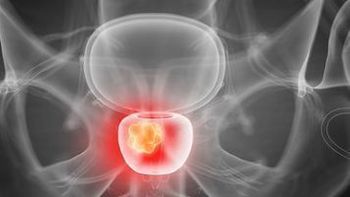
Results from the phase 3 MIRAGE trial showed lower rates of genitourinary and gastrointestinal side effects with MRI guidance vs CT guidance when treating patients with stereotactic body radiotherapy.
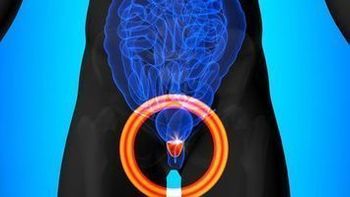
Rezvilutamide is a novel androgen-receptor inhibitor with low blood–brain barrier penetration.

“MFS, as a predictive marker for survival, favored the addition of short term ADT plus iSRT in this population compared to iSRT alone,” said lead study author Igor Latorzeff, MD.
The trial prospectively included a subgroup analysis comparing patients who received SBRT using robotic non-coplanar radiotherapy (CyberKnife) compared with conventional linear accelerator.

"If men were aware that just because they have no symptoms doesn’t necessarily mean they are cancer free, then more might take up offers for tests," says Vincent Gnanapragasam, MD.
Press Release
A Yale chemist and oncologist collaborated to create a new treatment for prostate cancer that tags specific proteins within the cancerous cells, making it easier for the body’s natural mechanisms to identify and destroy them.

“One of the first pieces of advice I would give is to make sure you have the OR space available for the equipment,” says Jennifer A. Linehan, MD.
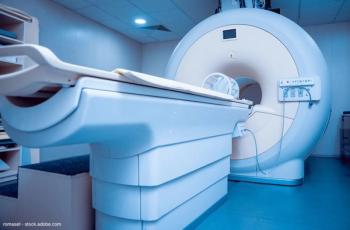
William P. Parker, MD, discusses the initial use of MRI and emergence of multiparametric MRI in the prostate cancer paradigm.
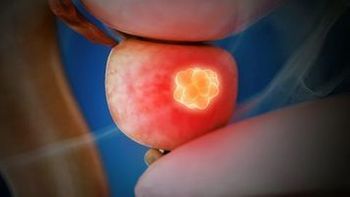
Stephanie Berg, MD, highlights the key findings of the PEACE-1 and ARASENS trials in patients with metastatic castration-sensitive prostate cancer.

Helen Heng-Shan Moon, MD, reflects on major advances in prostate cancer over the past 10 years and unmet needs that remain.

Christopher Wee, MD, discusses available androgen receptor inhibitors and unmet needs regarding the optimal use of these agents for patients with nonmetastatic castration-resistant prostate cancer.
“I think my definition of who is the ideal patient has changed over the last 4 years,” says Jennifer A. Linehan, MD.

“We really need to be thoughtful about how our treatment recommendations may induce financial toxicity in patients with advanced prostate cancer,” says Daniel D. Joyce, MD.
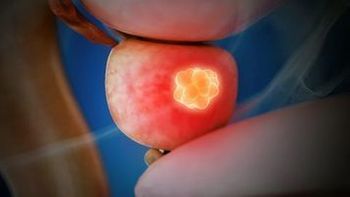
Adding apalutamide to the hormone therapy degarelix in the neoadjuvant setting increased the likelihood of achieving minimal residual disease negativity in patients with high-risk prostate cancer after radical prostatectomy.

“I feel like [HIFU] provided patients this intermediary treatment option…It was less invasive than radiation and surgery, but still provided cancer control, or at least for some patients delayed the time until they needed a more radical treatment,” says Jennifer A. Linehan, MD.

"Ultimately, it will be the treating physician’s responsibility to identify cost-effective alternatives and available resources to help mitigate the financial toxicity incurred from novel cancer therapies," writes Badar M. Mian, MD.

"Cancer doesn’t take a holiday or vacation, and it doesn’t care about a pandemic. Our efforts to reduce deaths from prostate cancer through screening and early detection must continue," writes Michael S. Cookson, MD, MMHC.

“We found that treatment-related out-of-pocket costs were 18 times higher for those patients treated with novel hormonal therapies compared to those who were just on standard ADT,” says Daniel D. Joyce, MD.
Advertisement
Advertisement