

Treatment with the first-line combination of pembrolizumab and lenvatinib led to durable anti-tumor activity in patients with non–clear cell renal cell carcinoma.
Treatment with the first-line combination of pembrolizumab and lenvatinib led to durable anti-tumor activity in patients with non–clear cell renal cell carcinoma.

"We found that consuming more plant-based food was associated with significantly better scores for the urinary domains of the quality of life questionnaire," says Stacy Loeb, MD, MSc.
“There are a lot of different ways that we can potentially use these complementary and alternative therapies to help mitigate symptoms in our patients across the realm of urology,” said Sarah P. Psutka, MD.

"We found in both unadjusted and adjusted analyses that patients seemed to discontinue enzalutamide and apalutamide at slightly earlier time points than darolutamide," said Alicia Morgans, MD.
Shilpa Gupta, MD, discusses long-term outcomes of the EV-103 trial, which explored the first-line combination of enfortumab vedotin and pembrolizumab in cisplatin-ineligible patients with locally advanced or metastatic urothelial carcinoma.
“Our ultimate goal is to come up with strategies that really enhance the life expectancy and the treatment options for our patients with urothelial cancer,” says Arlene O. Siefker-Radtke, MD.

“This research shows the importance of diversity in clinical trials," said lead author Daniel J. George, MD.
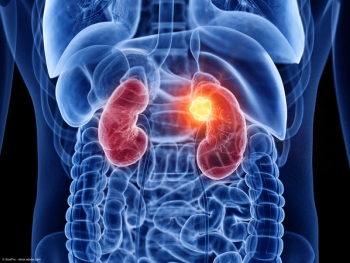
At a median follow-up of 67.2 months, the combination of pembrolizumab and axitinib continued to show an overall survival and progression-free survival benefit over sunitinib monotherapy in the first-line setting.

"In this trial, and in all the major IO/TKI trials, the checkpoint inhibitor stopped at 2 years. In this trial it was about 25% of patients who made it to that time point," says Brian I. Rini, MD.
"Unfortunately, I don't think that the triplet of cabo/nivo/ipi is ready as the current dosing for use in RCC with variant histology," says Bradley McGregor, MD.
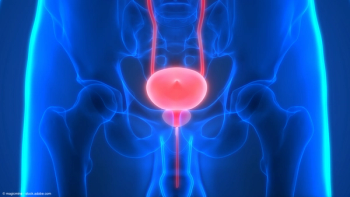
“Both the SWOG S1011 and the LEA trial show very clearly that a bilateral standard node dissection confined to the true pelvis is the standard of care for patients with curable muscle-invasive bladder cancer," says Seth P. Lerner, MD, FACS.
“The addition of atezolizumab to cabozantinib did not result in improved clinical outcomes in patients with mRCC who progressed on or after prior ICI treatment,” said Toni K. Choueiri, MD.

In this patient population, erdafitinib reduced the risk of death by 36% versus physician's choice of chemotherapy.

"In EV-103 dose escalation/cohort A, the safety profile of the combination was manageable, with no new safety concerns observed at nearly 4 years of follow-up," said Shilpa Gupta, MD.
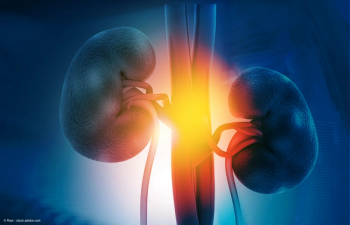
At a median follow-up of about 50 months, lenvatinib plus pembrolizumab maintained an overall survival benefit compared with sunitinib in patients with advanced renal cell carcinoma.
"All the patients said that they were pleased with the acupuncture that they received, and about 75% said that they would refer other people going through BCG to acupuncture," says Sarah P. Psutka, MD, MS.
"There was a striking decreased survival for patients who had sarcomatoid histology compared to the ones who had the classic variant urothelial histology," says Rohan Garje, MD.
The antibody-drug conjugate trastuzumab deruxtecan is being explored across a wide-range of HER2-positive solid tumors, including difficult-to-treat cancers.

The benefit in radiographic progression-free survival extended across all subgroups of patients with HRR-deficient metastatic castration-resistant prostate cancer.

“These results further support the importance of screening for germline and somatic BRCA1/2 alterations to deliver more precise care for our patient," says David Olmos, MD, PhD.
David Olmos, MBBS, MSc, PhD, discusses research presented at the ASCO 2023 Annual Meeting assessing outcomes with first-line novel hormonal therapy or taxane therapy in metastatic castration-resistant prostate cancer based on patients' BRCA/HRR status.
"The overall survival, Kaplan Meier curves, are maintained with a hazard ratio of 0.79 for the intent-to-treat patient population of lenvatinib/pembrolizumab versus sunitinib," said Thomas E. Hutson, DO, PharmD, FACP.
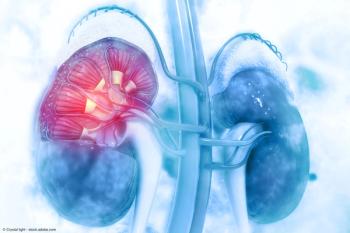
Overall, 86% maintained a response for greater than 6 months.

Belzutifan plus lenvatinib elicited promising antitumor activity with a manageable safety profile as a second-line or later treatment for patients with advanced renal cell carcinoma.
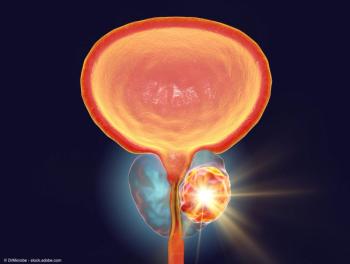
“Our observations in this study show that radium-223 can be integrated into the treatment sequence for patients with (metastatic castration-resistant prostate cancer),” said Daniel Y. Song, MD.

A total of 398 patients with mCRPC, unselected for homologous recombination repair gene alterations.were included in the safety cohort.

The proportion of patients who discontinued initial ARI treatment was 30.4% for darolutamide compared with 40.8% for enzalutamide and 46.0% for apalutamide.
The ENZAMET study explored enzalutamide in patients with metastatic hormone-sensitive prostate cancer.
Lead author Ian Davis, MBBS, PhD, discusses the results of the ENZAMET study update he shared during the 2022 ASCO Annual Meeting.

Combining radiotherapy with next-generation hormonal therapy is a feasible approach to explore in phase 3 trials enrolling patients with high-risk localized or locally advanced prostate cancer, according to an analysis of the phase 3 ATLAS trial.