

“I think immunotherapy in the neoadjuvant and also in the BCG-unresponsive setting are here to stay,” says Roger Li, MD.
“I think immunotherapy in the neoadjuvant and also in the BCG-unresponsive setting are here to stay,” says Roger Li, MD.

Overall survival was higher among patients with mHSPC who achieved undetectable PSA levels when treated with the triplet of darolutamide, ADT, and docetaxel, according to an analysis from the phase 3 ARASENS trial.

The median time between PSA progression and metastasis was 7.0 months for darolutamide compared with 5.6 months for placebo.

The biomarker analysis used next-generation sequencing to analyze ctDNA and genomic aberrations in 17 prostate cancer–related genes at baseline and at end of study treatment.

“Darolutamide, unlike enzalutamide, does not affect cabazitaxel systemic exposure, justifying their use in combination,” the authors wrote in their poster.
“We found in ARCHES that in the men who developed radiographic progression while on ADT-enzalutamide [Xtandi], two thirds of these patients, when they had radiographic progression, did not meet PSA progression criteria, and one third didn't have any rise at all in their PSA,” says Andrew J. Armstrong, MD, MSc.
Based on the efficacy of the LITESPARK-001 study, the phase 3 LITESPARK-005 study of belzutifan has already been launched, says Eric Jonasch, MD.

“ENZAMET adds to the body of knowledge from several other pivotal trials and now informs best practices for mHSPC,” said Ian D. Davis, MBBS, PhD, FRACP, FAChPM.

"PSMA-PET imaging reports on individual lesions of patients with mCRPC could include SUVmean prior to starting 177Lu-PSMA-617 therapy to provide important prognostic information on potential treatment responses and long-term outcomes," said Andrew J. Armstrong, MD.
“The clinical implications are that lutetium PSMA has similar overall survival to cabazitaxel, a proven life-prolonging therapy, but with fewer adverse events and better patient-reported outcomes," said Michael S. Hoffman, MBBS (Hons), FRACP, FAANMS.

“These results further support the use of lenvatinib plus pembrolizumab as a standard-of-care first-line treatments for patients with [advanced] RCC,” the authors wrote.

The PD-1 inhibitor toripalimab is approved in China for the treatment of patients with locally advanced or metastatic urothelial carcinoma who failed platinum-containing chemotherapy or progressed within 12 months of receiving neoadjuvant or adjuvant platinum-containing chemotherapy.

“Overall, these data…provide new insights about survival in patients receiving avelumab first-line maintenance in the JAVELIN Bladder 100 trial with or without second-line treatment," says Joaquim Bellmunt, MD, PhD.
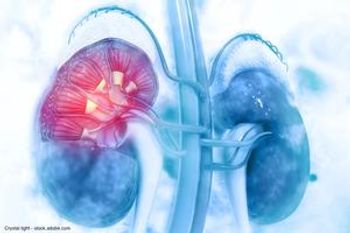
The EVEREST trial represents the first results for an adjuvant mTOR inhibitor for RCC.

“Cabozantinib plus atezolizumab demonstrated clinical activity with manageable toxicity in inoperable locally advanced or metastatic urothelial carcinoma," said lead author Sumanta K. Pal.

"This study does not support further investigation of cabozantinib alone as a maintenance therapy after platinum-based chemotherapy in unselected patients with advanced urothelial cancer,” said Robert J. Jones, MA, PhD, MBChB.

“This analysis has a median follow-up of 41 months,” says Jonasch.

The new findings, “further support the use of adjuvant pembrolizumab after nephrectomy as a standard of care in patients with localized renal cell carcinoma at increased risk for recurrence,” says Toni K. Choueiri, MD.

The targeted radioligand therapy achieved several other key end points beyond overall survival and radiographic progression-free survival.

Ribociclib was explored in combination with docetaxel and prednisone in patients with metastatic castration-resistant prostate cancer.

Pieczonka also discusses toxicity differences between VERU-111 and docetaxel.

“I think as these [advanced imaging] agents come out, we're going to see more and more data on this topic,” says Ketan K. Badani, MD.

The PSMA-PET imaging agents Piflufolastat F 18 and Gallium 68 PSMA-11 are approved by the FDA for managing patients with prostate cancer.

Christopher Pieczonka, MD, discusses where the novel agent sabizabulin (VERU-111) would fit in the metastatic castration-resistant prostate cancer paradigm if it succeeds in an ongoing phase 3 trial.

The benefit was more pronounced in patients who received only 1 treatment—enzalutamide or abiraterone—and no docetaxel.

Michael J. Morris, MD, discusses the rise of radiopharmaceuticals in prostate cancer and, in particular, the success of 177Lu-PSMA-617.

"The use of 177Lu-PSMA-617 significantly extended both the imaging-based survival and overall survival," writes Badar M. Mian, MD.

Dr. Neal D. Shore discusses multidisciplinary care in prostate cancer against the backdrop of the ODENZA trial, which assessed patient preference between darolutamide and enzalutamide.

"The Will Rogers phenomenon continues to be impactful, and when combined with a precision treatment, the outcomes of this disease state will be “doubly improved” for generations to come," writes Michael S. Cookson, MD, MMHC.

The 2021 ASCO Annual meeting has come and gone, with its annual release of thousands of abstracts across every tumor type. Here are the key genitourinary cancer highlights for the practicing urologist.