

Kuang and the AACU assert that although the clinical dialogue should begin between the ages of 45 and 60, dialogue alone cannot solve the crisis without the infrastructure to support it.
Kuang and the AACU assert that although the clinical dialogue should begin between the ages of 45 and 60, dialogue alone cannot solve the crisis without the infrastructure to support it.

This episode reflects a broader shift in the field: a move toward diagnostics that are not only more accurate, but also more human-centered.

The company remains on track to submit a supplemental Biologics License Application in the fourth quarter of 2026.

The 5-factor model aims to refine treatment decision-making by stratifying patients into 3 clinically actionable subgroups.

The label update permits thawing of nadofaragene in a 25 °C water bath over approximately 25 minutes.
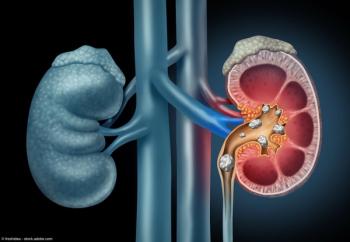
Findings from a systematic review suggest that increased fluid intake, dietary modification, and selected pharmacologic therapies may reduce recurrence of kidney stones in adults.

The European Commission is expected to have a final decision on the application in the second quarter of 2026.

Two new analyses from the ASPIRE trial showed lower health care consumption events and reduced follow-up costs with the SURE procedure vs URS, with RSV emerging as a key predictor of long-term utilization.

The results highlight the complexity of secondary prevention in stone disease.

The NCCN now assigns a Category 2A recommendation for nadofaragene in patients with high-risk BCG-unresponsive NMIBC with papillary tumors without CIS.

Topline results from the TALAPRO-3 study showed that adding talazoparib to enzalutamide improved rPFS for patients with HRR-mutated mCSPC.

At EAU 2026, Adam B. Weiner, MD, spoke with Nikita Bhatt, MD, about the growing interest in prehabilitation to optimize patients ahead of cystectomy.

Enolen implants demonstrated minimal systemic drug exposure and early signals of tumor volume reduction in localized prostate cancer.
The NCCN has recognized NAI plus BCG as an option for BCG-unresponsive papillary NMIBC as FDA review continues.

The OPTIMUM randomized trial demonstrated that microultrasonography-guided biopsy is noninferior to MRI fusion-guided biopsy for detecting clinically significant prostate cancer, with a streamlined in-office workflow, a manageable learning curve, and substantially lower cost that may help address diagnostic access gaps worldwide.

64Cu-SAR-bisPSMA demonstrated higher lesion detection rates, improved diagnostic accuracy, and a substantial impact on clinical management.

Adam B. Weiner, MD, sits down with Giancarlo Marra, MD, at EAU 2026 to discuss transperineal vs transrectal biopsy for prostate cancer diagnosis.

A subgroup analysis of the POTOMAC trial showed that durvalumab plus BCG I+M had consistent safety and efficacy in older patients with BCG-naïve high-risk NMIBC.
Clearance of the non-permanent implant technology is backed by safety and efficacy results from the pivotal Expander-2 trial.


Final results from a phase 1 study of Erda-iDRS provide proof-of-concept for sustained local delivery of erdafitinib into the bladder.

Data showed that the addition of PSMA-PET/CT reduced the need for prostate biopsy by nearly half without compromising the detection of clinically significant prostate cancer.

Katy Beckermann, MD, PhD, discusses how emerging data from the LITESPARK trials—particularly LITESPARK-011 and LITESPARK-022—may expand the role of belzutifan-based combinations across renal cell carcinoma treatment, while emphasizing the clinical significance of durable responses, careful toxicity management, and the need for longer-term survival data to guide practice.
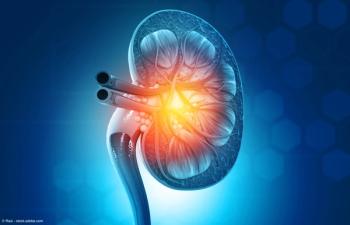
"Emerging evidence indicates that molecular imaging may enable more accurate detection of primary RCC, improve surveillance for recurrence, and enhance identification of metastatic lesions compared with conventional imaging," write the authors.
Lutetium-177 rosopatamab tetraxetan demonstrated an acceptable safety and tolerability profile with no new safety signals in patients with PSMA-positive mCRPC.

Neal D. Shore, MD, FACS, shares key findings from a post hoc analysis of the EMBARK trial showing that sustained PSA responses are possible following only 9 months of treatment with enzalutamide plus leuprolide.


Robert J. Motzer, MD, discusses the scientific rationale for the LITESPARK-011 study, its design and key findings, and how this combination could potentially influence treatment strategies in renal cell carcinoma.

Results from the AMPLIFY trial are intended to support an FDA submission seeking approval of 64Cu-SAR-bisPSMA as a diagnostic imaging agent for BCR of prostate cancer.
ImmunityBio has resubmitted an sBLA for the combination following an FDA request for updated efficacy data.