

Across 7 randomized trials, 177Lu-PSMA-617 significantly prolonged progression-free survival vs standard therapies, with no significant difference in adverse events.
Across 7 randomized trials, 177Lu-PSMA-617 significantly prolonged progression-free survival vs standard therapies, with no significant difference in adverse events.

The agent was granted conditional marketing authorization based on data from the phase 2/3 QUILT-3.032 trial.

Surgeons at Cleveland Clinic completed the first commericial procedure using the Hugo robot-assisted surgery system in the US.

64Cu-SAR-bisPSMA PET/CT identified a statistically significant greater number of prostate cancer lesions per patient compared with 68Ga-PSMA-11 PET/CT.

Despite early termination of the trial, its results provide scientific rationale for further investigation into targeting alternative AR domains in mHSPC.

In this episode, host Amy Pearlman, MD, sits down with Bruce R. Kava, MD, for a a discussion on his career path from oncologic surgery to sexual medicine, revision penile prosthetics, and cancer survivorship.
FDA lifts boxed warnings on 6 menopausal hormone therapies following a review of the evidence on risks and benefits.
A newly published meta-analysis found that adding metastasis-directed therapy to standard of care was associated with extended progression-free survival in oligometastatic prostate cancer, without adding significant safety risks.
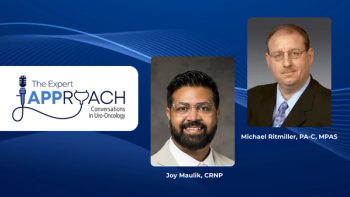
Beyond clinical care, this episode highlights the evolving role of advanced practice providers in urology.

A major focus of the episode is reconstructive urology, particularly the unpredictable and long-term effects of pelvic radiation.

The phase 2 Alliance A222001 trial demonstrated that oxybutynin led to clinically meaningful improvements in hot flash frequency and quality of life among men receiving hormone therapy for prostate cancer.

The findings offer insights into how treatment may be optimized using PSMA-PET/CT results.

The following FAQs highlight key guideline recommendations relevant to clinicians regarding the early detection of prostate cancer.

In this episode, host Amy Pearlman, MD, sits down with Emad Ibrahim, MD, HCLD, to discuss sexual and reproductive health in patients with spinal cord injury.
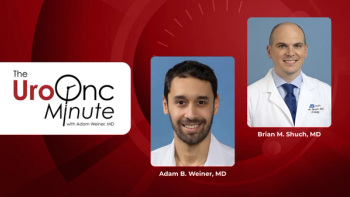
Adam B. Weiner, MD, is joined by Brian M. Shuch, MD, for a concise yet wide-ranging update on the evolving role of adjuvant therapy in renal cell carcinoma.

The conversation explores the growing role of at-home semen testing kits as screening tools, their advantages in accessibility and privacy, and their limitations compared with in-lab testing.
The study is designed to assess the safety, tolerability, pharmacokinetics, and preliminary antitumor activity of NEO-811 in clear cell renal cell carcinoma.
The sildenafil oral film is expected to be commercially available in the US in March 2026.

URO-1’s FDA-cleared SUREcore and coreCARE prostate biopsy devices have been adopted at multiple Novant Health hospitals as part of a systemwide value analysis.

The conversation explores evolving strategies that have further lowered infection risk, including no-touch principles, chlorhexidine skin preparation, antibiotic and customizable implant coatings, and growing interest in antiseptic-based solutions rather than antibiotics alone.



Amy Pearlman, MD, sits down with Katherine A. Amin, MD, to discuss the evolving landscape of female pelvic medicine, overactive bladder management, and fellowship training.

The application is seeking approval of Signatera CDx as a companion diagnostic to select patients with MIBC for treatment with adjuvant atezolizumab.

A recap of the FDA submissions and regulatory decisions in urology from January 2026.

ANDROMEDA is looking to build on previous findings from the LUNAR trial in recurrent, oligometastatic prostate cancer.

The conversation highlights the steady pace of innovation in urogynecology.

Cooled laser focal therapy with the ProFocal Device showed promising cancer control in patients with localized prostate cancer.

In this episode, Amy Pearlman, MD, speaks with Phillip M. Pierorazio, MD, about integrating mindfulness and wellness into a demanding surgical career and the evolving complexities of modern prostate cancer care.

The combination was tolerable and demonstrated promising early efficacy as a 3rd-line option for patients with mCRPC.