Final completion of the ECLIPSE trial is anticipated for February 2029.

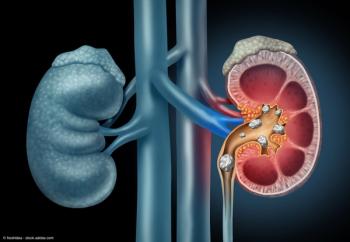
"The Stone Clear device provides patients with a non-invasive option to reduce their residual fragment stone burden in the clinic environment while being fully awake," says James E. Lingeman, MD.

The phase 1/2a SECuRE trial is evaluating the safety and efficacy of 67Cu-SAR-bisPSMA in the treatment of patients with mCRPC.

The sensitivity of 99mTc-sestaMIBI SPECT/CT was 97%, and the specificity was 53.8%.

In total, 33.3% of patients with a VUS also had positive lymph node involvement and required adjuvant ADT compared with only 16.2% of patients who did not have a VUS.

"Together, the data point to the exciting potential for this combination regimen to be used to treat patients with muscle invasive bladder cancer," says Roger Li, MD.

“It is critical that urologists understand when to order germline testing, are comfortable with actually ordering these tests, and integrate medical geneticists when appropriate," says Aditya Bagrodia, MD, FACS.

“Our study is distinguished by long follow-up, out to 12 years, looking at a broad spectrum of key complications," says Joseph M. Unger, PhD.

Overall, 76% of patients with a CD70 TPS of at least 50% achieved a reduction in tumor burden.

The decision was based on an interim readout from the trial, which showed that ONCT-534 did not lead to any clinically meaningful improvement of disease.

Patients with high P-CARE scores had an increased risk of any, metastatic, and fatal prostate cancer compared with patients with median P-CARE scores.

The observational LOBSTER study has already enrolled 303 patients and collected 479 samples.

"If you tapped into your emergency fund for any reason this year, it is important to make sure the account is replenished," writes Jeff Witz, CFP.

The revised policy will take effect on January 1, 2025.

In total, the study plans to enroll 84 adult patients across clinical trial sites in the United States and Australia.

“Based on these data, casdatifan has the potential to be a future treatment option for kidney cancer," says Toni K. Choueiri, MD.

The UUI responder rate was 71.8% among those who received SNM and 71.3% among those who received iTNM.

A rapid reduction in E coli in the urine was observed among 10 of 16 evaluable patients at 4 hours following the first treatment.

The decision comes after a pre-specified futility analysis determined that it was unlikely that the study would meet its primary end point.

Anti-tumor activity was observed across all patients with FGFR3-altered metastatic urothelial carcinoma who were treated at the dose levels of 90 mg and higher.

The NDA submission is supported by data from a single-arm, phase 3 trial of leuprolide mesylate administered as 2 injections, 3 months apart.

The RMAT designation is supported by interim data from the ongoing phase 1 TRAVERSE trial.

“The majority (76%) of patients not yet meeting the Phoenix criteria did have PSMA-avid lesions on PSMA-PET, suggesting [prostate cancer] recurrence," says Evelien J E van Altena.

The phase 3 ENVISION trial met its primary end point by demonstrating a 79.6% complete response rate at 3 months following the first instillation of the therapy.

“These findings support the safety of vaginal estrogen for treatment of local menopause symptoms, even in high-risk women,” says Gabriella M. Rustia, MD.

The approval is supported by data from the phase 3 SURE 1 and REASSURE trials.

The therapeutic response rate was 79% at 24 months, which is comparable to the rates seen at 6 months (78%) and 12 months (82%).

At 1 month, the mean decrease in the OAB-Q symptom severity subscale score was -31.2 in the 1-injection cohort vs -39.5 in the 10-injection cohort.

Patients with higher baseline HEI and E-HEI scores were less likely to experience grade reclassification.