

In this interview, Mary-Ellen Taplin, MD, discusses disparities in prostate cancer care and a unique initiative aiming to alleviate those disparities.
In this interview, Mary-Ellen Taplin, MD, discusses disparities in prostate cancer care and a unique initiative aiming to alleviate those disparities.
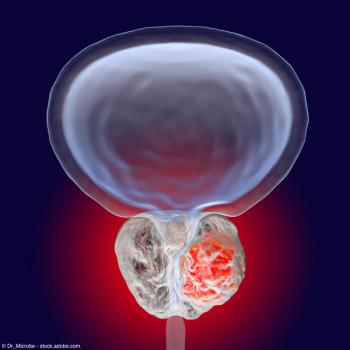
"So, there's a lot of evidence to point to the androgen receptor being an important player in at least developing this disease," says Edward M. Messing, MD.
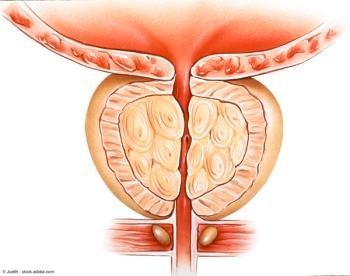
“Our results demonstrated that treatment with [the] Optilume BPH procedure resulted in significant symptom relief while still preserving erectile and ejaculatory function,” said Olivia Copelan, MD.
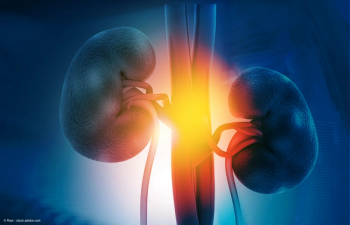
The dose escalation/dose expansion study is evaluating the safety and efficacy of AB-2100 in patients with ccRCC who either came back or did not improve following prior treatment with a checkpoint inhibitor and a VEGF inhibitor.

“The association of lower testosterone concentrations with higher all-cause mortality was present irrespective of luteinizing hormone concentrations, indicating that low testosterone was the main factor," says Bu B. Yeap, MBBS, FRACP, PhD.

The Contouring Assistant now marks Profound Medical’s second FDA-cleared TULSA-AI module.

Urinary symptoms were not significantly improved from local estrogen use in most studies, though an improvement in vaginal symptoms was observed.

Patients who scored in the highest quintile of plant-based diet index scores had a 47% lower risk of prostate cancer progression compared with those in the lowest quintile.

"Until now, no single center has had enough samples of the quality needed for comprehensive multi-omics profiling, as we’ve carried out in this study,” says Saravana Mohan M. Dhanasekaran, PhD.

Despite varied preferences for surgical vs medical treatments, most participants expressed an interest in seeking treatment for PFDs.
The Prescription Drug User Fee Act target action date is set for quarter 3 of this year.
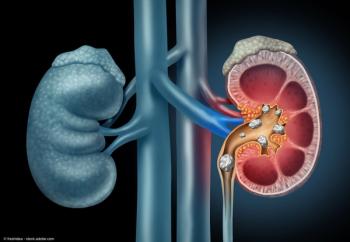
“We found that the SAPS is associated with higher intrarenal pressure and flow rate when compared to automated pumps," said Lucas B. Vergamini, MD.

Combination treatment with burst wave lithotripsy and ultrasonic propulsion for small, asymptomatic renal stones is feasible.
The phase 2/3 AlphaBreak trial is evaluating the safety and efficacy of FPI-2265 in patients with mCRPC who have been previously treated with 177Lu-PSMA radiotherapy.
Updated data from the phase 2 TAMARCK study continued to show safety and preliminary efficacy with the B7-H3–targeting antibody-drug conjugate vobramitamab duocarmazine in patients with metastatic castration-resistant prostate cancer.
“The results of the BRAVO study performed within the VA health care system showed significant decreases in the risk of recurrence and progression, as well as the potential for improved overall survival in patients who received a BLC compared to patients who received WLC only,” says Stephen B. Williams, MD, MBA, MS, FACS, FACHE.

Patients who received PUL experienced a greater reduction in inference regarding outdoor entertainment and community activities at 1 month vs WVTT.
High-quality imaging with [68Ga]Ga-DPI-4452, a carbonic anhydrase IX (CAIX)-targeting radiolabeled peptide, was observed by researchers as early as 15 minutes after administration.

"Our research shows that the identification of these genetic factors, even in geriatric patients, is important for determining targeted treatment and overall patient survival,” says Mahdi Taha, DO, FACOI, FACP.

“This data emphasizes the importance of utilizing the EPI test for risk assessment of high-risk prostate cancer in [African American] men," concluded the authors.

Results of an exclusive Urology Times survey reveal that more than 70% of respondents said they consider age a relevant factor in the performance of the specialist surgeon.
There was a statistically significant reduction in average daily micturition episodes and average daily urgency episodes with vibegron vs placebo.
The FDA is set to have a decision regarding the subcutaneous nivolumab formulation on or by December 29, 2024.

Real-world data showed routine use of darolutamide regimens in community urology practice for patients with metastatic hormone-sensitive prostate cancer.
UGN-101 showed efficacy in a broad population of patients with upper tract urothelial cancer and recurrence-free survival rates were high among patients who responded to UGN-101 induction therapy.

Treating patients with localized prostate cancer with high-intensity focused ultrasound led to noninferior salvage treatment-free survival vs radical prostatectomy.
Patients receiving PUL experienced improvements of 8.6 and (39.1%) and 10 (46.8%) in IPSS total score.
The erdafitinib intravesical delivery system TAR-210 was safe and showed strong initial efficacy in patients with non–muscle-invasive bladder cancer with select FGFR alterations.

There were no adverse events, such as penile bruising, swelling, edema, allergy, or penile fracture, observed in patients treated with shockwave therapy plus platelet rich plasma.
The investigators found that the propulsion group had a 70% lower risk of relapse than the control group (HR 0.30, 95% CI: 0.13-0.68).