

The subcutaneous formulation of pembrolizumab also received FDA approval in September 2025.
The subcutaneous formulation of pembrolizumab also received FDA approval in September 2025.

Zubert highlights the expanding technological and clinical landscape—from laser therapies and Testopel to emerging female sexual health interventions and menopausal care.

The test is designed to deliver actionable molecular results in approximately 15 minutes.

The CxBladder Triage Plus Test identifies patients with hematuria who are at higher risk for urothelial carcinoma.
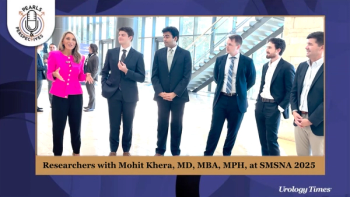
Across the board, the researchers' work offers answers that could transform guidelines, reduce invasive procedures, improve diagnostic accuracy, and empower clinicians with more personalized tools.

[68Ga]Ga-DPI-4452 is a gallum-68-radiolabeled PET imaging agent that forms a theranostic pair with the therapeutic candidate, [177Lu]Lu-DPI-4452 (ITM-91).

The phase 1b trial is assessing ORIC-944 both in combination with darolutamide and apalutamide.

John Eifler, MD, highlights new real-world evidence on nadofaragene firadenovec-vncg for BCG-unresponsive NMIBC.

Alice Bernard-Tessier, MD, highlights preliminary results from a phase 1 trial of gedatolisib plus darolutamide in mCRPC.

The safety and efficacy of testosterone undecanoate was demonstrated in the phase 3, six-month MRS-TU-2019EXT trial.

"I think MRI has really been perhaps the most transformative development in the realm of prostate cancer screening since I came into the field," says Stacy Loeb, MD, MSc, PhD (Hon.

"It's been a very exciting time for the radioligand space," says J. Travis Mendel, MD.

The rectal spacer showed sustained preservation of bowel, urinary, and sexual quality of life through 4 years of follow-up.

The agency is working with companies to update the language on HRT to remove references to risks of cardiovascular disease, breast cancer, and probable dementia.

Mobley also shares her treatment approach to BPH and explains the challenges of treating OAB.

Pearlman and Griggs tackle the real-world challenges of innovation—from surgeon comfort zones and patient perceptions to equipment logistics in private practice.

"I'm very excited to bring this therapy to our patients in the Philadelphia area and to be able to offer it at MidLantic," says David Cahn, DO, MBS, FACOS.

"For me and the patients, [nadofaragene firadenovec is] a very convenient dosing schedule, and it's a very efficacious treatment," says Ravi D. Chauhan, MD, FACS.
Miner emphasized that TRAVERSE has reshaped the safety narrative around testosterone replacement therapy, easing concerns about cardiovascular and prostate risks.

"I think the most important thing, or take-home message that we try to share, is gathering data, understanding what those metrics are from the very beginning," says Brooke B. Edwards, MD.
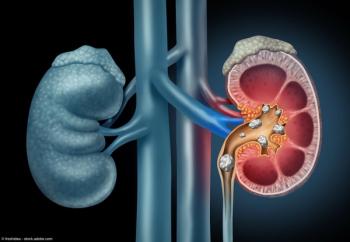
"The more I use [SURE], the more applications I see with it," says Matthew A. Love, MD.

"The main issue in DC now is the Medicare Physician Fee Schedule," says Scott Sellinger, MD, FACS.
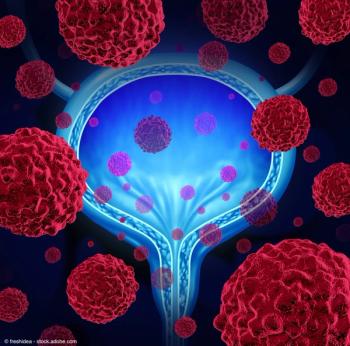
The FDA has confirmed that results from the UTOPIA trial can support submission of an NDA for UGN-103.

The study is assessing FL115 in combination with BCG in patients with non-muscle invasive bladder cancer.

"The OBBA includes broad and sweeping changes that will have a profound impact," writes Allan Shen, CFP.

The ENDURE 1 study plans to enroll up to 60 patients with benign ureteric strictures.
The Desai Sethi Urology Institute (DSUI) has released its 2025 Annual Report.

The approval is supported by the phase 2/3 ZEUS trial.

A key highlight of the discussion is the emerging research on testosterone in women, an area long underfunded and under-studied.

The phase 3 PSMAddition trial assessed the combination of 177Lu-PSMA-617 plus ADT/ARPI in an earlier stage of metastatic prostate cancer.