
A 42-year-old female undergoes right percutaneous nephrolithotomy (PCNL) for a complete staghorn calculus. As a routine after PCNL, a chest-x-ray was obtained using fluoroscopy. What abnormality is seen?
A 42-year-old female undergoes right percutaneous nephrolithotomy (PCNL) for a complete staghorn calculus. As a routine after PCNL, a chest-x-ray was obtained using fluoroscopy. What abnormality is seen?
Agents for bladder cancer, prostate cancer, and stress urinary incontinence are also included in this round-up of pipeline developments.
Other products highlighted in this round-up include a plate for studying infections caused by the long-term use of catheters and a new indication for sunitinib malate (SUTENT).
Several medical societies, including the AUA and the American Society of Clinical Oncology, are urging congressional leaders to prevent CMS from applying MIPS adjustments to Part B drug payments.
Here is a brief overview of the Tax Cuts and Jobs Act passed by Congress.
“My practice has seen a tremendous increase in patients’ awareness of HIFU as a treatment option," says one urologist.
"While improving local control seems to be important, especially in those with high-risk features, it’s not clear whether adjuvant EBRT is necessarily better than early salvage EBRT," writes Badar M. Mian, MD.
Comorbidity does not affect prostate cancer-specific mortality, according to authors of a large prospective observational study of men in Sweden, published in the Journal of Clinical Oncology (2017; 35:3566-74).

When treating kidney stones, debate continues over the use of dusting versus basketing. In this interview, Olivier Traxer, MD, describes both methods, lists his preferred laser settings, and explains why he changed the way he uses ureteral access sheaths.
Body mass index is an independent predictor of metastasis and prostate cancer mortality after radical prostatectomy, according to results from a large, long-term single-institution study.
Patients with bacillus Calmette-Guérin-unresponsive bladder cancer had worse clinical outcomes than patients who relapsed but did not meet BCG-unresponsive criteria, according to results of a retrospective analysis presented at the 2017 Society of Urologic Oncology annual meeting in Washington.
In this article, we describe our thought processes in treating patients with Peyronie's disease, which are summarized in an algorithm.
The physician argued that the migration of the mesh is a known risk of the procedure and the patient had given informed consent for the operation.
“Active surveillance continues to gain traction as a management strategy for low-risk prostate cancer in the United States. However, barriers still exist and challenges remain for both the treating urologist and the patient,” writes J. Brantley Thrasher, MD.
Men undergoing active surveillance for prostate cancer experienced levels of anxiety that were moderate, but that decreased over time, according to results of a large, prospective cohort study presented at the 2017 Society of Urologic Oncology annual meeting in Washington.
A urology community inspired by you, created for you. With discussions hosted by Michael Borofsky, MD, you can share your experiences, exchange ideas, photos and videos, and discover insights in ureteroscopy with your peers.
A recent study suggests experimental "texture analysis" of renal masses via computed tomography scan holds promise as a technique to allow more effective risk stratification.

Fluorescent blue light cystoscopy improves 3-year recurrence-free survival rates in patients with recurrent bladder tumors compared to white light cystoscopy, and researchers believe its use should be expanded.

"Numerous clinical studies have exhibited significantly improved tumor detection rates with BLC," write Zachary L. Smith, MD, and Norm D. Smith, MD.

"When submitting an unlisted code for a procedure, you of course need to submit your documentation and we recommend a cover letter or explanation of the service including a comparative value or charge based on a similar code," write Ray Painter, MD, and Mark Painter.
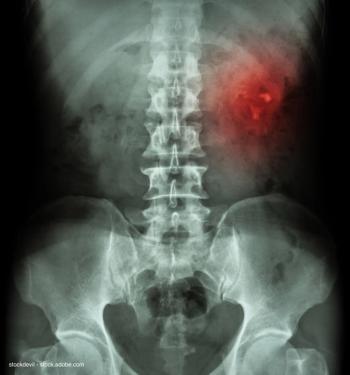
A study analyzing stone-free rates after ureteroscopy suggests that urologists might consider applying refined patient selection criteria in order to achieve better outcomes.

A preliminary analysis of data from a randomized controlled trial supports the efficacy of a low-oxalate diet for reducing urinary oxalate excretion in patients with idiopathic hyperoxaluria, but shows little or no benefit for daily dietary supplementation with vitamin B6 25 mg/magnesium 400 mg or a diet-supplement combination.
"The management of prostate cancer always requires caution to safeguard against avoidable risks from both the treatment and the monitoring protocol," writes Badar M. Mian, MD.
Urologist Henry Rosevear, MD, reflects on the three lessons he's learned in 5 years of practicing urology.
"Perhaps the biggest Medicare reform concern for urologists is the potential for provider reimbursements cuts, a threat that has continued to loom over the health care community for some time," writes the AACU's Ally Lopshire.
"It’s absolutely important. Because we have so much overlap in our patient population, our patients are best served by us working together," says one urologist.
In 2017, a flood of accusations against high-profile men in positions of power in Hollywood, the U.S. government, and the national media have focused the nation’s attention on sexual harassment and its consequences. The medical workplace is not immune from harassment, and the national conversation presents an opportunity for health care businesses to review their risk, policies, and prevention strategies.
Forming a student loan repayment strategy is not a one-size-fits-all process. What works well for a friend or colleague may not be an effective strategy for you.
Reconstruction of anterior compartment defects using magnetic resonance-visible vaginal mesh implants in combination with post-surgical three-dimensional imaging is feasible and yields reproducible results, researchers report.
Legislation that advocates believe would significantly reduce prostate cancer misdiagnoses is making its way through Congress and has the support of major urologic organizations and prostate cancer interest groups.