

“In the setting of widespread metastatic progression or failure, we typically prefer more systemic therapy with metastasis-directed therapy for symptomatic sites,” says Kate H. Gessner, MD, PhD.
“In the setting of widespread metastatic progression or failure, we typically prefer more systemic therapy with metastasis-directed therapy for symptomatic sites,” says Kate H. Gessner, MD, PhD.

"I think the most important thing to improve our reporting of PSA doubling time is to remind clinicians why it's important to even calculate this number," says Alicia Morgans, MD, MPH.

“Having a broader understanding of why someone might be experiencing the disease process or symptoms that they're coming in with is really meaningful and helpful, both to patients and to physicians,” says William Furuyama, MD.

“We found that the median rPFS with the combo of mevrometostat plus enzalutamide was 14.3 months, which compared favorably with what we saw with the enzalutamide arm, where the median was only 6.2 months,” says Michael Schweizer, MD.

"You want something that's going to be easy to have done to you, and also have an easy recovery," says Dean S. Elterman, MD, MSc, FRCSC.

“We hypothesized based on prior work that specifically men with low-volume disease, if they inherit this hyperactive form of HSD3B1, they'll have shorter overall survival. It turns out that that's true,” says Nima Sharifi, MD.
"We really try to limit the amount of tissue we resect and what we do in patients who've had radiation," says Amy E. Krambeck, MD.

"We found that actually, many, many physicians were not reporting PSA doubling time," says Alicia Morgans, MD, MPH.
“We took the urine from those patients, and we tested to see if we can predict their gemcitabine metabolism capability. We were able to predict it pretty accurately,” says Laura Bukavina, MD, MPH.

“To add to the complexity is the issue of intratumoral heterogeneity, where some clones may develop these resistance mechanisms and lose response over time or become resistant, while other clones will continue to respond,” says Kate H. Gessner, MD, PhD.

“It shows the significant poor outcomes in this population with our standard therapies and the need to improve upon that by developing novel treatments,” says Darren R. Feldman, MD.

Hear insights from experts on key trial data presented at ASCO GU 2025.

“Taken altogether, the study remains positive for PFS, but not for overall survival,” says Laurence Albiges, MD, PhD.

"What we're really trying to see now is this integration of imaging and using it with respect to AI and planning," says Dean S. Elterman, MD, MSc, FRCSC.

“Interestingly, the confirmed response rate in the intention to treat population was 32%, but this increases to 53% in the MET driven subset,” says Francesca Jackson-Spence, MBChB, BMedSc, MRCP.
"The median progression-free survival and median overall survival continue to be almost double what we see with chemotherapy," says Gopa Iyer, MD.
"I think this is the next step for testing the clinical activity of this agent," says David A. Braun, MD, PhD.
"We see that among the patients who went on to receiving cystectomy, 84% are metastases free," says Pooja Ghatalia, MD.
"The efficacy findings reported to date are 71% any time response," says John A. Taylor III, MD, MS.
“Both groups benefited, but it would look like earlier is better if we can treat patients with low-volume disease,” says Fred Saad, MD, FRCS
“Of the 3 adrenal androgens, it's DHEA that seems to be most indicative of overall survival,” says Nima Sharifi, MD.

"For the MIRAGE trial specifically, we're going to continue following patients and we'll look at [data at] 5 years as well," says Amar U. Kishan, MD.

"I think targeting things that make communities more vulnerable would be reasonable things to target to try and affect disease practices," says William Furuyama, MD.

“While I would hesitate to say that reversal is truly better in terms of efficacy, I think this data suggests that it's at least as good,” says Scott D. Lundy, MD, PhD, HCLD.

Smerina and Pearlman discuss recent research collaborations in the field of sexual medicine.

"We need to promote further research and guidelines for safe use of these natural products, because I think we're missing out if we don't monitor them," says Channing J. Paller, MD.
"I want to add that the safety profile was impeccable for this. No one experienced a [device-related] adverse event," says Matthew J. Mutter, MD.
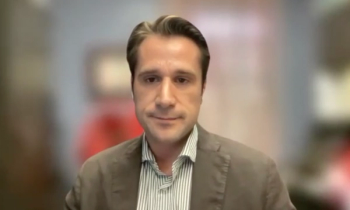
"A lot of shared decision-making has to do with, what is important to the individual man?" says Dean S. Elterman, MD, MSc, FRCSC.
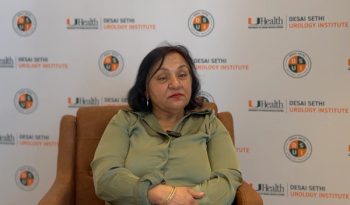
"My second book is on pelvic pain or prostatitis. It is focused on a holistic approach and stretches and mindfulness exercises," says Vanita Gaglani, RPT.

“I would say both there could be an increase in MRI-guided [SBRT] and there may be increase in investigation into shrinking margins with CT-guided SBRT as well,” says Amar U. Kishan, MD.