

“It's hard for us, based on our evidence here, to say that neoadjuvant chemotherapy is causal in any way or is resulting in prolonged survival,” says Fed Ghali, MD.
“It's hard for us, based on our evidence here, to say that neoadjuvant chemotherapy is causal in any way or is resulting in prolonged survival,” says Fed Ghali, MD.

"It was a daunting task, although I will say the original core was exceptional, so I had a wonderful framework from which to work," says Jeffrey A. Albaugh, PhD, APRN, CUCNS.

"I think the first thing you need to identify is, do you have a following, or do you have a niche that you know that you're not currently able to fill with your current role?" says Gia Ching.
“One of the ways we make the most difference for our patients is we take care of the people who are taking care of them,” says Chad Ritenour, MD.
“As long as APPs are properly supported, they will take off and they will change your practice,” says Mark T. Edney, MD.
“Another aspect is how to make this more and more complex diagnostic chain for prostate cancer work in practice, because we now have so [many] more tools than we had a decade ago,” says Tobias Nordström, MD, PhD.

"Studying the microbiome overall is challenging because it's dirty science. You have to be incredibly careful with contamination," says Ilaha Isali, MD, MSc, and Laura Bukavina, MD, MPH, MSc.
"If we synergize our efforts and our energy, as the level of the sea rises, all ships on the sea will rise with it," says Wayne Kuang, MD.
“The key take home message of that study was that having assumptions about basic medical terminology that we think are simple may actually leave patients confused,” says Vikram M. Narayan, MD.
“If there's enough radiation, then the cells can't repair themselves and die because of the radiation,” says Scott T. Tagawa, MD, MS, FACP, FASCO.

“I think promoting women in leadership positions, promoting mentorship for women applicants and women already in this field, and working on policy changes are the top 3,” says Michelle S. Sheng, MD.
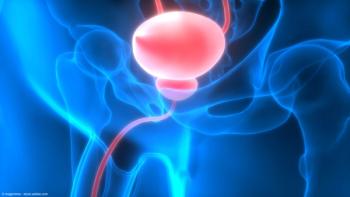
"The interplay between the microbiome and bladder cancer is very complex," says Ilaha Isali, MD, MSc.

“It's a good problem to have, because we're thinking about a previous era in which we didn't have many options besides more BCG vs cystectomy,” says Vikram M. Narayan, MD.

"You don't want to go into anything blind. You want to make sure that the numbers make sense," says Gia Ching.

"We're very much looking forward to the new data that'll be presented, hopefully, within the next year, to see where this falls in the grand scheme of the all the new drugs coming into play here," says Shreyas S. Joshi, MD, MPH.
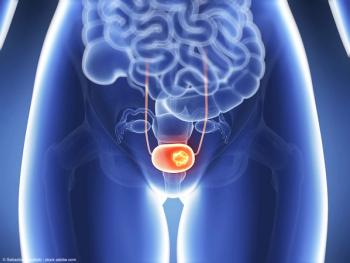
"We...tried to summarize all the findings that could potentially be helpful for future research in terms of bladder cancer," says Ilaha Isali, MD, MSc.
“It's the sustained release and constant exposure to the gemcitabine that's most likely responsible for the high efficacy rates of that we're seeing with the TAR-200 system,” says Siamak Daneshmand, MD.

"I think that it's so important right now to really, really stand as your own brand and really, really have a cultivated patient population that you're after," says Gia Ching.

“There's state advocacy work groups and other public policy work groups where folks can remain involved and keep pushing to improve the delivery of health care,” says Juan J. Andino, MD, MBA.
“This is another therapeutic that adds to UroGen [profile] as a potential treatment that could be used to preserve kidneys while treating low grade upper tract urothelial carcinoma going forward,” says Sarah P. Psutka, MD, MSc.

“Women not only tend to present with more aggressive disease, but they also have a higher probability of having what we call variant histology, so non-urothelial carcinoma,” says Ava Saidian, MD.

As the year comes to a close, we revisit some of this year’s top video content from Urology Times.
“These types of technologies can really make office urology much more efficient, which I think is very, very promising and one of the most promising areas in artificial intelligence,” says Chad Ellimoottil, MD, MS.
"We're asking the bladder to come have a seat and to give voice to surgical choice," says Wayne Kuang, MD.
"There's a number of emerging modalities in the primary focal ablation space that are in trial at this time," says Kara L. Watts, MD.

As the year comes to a close, we revisit some of this year’s top content on benign prostatic hyperplasia.
"We're excited about the science behind it, but we're also excited for our patients that if they can have access to this, maybe we can delay or completely avoid radical cystectomy or further aggressive treatments," says Shreyas S. Joshi, MD, MPH.

“I think there's a lot to be done and combination therapies, other drugs that can be instilled into this device. It's a bright future,” says Siamak Daneshmand, MD.
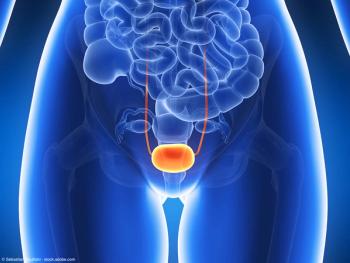
"We're trying to be the coach to our patients," says Wayne Kuang, MD.

“In some ways, it can be used to help if you want to get a biopsy to prove or confirm—it can be used to help detect in that range, too,” says Michael S. Cookson, MD, MMHC, FACS.