

"Despite the fact that multiple new procedures have come to light, nothing has the same excellent outcomes as HoLEP," says Amy E. Krambeck, MD.
"Despite the fact that multiple new procedures have come to light, nothing has the same excellent outcomes as HoLEP," says Amy E. Krambeck, MD.

“While sperm cryopreservation is very safe, there might be hidden costs that patients aren't aware of, both [in] the upfront costs of preserving the sperm and then the annual cost of maintaining it at a facility,” says Bradley Roth, MS4.
"It was interesting to think about the relationship between a disease process and a person's environment, and measure that and establish that relationship in a quantitative way," says William Furuyama, MD.

“Black patients have over 2-fold excess mortality compared to White men, and that has been fairly consistent; the actual rate ratio has hovered between 2 and 2.5 for many years,” says Matthew R. Cooperberg, MD, MPH.

"Most of these comorbidities, while they do affect the bladder, don't seem to affect the surgeries for stress urinary incontinence," says Jaspreet S. Sandhu, MD.

"We need to think carefully about what we're putting in our body and what the regulations are about natural products that we ingest," says Channing J. Paller, MD.

"There are actually no data to support that 1 neuromodulation is better than another based on disease severity, and this is based on the systematic review done for the OAB guideline," says Anne Pelletier Cameron, MD, FRCSC, FPMRS.
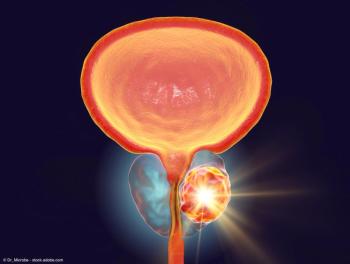
"Physician scored GU toxicity grade 2 or greater at 2 years was 51% with the CT-guided and 27% with the MRI-guided," says Amar U. Kishan, MD.

“It does seem clear that we need to get back to a smarter middle ground of screening—using screening more intelligently, finding the high-grade cancers and treating them—so that we can get that mortality curve back on a downward trajectory,” says Matthew R. Cooperberg, MD, MPH.

"It really remains to be seen whether we can expand this to care for other types of urological inpatients," says Timothy D. Lyon, MD.

"I would say the fact that we performed 754 HoLEP procedures in 2024 is a reflection of the efficiency and the high quality of care that you receive at Northwestern," says Amy E. Krambeck, MD.

"The idea here is to determine, from an epidemiologic perspective, whether freezing sperm for many men before their vasectomy is cost-effective compared to whether we should simply avoid this routine practice and allow men to proceed with their vasectomy and then restore their fertility in the future," says Scott D. Lundy, MD, PhD, HCLD.
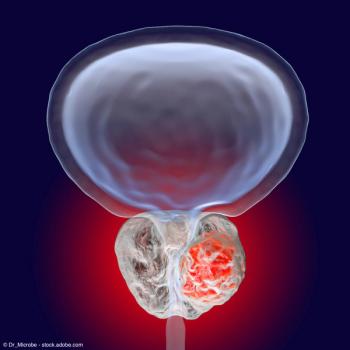
“The trial was specifically looking at whether that aggressive margin reduction from 4 mm to 2 mm would lead to a reduction in physician-reported urinary toxicity, specifically in the first 90 days after radiation,” says Amar U. Kishan, MD.

"I think we're learning slowly—I hope faster—how to use these agents as any other drug that a pharmaceutical company would study," says Channing J. Paller, MD.

"There are some very strict IC diets that have been published, and I've had a handful of patients who have really found them helpful," says J. Quentin Clemens, MD, MSCI.
"This study provides a comprehensive review of the role of natural products as complementary treatments for prostate cancer," says Channing J. Paller, MD.
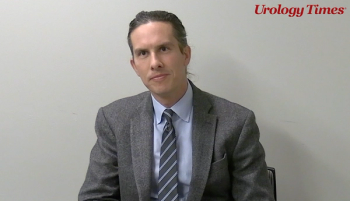
“Then recently, of course, with the single-port device, that has truly allowed us to be less invasive with our robotic approaches,” says Adam Lorentz, MD, FACS.
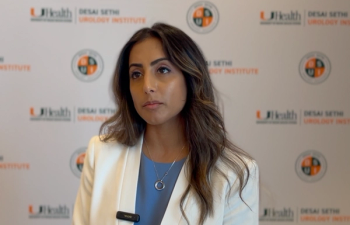
"I know this year we're going to see even more companies producing more products, more results, and hopefully really help change and improve patient outcomes, especially when it comes to overactive bladder," says Raveen Syan, MD, FPMRS.

“They come out of the fellowship competent and competitive in the field to any urology position that they're interested in,” says Tania Solomon, PA-C, MSc.
"The approach is often to identify what treatments the patients have tried already, so we don't try those again, and then have a discussion about the pros and cons," says J. Quentin Clemens, MD, MSCI.
"At Mayo Clinic, we think that delivering intravesical therapy for non-muscle invasive bladder cancer in patients' homes has the potential to reduce treatment burden, improve the patient experience, as well as increase access to care," says Timothy D. Lyon, MD.

According to Sanda, future advancements may involve gene and RNA sequencing, the use of AI in imaging, and multidisciplinary collaboration.
"There is new technology emerging for skin stimulation of the perineum that is just recently evolving to help control OAB symptoms," says Anne Pelletier Cameron, MD, FRCSC, FPMRS.

"We are trying to develop epigenetic biomarkers that can predict patients that are starting to progress to neuroendocrine prostate cancer," says Jindan Yu, MD, PhD.
"The notion that the urine is sterile should be hopefully abolished by now, especially in this group where we know that these individuals do have a lot of bacteria growing in their bladders," says Brendan T. Frainey, MD.
"My biggest hope for people reading this review is to understand that there are some golden opportunities for research," says Laura Bukavina, MD, MPH, MSc.

"Just having someone with another set of eyes I think is always helpful and gives you a lot of inspiration as well as a lot of encouragement on exactly what you need to do next," says Gia Ching.
“The patients I find that have the most pronounced benefit are the patients with the very large prostates, or the patients who are catheter dependent with concern for neurogenic or myogenic bladder failure,” says Brendan M. Browne, MD.
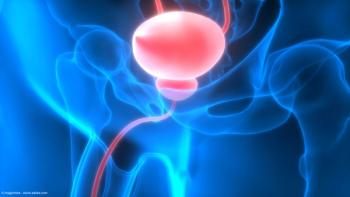
"I think integrating microbiome surveillance into clinical trials can bridge the gap between research and also therapeutic applications," says Ilaha Isali, MD, MSc.

“What creates job satisfaction are 3 principles: mastery, autonomy, and a sense of purpose,” says Mark T. Edney, MD.