

"I'm all for this great effort by ImmunityBio to provide us with an alternative option,” says Suzanne B. Merrill, MD, FACS.
"I'm all for this great effort by ImmunityBio to provide us with an alternative option,” says Suzanne B. Merrill, MD, FACS.

"Viral vectors are basically a blueprint of the virus that's used to carry the DNA payload into the target tissue, but the problem is they have some issues," says Katherine Chan, MD, MPH.

“I think we now have really robust data showing that earlier treatment intensification with combination regimens does lead to improved survival for patients with metastatic hormone-sensitive prostate cancer," says Dr Louise Kostos.
"For other health care professionals aiming to advocate for equitable changes within their system, it's really important to just start conversations about what you're noticing," says Hailey Frye.

John A. Taylor, III, MD, MS, discussed the new wealth of options in non–muscle invasive bladder cancer, specifically highlighting detalimogene voraplasmid.

"In a practice like mine, where approximately 30% of the practice is low testosterone, it'll have actually very little negative effect," says John P. Mulhall, MD.

“What's really cool about overactive bladder is that, it's not like high blood pressure. They do not have to leave this office with a pill in hand," says Anna Myers, CNP.

"The objective of this project [was] to clinically adjudicate the complications identified by that outpatient software," says Timothy D. Lyon, MD.

“One important aspect to get across…is that access to this EAP is pretty easy," says Suzanne B. Merrill, MD, FACS.

"We found that the location that prescribers were registered in, as well as their fellowship training, was significantly associated with higher vibegron prescription rates,” says Grace Khaner.
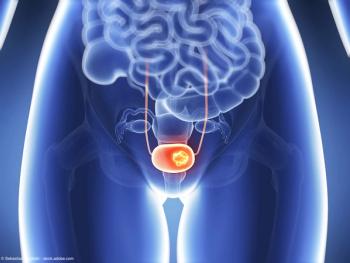
“High risk, non–muscle invasive bladder cancer carries a significant risk of recurrence and progression. This emphasizes the need for careful patient selection, especially when we are considering bladder-sparing approaches," says Neeraja Tillu, MD.

"This now clarifies and substantiates the fact that there are not increased risks from a cardiovascular standpoint with [testosterone] therapy, at least at the doses studied," says Landon Trost, MD.

"There is evidence for a direct link between the exposures you get by doing your job as a firefighter and then developing cancer down the road," says Sima P. Porten, MD, MPH.

"A lot of times…decreased desire is affected by everything else: pain with sex, orgasm, arousal. Because if none of that is good, then desire isn't going to be good either," says Anna Myers, CNP.

“The impact on bone health is really significant with long-term androgen suppression," says Dr Louise Kostos.
The phase 2 STARLITE 2 trial is assessing 177Lu-girentuximab plus nivolumab in advanced clear cell renal cell carcinoma.

“I think we can really use AI in several different facets of endourology," says Perry Xu, MD.

“For all intents and purposes, how you've been practicing telehealth currently is exactly how you'll be able to practice it until September 30," says Chad Ellimoottil, MD, MS.

"I hope that these new guidelines and the removal of the black box warning on testosterone therapy will help more physicians feel comfortable providing testosterone therapy to men," says Helen L. Bernie, DO, MPH.
"Radium-223 continues to have a very significant role for patients with advanced castration-resistant prostate cancer," says Rana R. McKay, MD, FASCO.

"When we compared the 2 groups, those that received tamsulosin and those that did not, we did find a significant difference with regard to success rates," says Kate H. Kraft, MD, MHPE, FACS, FAAP. .

“In 5200 men, very clearly, definitively, irrefutably, it has been shown that testosterone therapy is not associated with MACE over the course of the 12 to 24 months after commencement of testosterone therapy," says John P. Mulhall, MD.
“[There’s] a lot going on in bladder cancer in the non–muscle invasive, muscle-invasive space, as well as in some of the biomarkers, which is exciting and will definitely have a huge impact on the management of your patients," says Jason M. Hafron, MD, CMO.

"We found that female patients, Black patients, and patients with non-private insurance had a decreased odds of receiving opioids,” says Hailey Frye.

“A key point is the supply chain is very fragile, and there's not really a good financial incentive to make these drugs," says Ruchika Talwar, MD.

"Personally, I think monitoring and analyzing PSA kinetics is a great one because it's cheap and it's readily available,” says Dr Louise Kostos.

The trial is assessing the safety and tolerability of adaptive radiation therapy with concurrent sacituzumab govitecan in patients with MIBC.

"This certainly does feel like the beginning of the light at the end of the tunnel coming out of the BCG shortage," says Chad A. Reichard, MD.

“Identification of significant predictors [of upstaging] has improved our pre-op counseling," says Neeraja Tillu, MD.

"I think that testosterone is really a medication that can be life changing for so many men, says Helen L. Bernie, DO, MPH.