

Pezzella said she believes Neuspera offers a "smart, integrated, sophisticated alternative" for treating overactive bladder symptoms.
Pezzella said she believes Neuspera offers a "smart, integrated, sophisticated alternative" for treating overactive bladder symptoms.

Mina M. Fam, MD, discusses some of the common misconceptions that patients have when seeking testosterone replacement therapy.

“With the right use, AI can and hopefully will play a massive role in patient education,” says Justin M. Dubin, MD.

Benjamin M. Brucker, MD, outlines considerations surrounding pre-procedure urinalysis, prophylactic periprocedural antibiotics, and optimal dosing regimens for onabotA administration.

According to Daniel D. Joyce, MD, MS, policy initiatives should focus on improving the value and efficiency of radiation.
Anne K. Schuckman, MD, discusses some of the current challenges in delivering optimal care for patients with non–muscle invasive bladder cancer.

Justin M. Dubin, MD, outlines the current ways that artificial intelligence is being used in the male infertility space.

Bilal I. Chughtai, MD, walks through the design and potential implications of a pivotal trial of the Butterfly Prostatic Device.

Findings indicated that although trimodal therapy improved the quality of life for patients with muscle-invasive bladder cancer compared with cystectomy, its significantly higher cost made it not cost-effective.
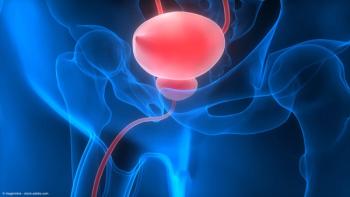
A notable finding was that 35% of these NMIBC patients exhibited ctDNA positivity.

Vignesh T. Packiam, MD, outlines the mechanism of action for detalimogene voraplasmid as well as its potential benefits in terms of storage and dosing.

The most apparent risk factor is hours worked, as increased work hours directly correlate with heightened tiredness and stress.

McVary's expectation is that the results will be sustainable because the short-term outcomes for larger prostates appear superimposable on the longer-term outcomes for smaller, previously restricted prostate volumes

Justin Dubin, MD, touches on the current landscape of men’s health, with a specific focus on the advent of AI.
Laura E. Davis, MD, discusses the link between early onset prostate cancer and persistent poverty.

One prominent theory suggests that younger generations of graduating urologists face increased financial pressures due to higher student loan debt.
The ARASTEP trial is exploring the combination of darolutamide plus ADT vs ADT alone in patients with high-risk biochemical recurrence of prostate cancer.

The system is now cleared for use in prostates up to 150 cm3.
Amy E. Krambeck, MD, discusses how to define success and how to determine the optimal timing for adding on a new partner.
Olivares cautioned that HIFU is not suitable for all patients, particularly those with more aggressive disease, for whom complete gland removal may still be necessary.
“The takeaway is that on a population level, on a health care system perspective, it's more cost-effective and safer to do transperineal prostate biopsy,” says Mitchell M. Huang, MD.
David Stanley, MD, FACS, discusses current trends and unmet needs in the treatment of patients with kidney stones.
Alicia K. Morgans, MD, MPH, highlights quality of life data from the phase 3 ARANOTE trial.

The findings strongly support a proactive approach to identifying and referring patients with poor urinary function after RP.

Treatment with the Revi System led to durable QOL benefits at 24 months, even among those patients who did not achieve the primary end point.
Anne Schuckman, MD, on optimal sequencing strategies, the SWOG 1602 trial, and the emerging role of ctDNA.
Amir S. Patel, MD, discusses interim findings from a randomized controlled trial of onabotulinumtoxinA injection at the time of HoLEP vs standard treatment.
The investigators found a clear, dose-response relationship between patient-reported incontinence severity and the subsequent use of incontinence interventions such as artificial sphincters or bulking agents.
Margaret A. Knoedler, MD, discusses the advantages of using the MONARCH platform for mini-PCNL.
Khurshid R. Ghani, MBChB, MS, FRCS, discusses how results from the SOUL trial may shape clinical decision-making regarding stent placement.