

Enrique Grande, MD, shares key findings from the DISCUS trial, exploring 3 vs 6 cycles of platinum-based chemotherapy for advanced urothelial carcinoma.
Enrique Grande, MD, shares key findings from the DISCUS trial, exploring 3 vs 6 cycles of platinum-based chemotherapy for advanced urothelial carcinoma.

Stephen J. Freedland, MD, shares 'unprecedented' overall survival data from the phase 3 EMBARK trial.

Srikala Sridhar, MD, MSc, FRCPC, outlines phase 2 data on avelumab in patients with locally advanced or metastatic penile cancer.

The data continue to support adjuvant nivolumab as a standard of care for patients with high-risk muscle-invasive urothelial carcinoma.

Andrew W. Hahn, MD, details phase 2 efficacy findings on lenvatinib plus everolimus vs cabozantinib in patients with metastatic ccRCC.

Andrea Necchi, MD, shares key findings from the phase 2 GDFather-NEO trial, presented at ESMO 2025.

Amy E. Krambeck, MD, explained that active suction provided by FANS helps reduce intrarenal pressure by continuously removing irrigation fluid.

Sevann Helo, MD, recaps an SMSNA 2025 session on setting patient boundaries.

Muhammed A. Moukhtar Hammad, MBBCh, outlines key findings from a study evaluating testosterone replacement therapy and hearing-related outcomes.

Michael J. Morris, MD, discusses the mechanism of action for AB001, a PSMA-targeted radioligand therapy for patients with mCRPC.

Landon Trost, MD, discusses patient-reported outcomes from a study comparing CCH treatment vs surgery for Peyronie's disease.

Aleece Fosnight, MSPAS, PA-C, highlights that although urinary leakage is common, it is not normal—and effective treatment options exist.
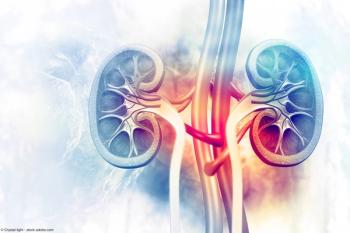
Krambeck highlights that FANS combine enhanced maneuverability and effective fragment evacuation, leading to higher stone clearance rates and improved procedural outcomes in endourology.
Ellen Cahill, MD, discusses a recent study on testosterone usage among men interested in fertility.

A. Lenore Ackerman, MD, PhD, discusses how clinicians should approach conversations with patients on the risks and benefits of vaginal estrogen.
Apolo highlighted the positive topline results from the phase 3 EV-303 trial (NCT03924895) evaluating EV plus pembrolizumab in cisplatin-ineligible patients with muscle-invasive bladder cancer.

Veda N. Giri, MD, outlines alternative care delivery models that could help improve access to genetic testing for prostate cancer.

Aleece Fosnight, MSPAS, PA-C, CSC-S, CSE, IF, MSCP, HAES, emphasized that many older patients eventually pursue care only after years of coping, when their quality of life has been significantly affected.

CAN-2409 plus valacyclovir significantly improved disease-free survival compared with placebo plus valacyclovir.

Findings showed that although most applicants emphasized work ethic and interpersonal skills, these attributes were not predictive of receiving an interview invitation.

A. Lenore Ackerman, MD, PhD, outlines the rationale for a guideline recommendation suggesting that D-mannose alone may not be effective for UTI prophylaxis.

Veda N. Giri, MD, outlines some of the key barriers to genetic testing in prostate cancer.

Melvin L.K. Chua, FRCR, PhD, FASCO, highlights data validating the performance of the ArteraAI Prostate test in an Asian cohort of patients with prostate cancer.

Chad A. Reichard, MD, outlines key findings from the CREST trial, evaluating the combination of sasanlimab plus BCG in patients with high-risk BCG-naïve NMIBC.

Shreyas S. Joshi, MD, MPH, discusses some of the key considerations for new agents entering the treatment landscape for BCG-unresponsive NMIBC.
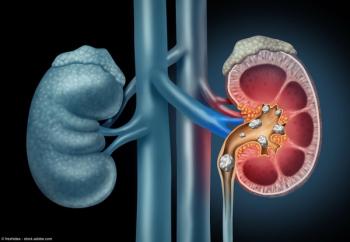
Krambeck pointed to the growing importance of medical management in stone disease prevention.

Veeru Kasivisvanathan, MBBS, BSc, FRCS, MSc, PGCert, PhD, highlighted how bpMRI aligns with evolving diagnostic strategies.

Mihir S. Shah, MD, outlines ongoing research on treatment intensification prior to radical prostatectomy in patients with localized prostate cancer.
Apolo also discusses the potential role of ctDNA in the bladder cancer space.

Fosnight described how stigma itself becomes a barrier to care, even though effective diagnostic and treatment options are available.